

[비즈한국] The LAH-1 Mirion light armed helicopter is currently being mass-produced to replace the aging AH-1E Cobra helicopters as the next-generation mainstay for the Republic of Korea Army Aviation. Especially in light of the tragic accident last February in Gapyeong, where a nearly 40-year-old retired Cobra helicopter crashed during emergency procedure training, killing both crew members, the production of the LAH helicopter is a matter that can no longer be delayed.
However, the news of the so-called 'LAH engine cracks' that began circulating last week has caused a major stir not only within the military but across the entire defense industry. The fact that corrosion and cracks appeared in most of the engines intended for light armed helicopters is not merely a parts defect; it is an incident that has created significant cracks in the pride of 'cost-effective K-Defense,' 'rapid-delivery K-Defense,' and 'world-class quality K-Defense.'
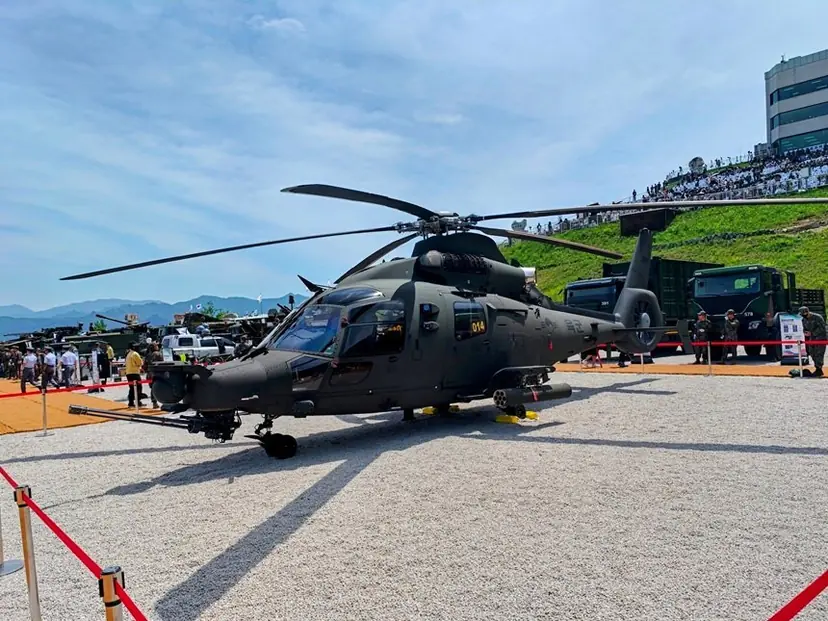
However, if one looks closely at the essence of this situation, it is not an issue that can be dismissed solely as a simple work error or lack of technical proficiency by the domestic manufacturer. This incident is a symbolic outcome where the limited technical data provided by the original overseas technology firm, combined with the 'independent development of domestic engines'—which had been postponed due to cost and scheduling issues—has struck us like a boomerang.
To grasp the essence of this LAH engine crack incident, more in-depth investigation and analysis are needed beyond the superficial reporting currently in the media. The details are as follows.
First, the 'Arriel 2L2' engine diffuser process for the LAH, which became the issue, uses martensitic steel (M152) as its main material. While this material exhibits excellent durability in the harsh and continuous high-temperature and high-pressure environments that occur when an aircraft is in operation, it can be vulnerable to instantaneous external impacts or strikes, requiring precise work instructions for handling the part.
Then why did the on-site workers have to use a mallet on a core component so sensitive to impact? The cause lay in the limited technical data. The technical manual for the component did not include specific explanations regarding the shrink-fitting process.
The limited technical data provided insufficient information on temperature conditions for the thermal expansion of the diffuser part, as well as detailed processes and precautions during assembly. Hanwha Aerospace012450, which developed the detailed manufacturing process, added a method of indirect tapping with a rubber mallet during assembly after experiencing difficulty inserting parts due to insufficient thermal expansion, which ultimately caused micro-cracks in the brazing area of the diffuser's internal vanes.
These cracks were impossible to identify with the naked eye and could only be detected using high-magnification scopes. Safran engineers visited the Korean plant in early June for a joint technical review, identified the cause, and worked with Hanwha Aerospace to devise solutions to prevent identical defects. The process of using high-magnification scopes to find them was a precise maintenance task independently added by our company and the Army.
However, a larger, more fundamental problem revealed by this situation lies in the structural disadvantages of our licensed production contracts and our state of technical subordination. It is reported that Hanwha Aerospace is bound by contract terms that require it to pay significant additional fees to Safran every time they officially submit a 'Technical Query' to the original technology firm regarding doubts or unclear aspects of the process. This is common in typical licensed production.
Fortunately, to resolve this defect, a joint civil-government-military investigation council—including the Defense Acquisition Program Administration, the Defense Agency for Technology and Quality, the Army Aviation Command, KAI, and Hanwha Aerospace—moved quickly and comprehensively starting in April. Hanwha has completely scrapped the incomplete manual torch heating method that caused the defect and introduced a new 'electric heating furnace' process that precisely controls temperature to achieve uniform thermal expansion of the entire base material. Additionally, they have significantly strengthened quality verification procedures by creating new non-destructive testing and endoscopic inspection processes immediately after assembly.
In other words, while it appeared there was an issue with the LAH engine in Hanwha Aerospace's operations, the company, government agencies, and the military actively cooperated to investigate the cause of the defect and implement process improvements, allowing recovery measures to proceed early. They prevented a problem that could have escalated into a crash of a new helicopter.
Although the technical shortcomings have been resolved, this incident, which wasted valuable national time and money due to the original manufacturer's limited process manuals and nearly disrupted the Army's core deployment schedule, suggests many things to us. Furthermore, the fact that the assembly process has taken longer and cost more than the original LAH engine localization plan remains an unresolved issue, as it is uncertain whether the Defense Acquisition Program Administration can provide cost compensation.
The ultimate lesson this LAH engine crack incident teaches us is clear: no matter how excellent and proven an engine may be on the world stage, under a licensed production system that relies entirely on overseas source technology, one can always face such force-generation gaps and structural disadvantages. To achieve true localization and self-reliance in weapon systems, we must go beyond the level of merely assembling foreign parts and move toward complete self-reliance in the independent development of gas turbines, the core of aircraft engines.
As this incident has exposed the problems of manufacturing engines without IP (Intellectual Property), the government, companies, and research institutions must unite to devote themselves more intensely to accumulating core technologies through independent engine development projects such as the HAF4500. I hope this case acts as a powerful catalyst for the Republic of Korea's aircraft engine industry to fully emerge from the shadow of licensed production and mature into a country of independent development and complete technological sovereignty.
![[Military Tales] LIG's 'Secret Weapon' Anti-Drone Missile: Could it Shoot Down a North Korean Version of the Shahed?](https://s.bizhankook.com/attachments_webp_no_wm/2026/07/134404_no_wm_67d0cb50.webp)
![[Defense Story] Why Canada Submarine Bid Failure Proves Need for New Presidential Secretary for Defense Industry](https://s.bizhankook.com/attachments_webp_no_wm/2026/07/134454_no_wm_eee848e4.webp)
![[Military Story] [Exclusive] Indonesia Completes Final Payment of KF-21 Adjusted Contribution](https://s.bizhankook.com/attachments/2026/07/e8e440c2ed1c_17a7336a.jpg)
![[Mil-Duck Telling] The Root Cause of the 'Rubber Mallet Incident' That Caused Cracks in LAH-1 Engines](https://s.bizhankook.com/attachments/2026/07/50b076aac26a_6fa9356d.jpg)
![[Military Talk] Hanwha Unveils 'Drone-Blocking Command Armored Vehicle' N-MCV for the First Time](https://s.bizhankook.com/attachments/2026/07/096f15b33ac1_a76e4ddb.jpg)
![[Military Talk] The Blueprint for a Crewed Spacecraft Using South Korea's Independent Technology Has Emerged](https://s.bizhankook.com/attachments_thumb/2026/06/98717_thumb_a7e83bdd.webp)