

[비즈한국] A drama does not merely remain a drama. The Netflix series 'True Education' shows that it can lead to positive results in both social influence and policy, as the drama itself acts as an agenda setter for policy.
Policy agenda setting refers to the institutional examination of social problems to resolve them through policy. The study of policy agenda setting emerged in the 1960s due to large-scale protests by Black Americans. Alarmed by this, politicians and scholars began to examine why the government had not addressed the issue of racial discrimination through policy.
In communication theory, agenda setting refers to the way mass media consciously shapes public thought and opinion on current issues. Walter Lippmann stated, "The information provided by the media plays a decisive role in constructing our reality." Maxwell McCombs, a professor at the University of Texas, stated in his book 'Agenda Setting' that "when the media highlights certain agendas, the general audience begins to think of those issues as important, and consequently, they emerge as significant agendas." This suggests that public agendas are set by media outlets and the perspectives they use to portray the world.
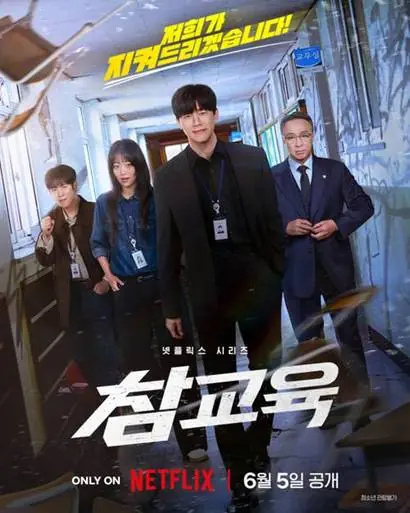
In the past, news and debate programs performed this agenda-setting function, but lately, dramas seem to be doing the same. A prime example is the Netflix drama 'True Education.' The show features an 'Educational Rights Protection Bureau,' where supervisors are dispatched to schools where educational authority has collapsed to resolve problems. The drama did not end with just being a show; its social impact was so significant that it drew reactions from the political sphere.
On the 12th, the Democratic Research Institute, a think tank for the Democratic Party of Korea, published a policy briefing report titled 'Plan for Establishing the Ministry of Education's Educational Activity Protection Bureau.' Rather than the violent retribution seen in the drama, it proposed an Educational Activity Protection Bureau model that functions as an accountable command center. Ahn Min-suk, the superintendent-elect of the Gyeonggi Provincial Office of Education, also proposed a public debate on establishing an educational rights protection bureau within the Gyeonggi Provincial Office of Education, stating that the Gyeonggi-style bureau would focus on restoring the school community.
On the 16th, 11 groups representing parents, teachers, and educational organizations launched a 'National Movement for Restoring Trust in the Educational Community.' They argued that restoring trust in schools takes precedence over legal punishment or administrative intervention. The key functions of the educational rights protection bureau proposed by the Democratic Party include establishing an integrated classification system for cases of infringement on educational activities, an institutional responsibility system for malicious complaints, support for responding to child abuse reports, and support for restoring the school community. Institutional intervention and restoring trust in the educational community are not matters of priority but problems that must be solved together, and this discussion was triggered by the drama 'True Education.'
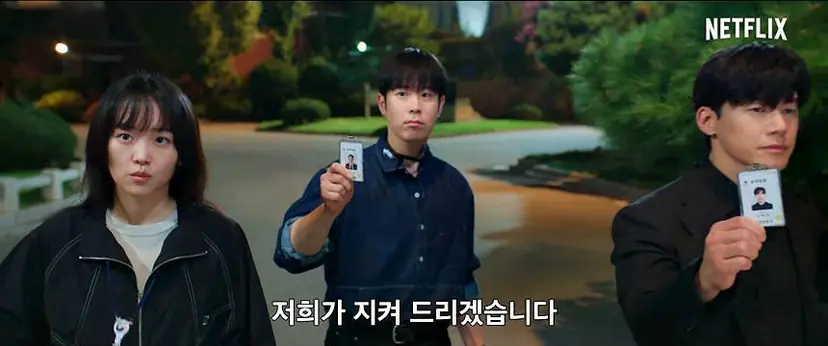
Educational rights are held by all stakeholders in a school. Teachers have educational authority, students have the right to receive education, and parents have the right to protect their children. The drama also covered a wide range of cases beyond just teachers' rights. It depicted instances of students bullying classmates, engaging in extortion, committing school violence, and disrupting classroom atmospheres, as well as teachers leaking or fabricating exam papers, parents driving teachers to suicide through malicious complaints or interference, and parents with excessive zeal for education ignoring their own children's drug use.
The drama frequently features gangsters and focuses on the atrocities committed by the children of the elite. This may differ from reality. Regardless, strengthening internal capacity for autonomous response to educational rights is crucial. Civic groups related to education have also stated that they will prepare policy bills based on trust, rather than external force, through deliberation and discussion.
This is not the first time a K-drama has created a social stir. The drama 'The Glory' significantly highlighted the issue of school violence, and overseas, instances of public figures being outed as school bullies led to public apologies. However, these did not become public agendas because the drama itself was limited to personal revenge. Conversely, 'True Education' has been considered a public agenda because it contains realistic ideas and alternatives for public intervention, systems, and policies.
It is likely not only in school education where platform content is needed as a public sphere that forms public discourse rather than private revenge or venting. The social role of drama can be further strengthened when it goes beyond merely pointing out reality and proposes alternatives. A drama is not just a drama.
The author Kim Heon-sik has been walking through or navigating the forest of popular culture phenomena since his 20s with the expectation that there is a way to make the world a better place through culture. He continues on the same path with the same belief even in the 21st century, where artificial intelligence and quantum computers are active.