

[비즈한국] On my morning commute, I transferred between buses and subways, tapping my smartphone as a transit card. After lunch, I paid with Samsung Pay. Worried I might forget a colleague's wedding scheduled for this weekend, I scheduled a transfer for the congratulatory money via Kakao Pay. On my way home in the evening, feeling a bit hungry, I bought tteokbokki at a street stall and paid via Zero Pay. Today, I didn't use a single banknote or coin.
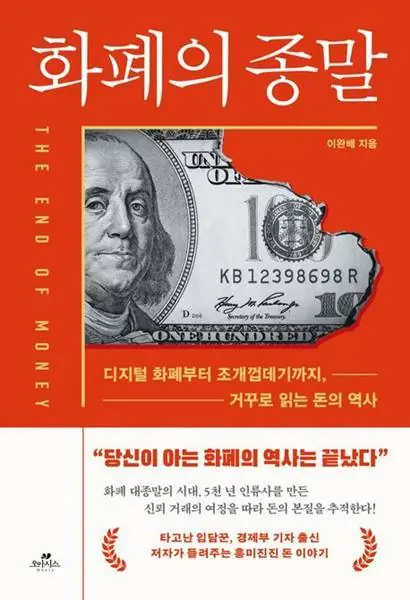
A daily life without cash is nothing special anymore. In an era where physical currency is disappearing, a book has been released that explains what money is and how it will change in the future.
'The End of Money' traces the history from digital currencies like CBDCs and stablecoins, back through monetary reform, religion and money, stocks and insurance, gold and silver coins, the birth of banks, and all the way back to the origins of money: seashells. It follows the history of how 'trust,' the essence of what we call money, has been traded until now.
The author, an economic journalist with 11 years of experience, untangles the complex history of money in an engaging way. Beyond the future where paper money disappears, the book explores the true essence of 'trust' at the threshold humanity faces just before a new monetary system, and poses questions about the future of transactions.
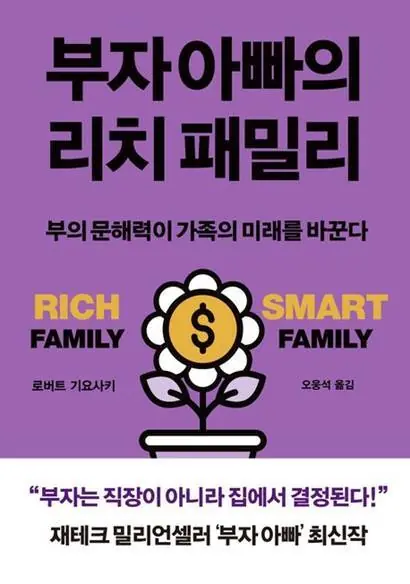
If you've read a book that teaches you about money, the next step is a book that teaches you the 'mindset' for making money. Robert Kiyosaki, author of the bestseller 'Rich Dad Poor Dad,' has released a new book. 'Rich Dad's Rich Family' goes beyond his previous work, extending the realization of wealth-building techniques to family and the lives of the next generation.
Recently, many parents in Korea provide economic education from a young age by buying stocks for their children, and Kiyosaki also emphasizes that the starting point of financial freedom is not school, but the 'home.' He argues that the era of earning money through labor is over, and one must view the world from the perspective of investment and systems. Since it has become an era where ordinary wage earners cannot save money, he suggests adopting an investor's mindset. To this end, the author cites 'financial literacy' as the essential survival condition for this era, and presents the following 8 financial literacy principles:
1. Financial IQ: Good grades are not everything. Finding a learning method that suits you and developing the financial IQ to read the flow of money is the real starting point of personal finance.
2. Homework at Home: The rich are made at home. You cannot become rich on a salary alone. Use your spare time to steadily build assets that put money into your pocket.
3. Choosing a Quadrant: Don't remain an employee (E) or a self-employed person (S) climbing a ladder built by others. Cultivate the mindset of a business owner (B) or an investor (I), where systems and assets work for you.
4. Three Types of Income: Do not rely solely on income earned by working directly. You must create a structure of passive income and investment income that comes in even when you are not working.
5. Your Own Report Card: Financial statements are report cards in the world of money. You must learn to understand the difference between assets and liabilities and take control of your own cash flow.
6. Facts and Truth: You must read the truth through 'facts,' such as numbers and cash flow, not others' opinions. That is the first step toward avoiding financial risk.
7. Mindset of Abundance: Money grows like a tree. Instead of worrying about scarcity and shrinking back, you must cultivate a mindset that grows the income itself.
8. The Power of Words: The rich speak the language of the rich, and the poor speak the language of the poor. Learning and choosing economic terms and the language of money is the first step to changing the direction of your life.
The book is a mix of somewhat abstract, macro-level content and concrete, practical content. Regardless, it is up to the reader to choose and act upon it. As a side note, Kiyosaki's previous work, 'Rich Dad Poor Dad,' has reportedly sold over 5 million copies in Korea alone.
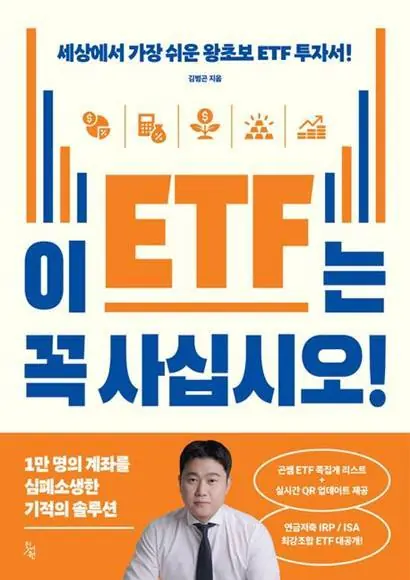
A book has also been released that easily explains the ETFs that are the hottest topics these days. The author, a pension expert who runs a YouTube channel and a Naver cafe, says he wrote the book after hearing many unfortunate stories from beginner investors.
'You Must Buy This ETF!' recommends ETFs based on an individual's investment propensity and age group, such as aggressive, neutral, or conservative types. True to its subtitle, 'The World's Easiest ETF Investment Book for Absolute Beginners,' it is characterized by easy explanations that even beginners can understand without complex chart analysis or corporate analysis. It presents a concrete '8 Principles of ETF Investing' to allocate assets according to age and asset size, and to include high-quality, carefully selected ETFs in a golden ratio.
It also provides tips on how to use 'tax-saving vessels' such as pension savings, IRP, and ISA among the overflowing financial products. In particular, it contains 63 representative practical investment cases to show solutions and provides an up-to-date, real-time updated ETF list via QR code. The 'curated' ETF list was selected based on market capitalization and focuses on high-quality stocks that are safe due to their large asset size, have low fees, and have abundant trading volume.
I emphasize once again: personal finance books are just for reference, and don't forget that investment is ultimately your own responsibility!