

[비즈한국] Daegu Mayor-elect Choo Kyung-ho pledged to relocate the headquarters of the Industrial Bank of Korea (IBK)024110 to Daegu Metropolitan City ahead of the June 3 local elections. Relocating the IBK headquarters requires an amendment to the law, as Article 4 of the current Industrial Bank of Korea Act explicitly states, "The headquarters of the Industrial Bank of Korea shall be located in Seoul." Parliamentary cooperation is essential for such an amendment. In a similar case, the Yoon Suk-yeol administration attempted to move the Korea Development Bank (KDB) headquarters to Busan, but failed to pass the necessary legal changes. With the Democratic Party of Korea currently holding a parliamentary majority, it is expected that fulfilling the pledge made by the mayor-elect, who is affiliated with the People Power Party, will not be easy.

A breakdown of the 300 current National Assembly members by party shows 161 from the Democratic Party of Korea, 110 from the People Power Party, 12 from the Rebuilding Korea Party, 4 from the Progressive Party, 3 from the Reform Party, 1 from the Basic Income Party, 1 from the Social Democratic Party, and 8 independents. General laws can be amended with the attendance of a majority of the registered members of the National Assembly and the approval of a majority of those present. Cooperation from the Democratic Party is essential for the amendment to pass. However, as Mayor-elect Choo is a member of the People Power Party, there is no guarantee that the Democratic Party will cooperate smoothly.
Of course, if the People Power Party secures a majority in the general election scheduled for 2028, a legal amendment would be possible without the Democratic Party's cooperation. However, since the results of that election cannot be predicted, it is difficult for Mayor-elect Choo to push for the relocation with the 2028 general election in mind. If the Democratic Party retains its majority after the 2028 election, relocating the IBK headquarters during his term will become even more difficult.
Ultimately, the most realistic way for Mayor-elect Choo to achieve the relocation is by persuading the Democratic Party. The Democratic Party has never issued an official statement regarding the relocation of the IBK headquarters. While Kim Boo-kyum, the Democratic Party's candidate for Daegu Mayor, also pledged to move the IBK headquarters to Daegu, this was his personal promise, not an official party platform.
The problem is that the Democratic Party does not view Mayor-elect Choo favorably. During the Yoon Suk-yeol administration, Choo served as Deputy Prime Minister and Minister of Economy and Finance. For this reason, members of the Democratic Party point out that he bears responsibility for the former President Yoon's attempt to declare martial law. In fact, the mayor-elect is currently on trial on charges of participating in a major insurrection. His campaign was also criticized for former President Park Geun-hye's participation during the June 3 local elections.
Ahead of the local elections in April, Democratic Party spokesperson Kim Gi-pyo criticized the situation, stating, "It is an insult to the public that an insurrection defendant who trampled on the constitutional order was blatantly nominated as a candidate for a metropolitan government head. Is this what the People Power Party calls conservative reconstruction, nominating one of the people most responsible for that tragedy at such a grave time when the responsibility for the insurrection is still being handled in court?"
Nonetheless, since the Lee Jae-myung administration is actively pushing for the relocation of public institutions to local regions, the possibility of moving the IBK headquarters is not zero. As many Democratic Party lawmakers support the Lee Jae-myung administration's policies, the possibility of amending the Industrial Bank of Korea Act is not entirely off the table. Furthermore, no local government other than Daegu appears to be actively pursuing the attraction of the IBK headquarters.
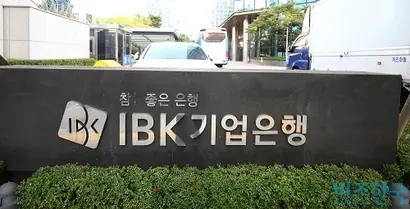
Another variable is internal opposition within IBK. When rumors of the relocation surfaced last May, the Korean Financial Industry Union (KFIU) opposed it, stating, "IBK is a policy financial institution established to support small and medium-sized enterprises (SMEs) and small business owners, and its responsibilities differ from those of general financial firms." They added, "Relocating the IBK headquarters is not merely a matter of changing a building's address; it is a serious issue that shakes the entire operational system of South Korea's policy finance and the support base for SMEs."
When the possibility of relocating the Korea Development Bank (KDB) headquarters was raised during the Yoon Suk-yeol administration, a significant number of KDB employees resigned. There is no guarantee that the same will not happen at IBK. Even if it does not lead to mass resignations, if the financial union launches a large-scale strike, the government and the National Assembly will have to take notice. Mayor-elect Choo must persuade the IBK union at the same time he seeks to persuade the National Assembly.
On June 11, during a press conference in Jeonju, North Jeolla Province, Minister of Land, Infrastructure and Transport Kim Yun-deok stated, "In line with President Lee Jae-myung's philosophy on balanced national development, the draft for the second round of public institution relocation is almost complete," adding, "The overall outline will be revealed in September." Once the Lee Jae-myung administration's roadmap for relocating public institutions is announced, discussions regarding the relocation of the IBK headquarters are expected to gain momentum.