

[비즈한국] With the US and Iran reaching a peace agreement after 106 days, the risk of a blockade in the Strait of Hormuz—which had threatened the global energy supply chain—has been fully resolved, bringing a sense of relief across South Korea's industrial sector and the overall macroeconomy. As international oil prices and shipping rates, which had reached record highs, are rapidly stabilizing, significant positive changes are expected in the profit structures of domestic companies that had been suffering from the dual burden of high costs and high exchange rates.
The war between the US and Iran effectively concluded on June 14 (local time) with the signing of a peace agreement. Following the key provision of the agreement to reopen the Strait of Hormuz, the geopolitical bottleneck that had been constricting global logistics networks is showing signs of easing. International oil prices (Brent crude), which had surged to $118 per barrel during the war, fell to the mid-$80 range immediately after the end of the conflict, and the Shanghai Containerized Freight Index (SCFI) also began a downward trend after peaking at 2,985.
Furthermore, shipping war risk insurance premiums, which had skyrocketed by up to 8%, are returning to normal levels. However, analysts estimate that it will take 60 to 90 days for the approximately 60 million barrels of crude oil currently trapped in the Persian Gulf to reach their final destinations and for Middle Eastern production lines, which produce 11 million barrels per day, to return to full operation.
The sharp fluctuation in oil prices resulting from the easing of geopolitical risks is having mixed ripple effects on South Korea's oil refining and petrochemical industries. The refining industry faces short-term loss concerns due to the "reverse lagging effect," where crude oil purchased at high prices during the war must be processed and sold as products at currently lowered market prices. It typically takes about 2 to 3 months from the purchase of crude oil to its refinement and sale as a product; therefore, as oil prices plummet to the $80-per-barrel range, profit margins are expected to shrink compared to the period when oil was purchased at over $100 per barrel. This recalls the early days of the 2020 COVID-19 pandemic, when the four major Korean refiners recorded a combined deficit of 4 trillion won in the first quarter alone, and is seen as a short-term negative factor hindering the recovery of refining margins.
On the other hand, the petrochemical industry, which has long suffered from cost pressures, sees the decline in the price of naphtha—a core raw material—as a positive signal. Naphtha prices, which soared to $1,200 per ton during the war, have passed the $800 mark post-war and are attempting to enter the $500 range. This cost reduction is not only driving the recovery of domestic Naphtha Cracking Center (NCC) utilization rates, which had fallen to the 60% level, but is also acting as a factor that restores strong price competitiveness compared to US Ethane Cracking Centers (ECC), which have seen profitability deteriorate due to rising ethane prices that often accompany crude oil production cuts.
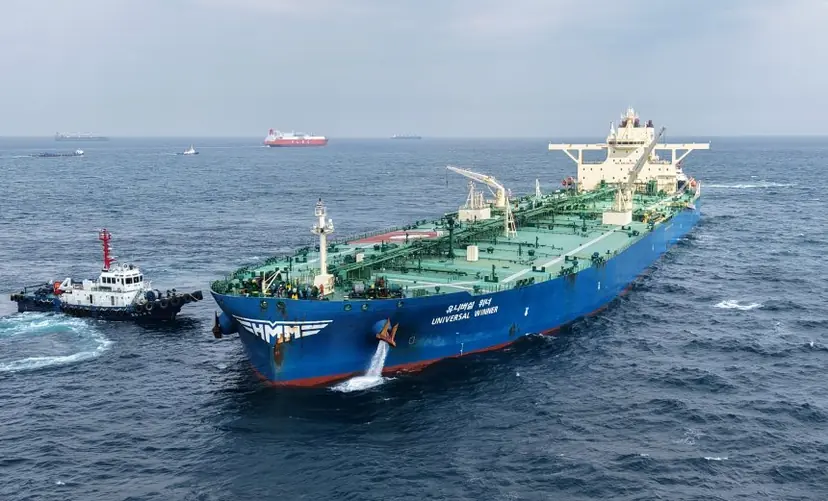
For the shipbuilding industry, while the short-term surge in demand for Very Large Crude Carriers (VLCC) seen during the war may cool down, securing long-term order competitiveness centered on next-generation, high-value-added eco-friendly ships, such as ammonia-propelled vessels, is expected to become the priority.
The aviation industry is experiencing the most dramatic cost-saving effects. The stabilization of the dollar-won exchange rate and the sharp drop in international oil prices are providing immediate dual benefits. Domestic airlines spend up to 30% of their operating costs on jet fuel, and their profit structures involve paying for major expenses, such as maintenance and aircraft leasing fees, in US dollars.
Following the war's end, the easing of the high exchange rate—which had spiked to the 1,560 won level—acts as a factor that significantly lowers the burden of annual fuel expenditures (amounting to 4 trillion won) and other financial costs like leasing fees. Furthermore, the reduction in fuel surcharges, which makes travel more affordable for consumers, could lead to an increase in overseas passenger demand that had been dampened by high inflation.
The steel industry is also receiving a double boost. As shipping rates fall, transport costs for iron ore and coking coal, which are entirely imported from overseas, are expected to decrease. In particular, for electric arc furnace steelmakers, where electricity costs account for 20-30% of manufacturing costs, the decline in oil and coal prices is welcome news. The long-term decrease in power generation costs is expected to play a decisive role in their profitability recovery.