

[비즈한국] As high inflation persists, large supermarket shelves are increasingly stocked with private brand (PB) products ranging from around 1,000 won to under 5,000 won. With low-priced items from groceries to household goods taking center stage, the price competition among large supermarkets is shifting from temporary promotional discounts to the expansion of permanent ultra-low-priced product lines.
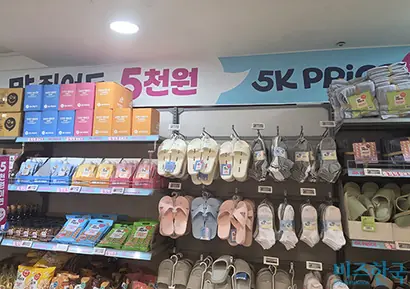
According to the National Data Agency, the cost-of-living index in May 2026 rose by 3.3% compared to the same month last year, with food prices within the index increasing by 2.1%. In response to the heightened burden of inflation, large supermarkets are expanding their ultra-low-priced PB product lines. E-Mart is spearheading this with "5K Price," an ultra-low-priced PB launched through integration with E-Mart Everyday, while Lotte Mart is increasing the number of products priced under 1,000 won under its "Only Price" (TodayGood) PB.
Demand for ultra-low-priced PB products is also rising. According to Lotte Mart, sales of "TodayGood" products priced under 1,000 won increased by 18.3% from January 1 to June 8 of this year compared to the same period last year. E-Mart’s 5K Price reached approximately 20 million units sold cumulatively as of March this year.
At the E-Mart Suseo branch, visited around 5 PM on the 13th, 5K Price products were displayed throughout the store. The fresh food section featured tofu, bean sprouts, fish cakes, and other affordable items priced under 1,000 won. A separate section held household goods such as slippers, towels, and socks. Some items even had "sold out" signs attached. At the Lotte Mart Jamsil branch, "TodayGood" products were also arranged in the food aisles and snack corners, and it was easy to see consumers picking up these items.
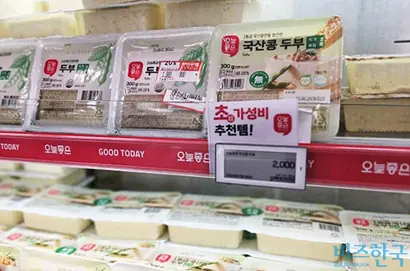
A 50-year-old woman identified as A, who purchased 5K Price tofu and bean sprouts at the E-Mart Suseo branch that day, said, "Since it's cheap, I buy it every time I shop. With prices rising so much these days, I hesitate to pick up anything that isn't discounted or priced low."
The core of maintaining ultra-low PB prices is bulk purchasing. E-Mart lowers product costs and logistics expenses through integrated purchasing across its affiliated channels such as E-Mart, E-Mart Everyday, and SSG.com. Lotte Mart secures price competitiveness by negotiating volumes with partners in advance and buying in bulk.
Beyond bulk purchasing, there are other ways to lower prices. E-Mart has designed some products in small quantities, targeting single and two-person households. This reduces the burden of buying large quantities that might go to waste, allowing consumers to purchase exactly what they need at a low price. For some household items, they also utilize "direct sourcing," where they find and select specialized overseas manufacturers themselves. Lotte Mart maintains low prices by applying additional discounts using their own marketing budget.
Large supermarkets entering the ultra-low-priced PB competition is a strategy aimed at the growing price sensitivity of consumers. By expanding essential items into low-priced PBs, they lower the perceived price level, which is expected to boost store visits and additional purchases. Ultra-low-priced PBs function more like permanent product lines than simple promotional events. This is because, as high inflation persists, keeping the prices of frequently purchased goods low serves as a source of price competitiveness for large supermarkets.
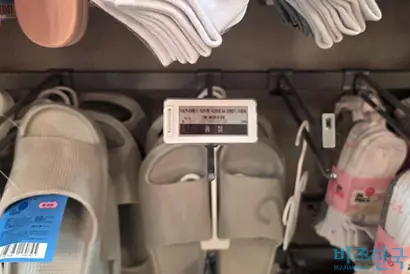
Ultra-low-priced PBs target the entire shopping basket rather than just the sale of a single item. By offering frequently bought items like tofu, bean sprouts, snacks, and household goods at low prices, they draw consumers into the store and lead to the purchase of other products. If there are more items that are always available at low prices—rather than only being cheap during discount events—consumers perceive the store's baseline prices as low. This is the reason why large supermarkets are growing ultra-low-priced PBs into permanent product categories.
Experts also view the expansion of ultra-low-priced PBs in the context of changing consumption habits. Lee Jong-woo, a professor of Distribution and Marketing at Namseoul University, said, "There is a trend where consumers nowadays prefer substitute products over brand-name goods, and there is a growing atmosphere that sees nothing wrong with PBs," adding, "As real income decreases, a consumption trend of buying fewer expensive items is emerging."
The challenge is converting low prices into profit. While ultra-low-priced items are effective in demonstrating price competitiveness, it is not easy to generate high margins from the products themselves. Professor Lee noted, "It is difficult to make a margin by selling only cheap items," adding, "The key will be how to translate these ultra-low-priced PBs into actual profit."
For ultra-low-priced PBs to be more than one-time items, sustainability in the product line is also necessary. It is difficult to create repeat purchases by only offering a few items at a low price. Professor Lee added, "One or two products are not enough; products need to be bundled into series and branded."