

[비즈한국] The war between the United States and Iran is nearing its end. On the 14th (local time), U.S. President Donald Trump officially announced the conclusion of peace negotiations via his social media platform, Truth Social, stating that an “agreement with Iran has been finalized.” This comes 106 days after the war began on February 28 with preemptive strikes by the U.S. and Israel. Iran's Ministry of Foreign Affairs also confirmed the policy to end the war and announced that the previously blockaded Strait of Hormuz will be reopened following the signing of a memorandum of understanding on the 19th.
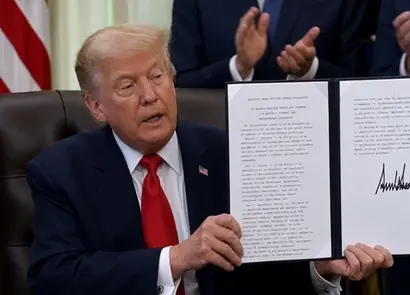
Of course, a “negotiation agreement” and a “signed deal” are different things. While both sides have agreed on the broad framework, detailed differences have not been fully resolved, and the signing date could be delayed by a few more days. It remains in a “pre-signing phase” where they have agreed to a peace framework, meaning there is still room for reversal before the 19th.
More importantly, the market has already largely priced in this scenario. Brent crude oil, which exceeded $110 per barrel at the peak of the war, has recently slid to the mid-$80s due to growing expectations for a deal. This is a decline of about 20% from the high. The expectation that the Strait of Hormuz—the core variable of this war—will reopen has already stripped away a significant portion of the “war premium” that was baked into oil prices. Accordingly, simple investment bets based on the idea that “prices will crash now because an agreement has been reached” could be a step behind.
Furthermore, the reopening of the strait does not mean that crude oil supply will return to normal immediately. It takes time to conduct route safety checks, remove sea mines, normalize insurance premiums and freight rates, and repair some energy infrastructure that accumulated during the blockade. This means the additional decline in oil prices may not be as steep as the market expects.
Nevertheless, the direction and the varying impacts on different sectors are clear. Oil refining and crude oil production stocks, which benefited during the high-oil-price era, may enter a phase where margin expectations are reduced. Gold, which attracted funds as a safe-haven asset, could also lose momentum once risk-aversion sentiment subsides. On the other hand, there are sectors that will benefit. For airlines and shipping companies, where fuel costs account for a large portion of expenses, a drop in oil prices directly translates to cost savings. The defense sector is a bit more complex. Since these stocks fluctuated whenever the agreement seemed shaky, their short-term momentum may peak once the end of the war is confirmed; however, medium- to long-term variables like Middle East reconstruction and regional security demands remain separate issues.
However, one variable cuts across all these scenarios: the fact that the direct parties to this agreement are the U.S. and Iran. Israel, which actually started the war, is not a signatory to the agreement. While Iran is demanding that a ceasefire with Hezbollah in Lebanon be included in the agreement, Israel—the actual party on that front—is outside the negotiation table. In fact, even on the 13th, when the signing of the memorandum for ending the war was imminent, the Israeli military conducted massive airstrikes in southern Lebanon. Even if the signing between the U.S. and Iran goes smoothly, the “war premium” could return at any time if embers of conflict flare up on other fronts in the region.
So, what should investors check? First, if you have stocks in your portfolio that you bought based on the assumption of high oil prices, it is time to reassess your weighting. However, be careful not to make a late sale that merely locks in losses, as these stocks have already been adjusted significantly. Second, since oil-tracking ETFs or inverse products move in opposite directions, it is safer to approach them in stages, confirming the transition from an “agreement” to a “signed deal.” Third, stable oil prices can lower inflationary pressure, giving the Bank of Korea and the U.S. Federal Reserve more room to maneuver their monetary policies. You should consider that this could work favorably for growth stocks and domestic demand stocks sensitive to interest rates, beyond just the energy sector.
Of course, the biggest risk is the instability of the agreement itself. This truce has been violated and led to renewed fighting many times in the past, and clashes continued until just a week ago. Whether the signing on the 19th will go smoothly and whether the reopening of the Strait of Hormuz will actually be implemented remains to be seen.
The end of a war is reflected in prices more trickily than its beginning. The start of a war is reflected instantly due to fear, but the end unravels slowly—and ahead of time—through the steps of agreement, signing, and implementation. Within that time lag lie both market misunderstandings and opportunities. Now is not the time to cheer, but the time to crunch the numbers again.