

[비즈한국] It appears that Samsung Bioepis has officially begun preparations for the commercialization of a biosimilar to 'Keytruda,' the world's top-selling drug.
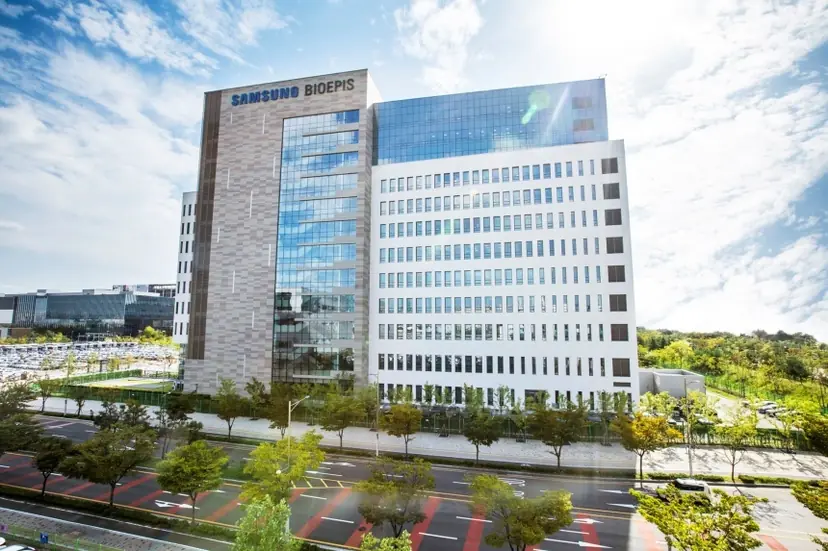
According to the Intellectual Property Office, Samsung Bioepis filed for trademark rights for PYZTRU and KEYADVAN on the 11th. Industry insiders speculate that these names refer to the biosimilar SB27, which is currently under development by Samsung Bioepis. SB27 is a biosimilar of Keytruda, the world's top-selling immuno-oncology drug, and is showing the fastest development progress among Samsung Bioepis's biosimilar pipeline.
Analysts suggest that this is a sophisticated branding strategy, with PYZTRU borrowing the suffix 'TRU' from Keytruda, and KEYADVAN using the prefix 'KEY,' to intuitively evoke the original drug, Keytruda.
Keytruda recorded approximately $31.7 billion (48 trillion KRW) in revenue last year. With its patents set to expire in major countries including the U.S. and South Korea by 2028, competition for market entry among global biosimilar companies, including Celltrion068270, is fierce.
Currently, Samsung Bioepis is employing an overlap strategy, conducting Phase 1 and Phase 3 global clinical trials for SB27 simultaneously. The company recently demonstrated pharmacokinetic (PK) equivalence to Keytruda in a Phase 1 clinical trial for non-small cell lung cancer, and the Phase 3 trial is expected to be completed within the year. The industry views this trademark filing as a sign that Samsung Bioepis is gearing up for full-scale commercialization in line with the expiration of Keytruda's patents. Regarding this, a Samsung Bioepis official stated, "It is difficult to officially confirm matters regarding trademark applications."
Through continuous research and development, Samsung Bioepis has launched a total of 11 biosimilar products in the domestic market. Starting with the autoimmune disease treatment 'Etoloche' in 2015, the company has released products such as the autoimmune treatment 'Epiztec,' ophthalmic treatments for conditions like macular degeneration, 'Afilibu' and 'Amelibu,' and the rare blood disease treatment 'Episcli.' Notably, Samsung Bioepis's oncology drug 'Onbevzi' has surpassed Celltrion's 'Remsima' to rank first in revenue within the domestic biosimilar market, leading the industry.
Since its spin-off from Samsung Biologics207940 last year, Samsung Bioepis has been expanding its scope beyond its core cash cow, the biosimilar business, into the field of new drug development. In April, the company presented preclinical study results for its ADC (antibody-drug conjugate) new drug 'SBE303' at the American Association for Cancer Research (AACR) annual meeting.
In addition to advancing its own pipeline, the company is also actively engaged in global investment. Samsung Bioepis, along with Samsung C&T028260 and Samsung Biologics, has secured a total of 442 billion KRW in cumulative operating funds, including the creation of the 200 billion KRW Samsung Life Science Fund No. 3 to secure next-generation global innovative technologies. Based on this, the company is focusing on identifying and strategically collaborating with global firms that possess foundational technologies for next-generation new drugs, such as ADCs, gene therapies, and AI-based platform technologies.