

[비즈한국] Obesity treatments are emerging as a new beacon of hope in the Metabolic Dysfunction-Associated Steatohepatitis (MASH) market. This comes as a series of clinical data indicates that these drugs not only dramatically reduce body weight but can also significantly reverse fibrosis, the hardening of the liver. As the core cause of liver disease is being redefined as metabolic dysfunction such as obesity and diabetes, GLP-1 receptor agonists, which regulate systemic metabolism, are gaining attention as powerful game changers in the field of liver disease.

'Fatty Liver' has become a systemic disease… The boundaries between hepatology, endocrinology, and nephrology are disappearing
The medical community, which previously sought the causes of liver disease primarily in viruses or alcohol, is now focusing on the breakdown of the systemic metabolic system, such as obesity, diabetes, and hypertension.
With the shift in perspective regarding the root causes of the disease, the landscape of hospital care also appears to be changing.
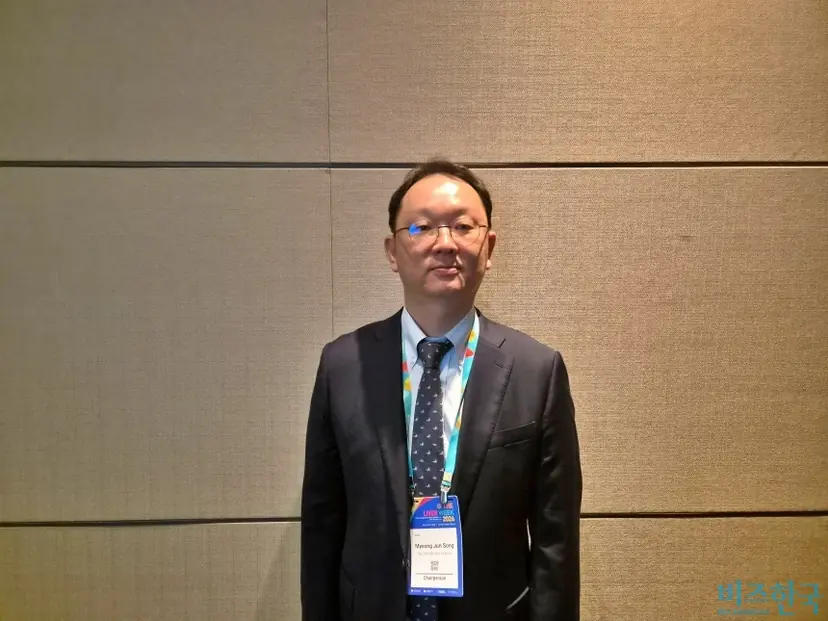
Song Myung-jun, a professor of gastroenterology at the Catholic University of Korea Daejeon St. Mary's Hospital (Public Relations Director of the Korean Association for the Study of the Liver), noted the changes in the field, saying, "In the past, when dealing with viral liver disease, it was sufficient for a hepatologist to prescribe antivirals. However, as the number of fatty liver patients has surged, gastroenterology departments can no longer manage these patients alone. As patients visit cardiology, nephrology, and endocrinology departments for comorbid conditions, the specialties have begun to overlap with the patient at the center."
As the boundaries between various departments have become blurred, the need for integrated, collaborative care has increased. However, even with the mixing of clinical areas, there is still a lack of clear guidelines for integrated patient management. Professor Song explained, "While endocrinology focuses on HbA1c, gastroenterology focuses on normalizing liver enzymes or preventing liver fibrosis. While early-stage patients can be managed in any department, the biggest concern in current clinical practice is how to care for patients transitioning to severe stages." Accordingly, the Korean Association for the Study of the Liver plans to update and announce the latest information and criteria regarding the efficacy of diabetes and obesity-related metabolic drugs for liver disease treatment at their conference in November.
'Wegovy' shakes the Liver Association… The key is "Preventing muscle loss"
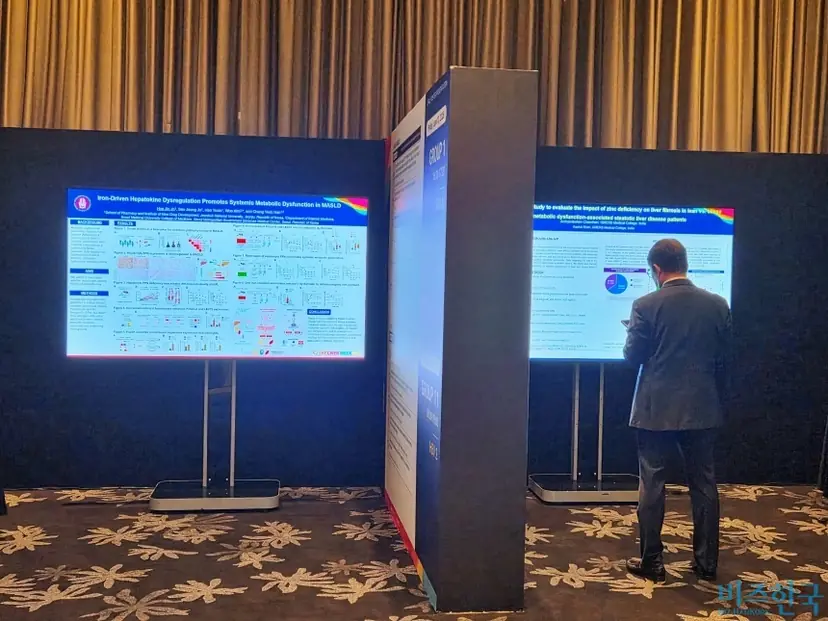
As systemic metabolic diseases like obesity and diabetes are identified as the core causes of MASH, attention is focusing on the obesity treatment Wegovy. At 'The Liver Week 2026', hosted by the Korean Association for the Study of the Liver and held at the Conrad Seoul in Yeongdeungpo-gu, Seoul from the 11th to the 13th, Novo Nordisk drew attention by setting up a booth for Wegovy (active ingredient: semaglutide).
Wegovy received accelerated approval from the U.S. Food and Drug Administration (FDA) as a MASH treatment last August. Because it is an accelerated approval rather than full approval, long-term confirmatory clinical trials (Phase 3, Part 2) are currently underway. According to the results of Part 1 of Novo Nordisk's global Phase 3 (ESSENCE study), 37.0% of the Wegovy-treated group showed an improvement in liver fibrosis by at least one stage without worsening of MASH symptoms at 72 weeks. This was 14.5 percentage points higher than the 22.5% improvement in the placebo group. Furthermore, the percentage of patients whose MASH symptoms completely resolved without worsening of liver fibrosis was 62.9% in the Wegovy group, nearly double that of the placebo group (34.1%).
Since the emergence of Wegovy, global big pharma companies are also challenging the MASH treatment market based on GLP-1 drugs. 'Survodutide,' a GLP-1/glucagon dual agonist that Boehringer Ingelheim introduced from Yuhan Corporation000100, recently confirmed in Phase 2 clinical trials that 83% of patients saw MASH improvement. Eli Lilly also secured results in its 'Zepbound' (active ingredient: tirzepatide) Phase 2 trials where up to 73.3% of patients achieved MASH resolution without worsening of liver fibrosis. GLP-1 formulations appear to be establishing themselves as next-generation standard treatments that go beyond obesity to normalize the metabolic system and heal the liver.
However, Professor Song points out that GLP-1 class drugs are not yet a perfect solution. He highlighted the risk of muscle loss behind the dramatic weight loss of Wegovy. He stated, "It is true that obesity drugs can dramatically reduce weight by 15-30% and have set a clear milestone in improving liver fibrosis, but the problem is that not only fat but also large amounts of muscle are lost in the process." He added, "For patients with liver disease, muscle loss is a fatal side effect that reduces systemic metabolic capacity, and once lost, muscle is very difficult to recover."
Ultimately, the analysis is that the future MASH treatment market will be led by drugs that can safely preserve muscle, in addition to the liver fibrosis improvement effects proven by Wegovy.
The counterattack of K-Bio: Dong-A ST170900, D&D Pharmatech432320, OliX226950, etc.
As global big pharma companies are stepping up to seize the market with GLP-1, domestic pharmaceutical and biotech companies are also staking their existence on the development of MASH treatments.
Dong-A ST is conducting global Phase 2 clinical trials for its new MASH drug candidate 'Vanoglifel (DA-1241)' through its subsidiary Metavia. It drew attention at the American Diabetes Association (ADA 2026) meeting held from the 5th to the 8th by releasing preclinical data on combination administration with 'Resmetirom' in MASH mouse models. Resmetirom is the first MASH treatment approved by the U.S. FDA. The 'Resmetirom + DA-1241' combination group showed a 23.6% reduction in body weight compared to the control group, and body fat and epididymal fat were reduced by 43.5% and 42.1%, respectively. Additionally, ALT (alanine aminotransferase), an indicator of liver damage, decreased by 83.5%, and improvements in biomarkers related to liver fat accumulation, inflammation, and fibrosis were also confirmed.
D&D Pharmatech also announced top-line results from its global Phase 2 clinical trial for 'DD01,' a peptide-based dual agonist that acts simultaneously on GLP-1 and glucagon receptors. In the 48-week liver biopsy assessment, it confirmed statistical significance in all major primary endpoints, such as fibrosis improvement without MASH worsening, MASH resolution without fibrosis worsening, and MASH resolution and fibrosis improvement, raising expectations for a next-generation MASH treatment. In addition, OliX, which possesses RNA interference (RNAi) platform technology, is conducting a global Phase 1 trial for 'OLX702A' in Australia.
However, there are voices suggesting that for these K-Bio companies to succeed in the global market, a precise patient selection strategy is necessary. Professor Song advised, "Even though there are quite a few severe patients transitioning from fatty liver to cirrhosis, they are not well-identified in clinical settings, and existing drugs have repeatedly failed at this stage. In a situation where non-invasive diagnostic devices are lacking in primary medical institutions, for companies developing new drugs, how accurately they can select the real target patients among a vast patient population who can benefit clinically will be the key to the success of the drug."