

[비즈한국] U.S. aerospace company SpaceX listed on the U.S. Nasdaq on the 12th (local time). SpaceX's initial public offering (IPO) price was set at $135 (approximately 205,000 KRW) per share. Based on the IPO price, SpaceX's market capitalization reached approximately $1.75 trillion (approximately 2,658 trillion KRW). This ranks as the 7th largest market cap in the U.S. stock market.
On its first day of trading, SpaceX's stock price climbed as high as $176.52 (approximately 268,000 KRW) during the session before closing at $160.95 (approximately 244,500 KRW). This represents a 19.22% increase in just one day. Consequently, SpaceX's market capitalization grew to approximately $2.12 trillion (approximately 3,221 trillion KRW).
Shin Eol, a researcher at Sangsangin Securities, analyzed SpaceX, stating, "The aerospace industry is linked to artificial intelligence (AI), satellite communications, defense, and robotics, and has the potential to emerge as the central pillar of next-generation growth industries," while adding, "High volatility in the early stages of listing and the concentration of short-term supply and demand could be factors that increase overall market volatility."
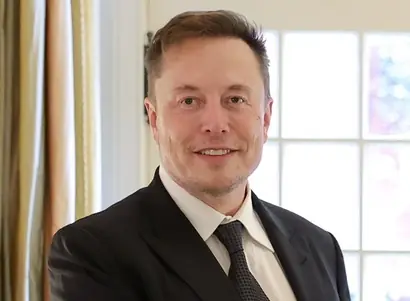
With the rise in SpaceX's stock price, the wealth of Elon Musk, CEO of Tesla and SpaceX's largest shareholder, has also increased. Musk is known to hold approximately 42% of SpaceX's shares. Foreign media estimates that Musk's personal wealth has reached $1.1 trillion (approximately 1,670 trillion KRW) following the SpaceX listing. If these estimates hold true, Musk would become the world's first person to possess a trillion-dollar fortune.
Analysts suggest that the SpaceX listing could also impact the domestic South Korean stock market. Kim Jong-min, a senior research fellow at Samsung Securities, explained, "Ahead of the largest mega-IPO in history, the SpaceX listing could create a temporary liquidity black hole in global asset markets," adding, "While the SpaceX listing may cause a short-term concentration of liquidity, I judge it to be a new opportunity for the Korean semiconductor industry from a mid-to-long-term perspective."
Hong Ye-rim, a researcher at Korea Investment & Securities, stated, "While there is uncertainty regarding the speed of realization of (SpaceX's) roadmap, the direction itself suggests a structural increase in launch demand and launch vehicle production," adding, "We maintain a positive view on launch vehicle material value chains such as Sphere and HVM295310 (HVM), which could directly benefit from the expansion of Starship production and launches." Sphere and HVM are listed on the KOSDAQ. Sphere's main business is supply chain management for the space industry, and HVM is a manufacturer of alloys used in space launch vehicles.