

[비즈한국] A new bio event has been held in Berlin. The name is ‘bio:cap’. It is a combination of ‘bio’ from Biotechnology and ‘cap’ from capital. Here, ‘capital’ holds two meanings simultaneously: financial capital and the capital city. In other words, bio:cap is an event that serves as a meeting point for bio technology and capital, while also representing a commitment to reconnecting the European life sciences ecosystem from Berlin, the capital of Germany.
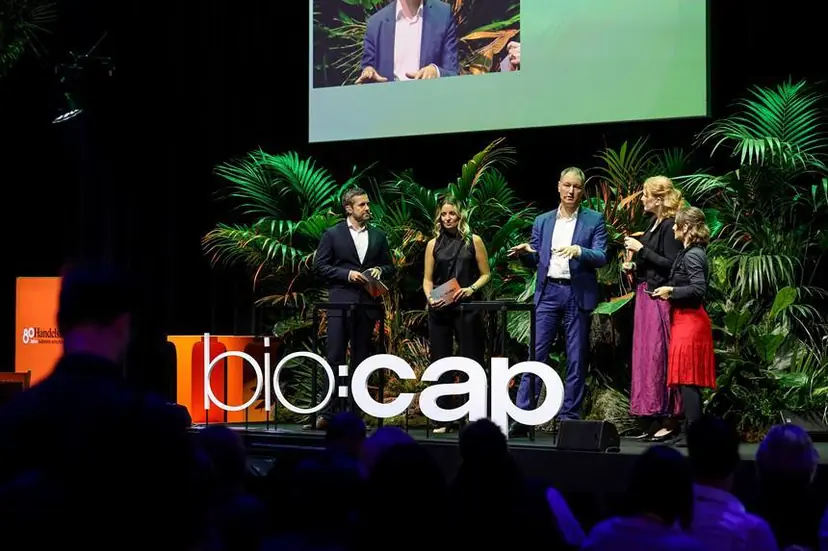
A Professional Event for Industry Insiders, Focusing on ‘Substance’ Over Scale
Held for the first time this year, bio:cap had a different atmosphere compared to typical trade fairs. Large exhibitions often bring to mind crowds of general visitors, expansive halls, promotional brochures, and booths trying to grab passersby. However, bio:cap was never intended to be that kind of event. It was not for the general public, but rather a professional event designed for stakeholders in the bio, healthcare, AI, investment, clinical, and pharmaceutical industries to meet each other with precision.
This, in fact, was the biggest strength of bio:cap. It was not an event that touted performance through visitor numbers, but one that valued who attended, what conversations took place, and whether those discussions could lead to actual PoCs (Proof of Concepts), investments, clinical collaborations, or European market validation. Even if not many people passed by the booths, it was more important to meet a single qualified investor, hospital official, or pharmaceutical business development manager.
The event structure was particularly impressive. Conferences, pitching, partnering, and investor meetings were held during the day, followed by exhibitor parties and networking events in the evening. Conversations that were difficult to have in official meetings flowed naturally in the evening settings, and it was possible to reconnect with someone you briefly greeted on the first day at their booth or meeting room the next day. Given that trust is crucial in the bio field and multiple conversations carry more weight than a single pitch, this configuration was highly practical.
Although bio:cap was held in Berlin for the first time, it did not intend to remain a local event. It connected with the bio ecosystem in Boston, USA, and indeed, many participants from the American bio ecosystem were present. The scene where Europe’s research capabilities, Germany’s clinical and manufacturing infrastructure, and the American-style investment and scale-up culture met in one space showed how Berlin intends to grow its bio ecosystem in the future.
Berlin’s Hidden Attraction: The Bio Industry
Until now, Berlin has been strongly perceived as a city for fintech, SaaS, e-commerce, mobility, and AI startups. Meanwhile, the centers for Germany’s bio and pharmaceutical sectors have been more frequently cited as Munich, Heidelberg, the Rhine-Neckar region, areas near Cologne and Düsseldorf, or the southwestern German cluster connected to Basel, Switzerland. However, in recent years, Berlin has emerged as a new healthcare innovation hub, combining clinical, research, and digital innovation infrastructure such as the Berlin Institute of Health at Charité, the Hasso Plattner Institute founded by SAP co-founder Hasso Plattner, the health cluster Max Delbrück Center, and the Robert Koch Institute, which functions as a national public health institute.
The name that best illustrates this trend is HealthCapital Berlin-Brandenburg. HealthCapital is a regional brand and network that unifies Berlin and Brandenburg into a single healthcare and life sciences cluster.
In this region, biotech, pharmaceuticals, medtech, digital health, hospitals, research institutions, investors, and public agencies are closely linked. In particular, Berlin-Brandenburg is home to global healthcare, pharmaceutical, and medtech companies such as Bayer, B. Braun, Berlin-Chemie, Biotronik, Eckert & Ziegler, Pfizer, Sanofi, Takeda, and Thermo Fisher Scientific.
The reputation of these companies is important. It is proof that Berlin is not just an image of a free city where entrepreneurs gather, but is growing into a bio-health cluster that actually possesses industrial partners, clinical and research infrastructure, and a global corporate network. For a bio/healthcare startup, entering Europe is not just a matter of establishing a local subsidiary or participating in an exhibition. It requires validation at hospitals, passing the standards of regulatory agencies, collaborating with pharmaceutical or medical device companies, and convincing investors of long-term growth potential. In this respect, the HealthCapital Berlin-Brandenburg ecosystem can be a very interesting entry point for Korean startups.
5 Companies Challenging the Global Market
Korean bio and healthcare startups also joined this year’s bio:cap: MEDIAIPLUS, MEDIHUB, Ainex Corporation, NineBioWare, and Microt Inc. While their technical areas differ, they shared a clear common goal: connecting the medical and healthcare technologies developed in Korea with the European ecosystem of clinical, investment, and pharmaceutical/medical device industries.
MEDIAIPLUS is a company that develops an AI-based platform supporting clinical trial preparation, CRO selection, and clinical data analysis. One of the most difficult challenges for bio-ventures or pharmaceutical companies when developing new drugs is establishing appropriate clinical trial strategies, identifying competitive clinical status, and finding reliable CROs and institutions.
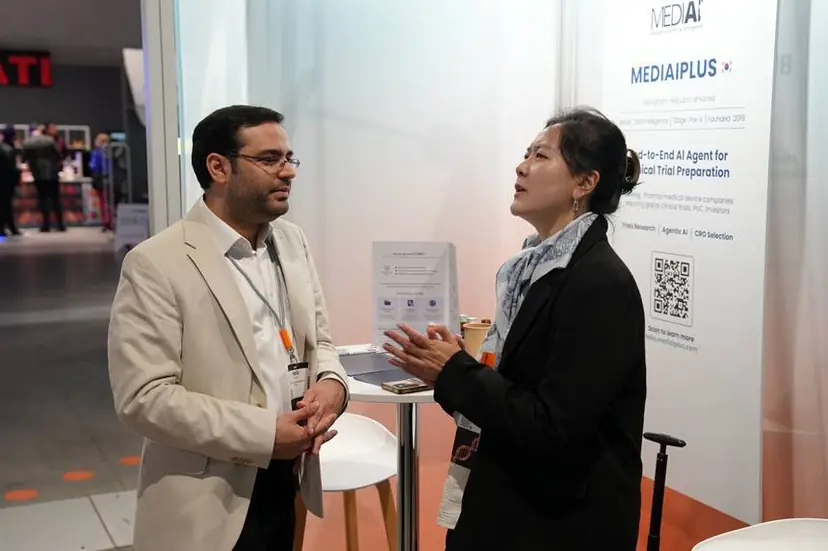
MEDIAIPLUS aims to make this process efficient through data and AI. Especially in Europe, where medical systems, regulations, and clinical institution structures are complex by country, there is a great need for data-driven decision-making in the clinical trial preparation process. On-site, MEDIAIPLUS drew attention by presenting a clear sense of purpose regarding clinical development efficiency during conversations with pharmaceutical companies like Bayer and Novo Nordisk, as well as CROs and biotech stakeholders.
MEDIHUB is a smart injection and drug delivery medical device company that reduces patient pain and increases the convenience of medical procedures for staff. For medical devices, the technology itself is important, but it is equally vital whether they are easily used in actual clinical settings, whether they do not hinder existing workflows, and how much they improve the patient experience. MEDIHUB’s solution focuses exactly on these points.
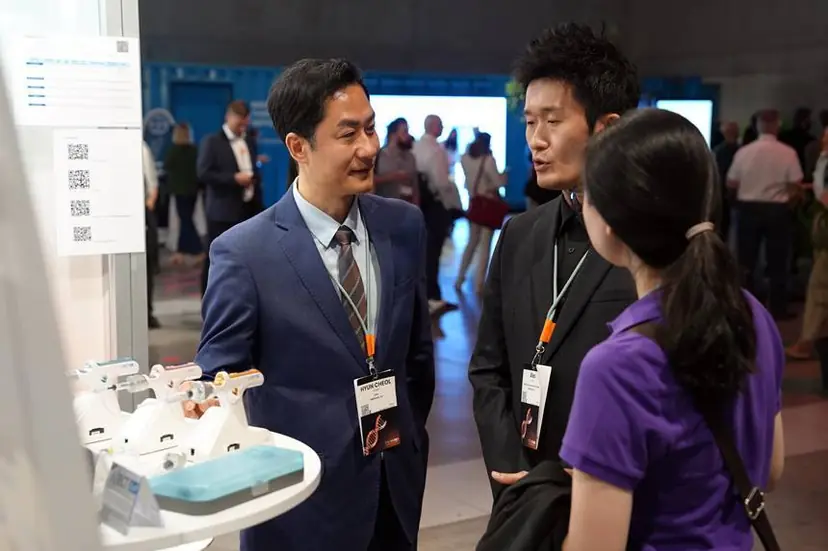
As medical device certification, distribution partners, and in-hospital usability validation are crucial in the European market, MEDIHUB explored possibilities for connections with medical device investors, distribution partners, and clinical networks at the event. Feedback was positive as they could address both patient-centered care and medical staff efficiency. In particular, Novo Nordisk, famous for its diabetes and obesity treatments, showed keen interest by visiting the booth for two consecutive days.
Ainex Corporation develops real-time AI diagnostic assistance solutions in the field of gastrointestinal endoscopy. Endoscopy is a widely used examination method in hospitals around the world, but the quality of results can vary depending on the proficiency and diagnostic focus of the medical staff.
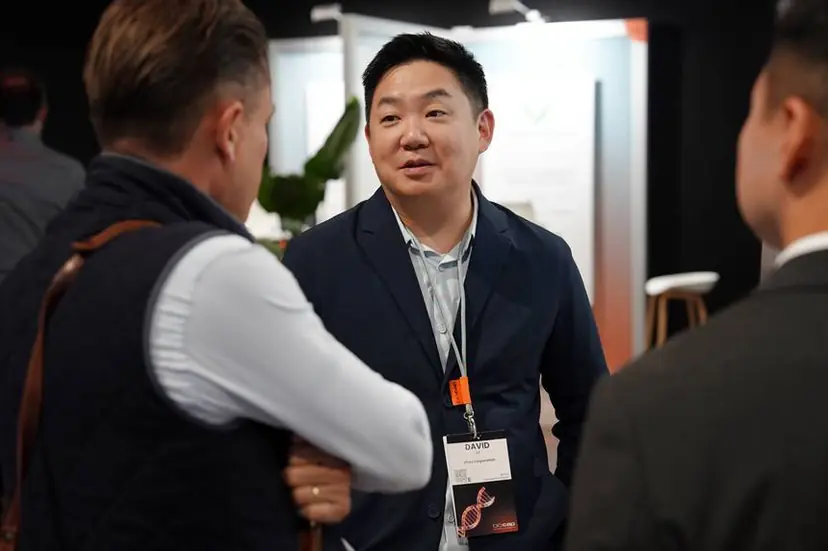
Ainex Corporation proposes a direction to detect abnormalities in real-time during stomach and colon endoscopies through AI and assist medical staff's judgments. For medical AI to enter the hospital workflow in Europe, clinical evidence, data protection, medical device regulations, and compatibility with existing equipment are all important. bio:cap became a stage where Ainex Corporation could directly discuss these issues with European hospitals, investors, and stakeholders in the medical device ecosystem. On-site, they were coincidentally connected with Vivantes, one of Germany’s large hospital chains, and had the opportunity to visit a hospital in Berlin to demonstrate the device to doctors.
NineBioWare is a blood-based ultra-sensitive diagnostic technology company aiming for early diagnosis of neurodegenerative diseases. Neurodegenerative diseases like Alzheimer's and Parkinson's are critical medical and social challenges in Europe, where the population is aging rapidly.
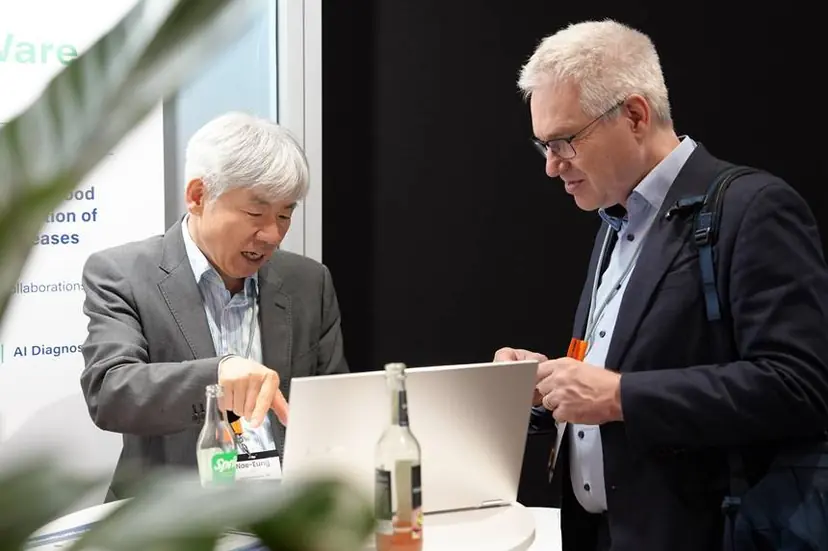
If early diagnosis becomes possible, it can create meaningful changes in various areas, including the timing of therapeutic intervention, patient management, and the selection of subjects for clinical trials. NineBioWare is still in its early stages, but for that very reason, meeting investors, research institutions, and the early innovation teams of pharmaceutical companies at an event like bio:cap was crucial. Along with the perfection of the technology, identifying which disease targets to prioritize, which clinical partners to verify with, and what evidence to accumulate in Europe were key tasks, and conversations evaluating these directions took place on-site. Notably, the Department of Neurology at Charité took a keen interest in NineBioWare’s solution.
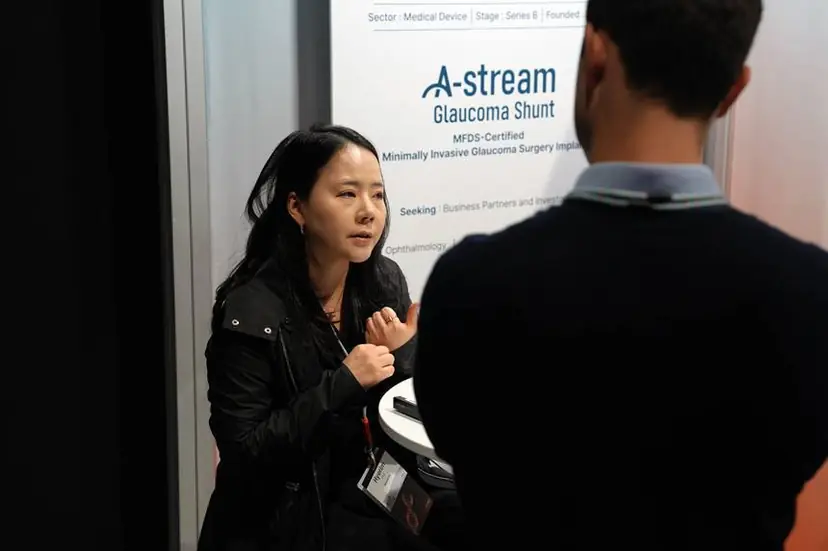
Microt Inc. is a medical device company in the MIGS (Minimally Invasive Glaucoma Surgery) field, specializing in minimally invasive ophthalmic implants for glaucoma treatment. Glaucoma is one of the leading causes of blindness worldwide, and demand for treatment is increasing alongside the aging population. Existing treatments have several limitations in terms of medication adherence, surgical burden, and long-term management. Microt proposes a solution that increases accessibility to glaucoma treatment with lower burden. In the European market, networking with ophthalmologists, clinical data, CE certification strategies, and securing distribution partners are key. At bio:cap, based on their clear expertise in ophthalmic medical devices, Microt elicited concrete discussions with medical device investors and clinical partner candidates. In particular, they gained the opportunity to meet with European investors, marking a good first step for business expansion.
The participation of Korean companies in bio:cap is meaningful not simply because “Korean startups participated in a European event.” What is important is that they tried to explain their respective technologies in a language that can be validated in the European market. Even if they are accustomed to explaining the technical power or the potential for hospital adoption in Korea, the questions are slightly different in Europe. What clinical evidence do you have in Europe? How will you respond to medical device regulations? How are personal information protection and medical data governance designed? What business models are possible within insurance reimbursement or hospital procurement structures? If conducting a PoC, which hospitals, patient groups, and indicators will you use for validation?
bio:cap was a venue where these questions were unavoidable. And in that respect, it was beneficial for Korean startups. The failure of overseas exhibition participation often comes from “spreading the word widely but being left with nothing.” However, at a highly specialized event like bio:cap, having in-depth conversations with a small number of stakeholders can be a greater achievement than promoting to an unspecified crowd. Korean companies met with investors, hospitals, pharmaceutical companies, and research institution officials on-site to try to solidify the next steps for their European expansion. In particular, the approach of discovering PoC and investment opportunities together is a very realistic strategy for entering the European market.
The European bio and healthcare market has high barriers to entry as much as it has great opportunities. If it is a medical device, CE certification and clinical evaluation are required; if it is digital health or medical AI, data protection, algorithm validation, and hospital adoption procedures are important. If it is a bio-diagnostic or clinical trial platform, trust must be secured between pharmaceutical companies, CROs, hospitals, and research institutions. For Korean companies, technical prowess alone is not enough. Local partners, clinical evidence, regulatory strategies, and logical arguments to persuade investors are also required.
In this aspect, bio:cap was a good testbed for Korean startups. Berlin might be difficult to call the largest bio-manufacturing cluster in Germany in the traditional sense yet. However, it has very strong potential in connecting AI and digital health, clinical research, policy, and investment networks. Strong hospital infrastructure, the translational medicine perspective of the Berlin Institute of Health, the digital capabilities of the Hasso Plattner Institute, and the industry-research-policy network centered on HealthCapital are Berlin's unique combination. With the addition of global pharmaceutical companies, bio-investors from the U.S. and Europe, and German economic media, bio:cap showed the potential to grow into an important networking platform in the future European bio-ecosystem, beyond being just a new event.
The author, Lee Eun-seo, majored in law in Korea and studied theater in Berlin. Based in Berlin, a city of art and a European startup hub, she leads 123Factory, growing alongside the city and connecting the startup ecosystems of Korea and Germany.