

[비즈한국] In 1920s Hollywood, studios discovered new directors and tasked them with directing experimental projects on low budgets. During the Great Depression in the 1930s, as economic hardship led to a decline in theater attendance, theater owners began actively screening these low-budget experimental films. This was the double-bill or double-feature strategy, where two films were shown simultaneously. It was a marketing tactic that allowed audiences to see two movies for the price of one ticket, much like how buying a cassette tape in the past meant you could listen to both Side A and Side B.
While these films are called 'B-movies' in Korea, there is no such thing as a B-movie in reality; there are only A-movies and B-movies. The term was simply translated in Korea to describe low-budget films. The term 'B-movie' is said to have been first used for the 1935 film 'Ladies Crave Excitement'.
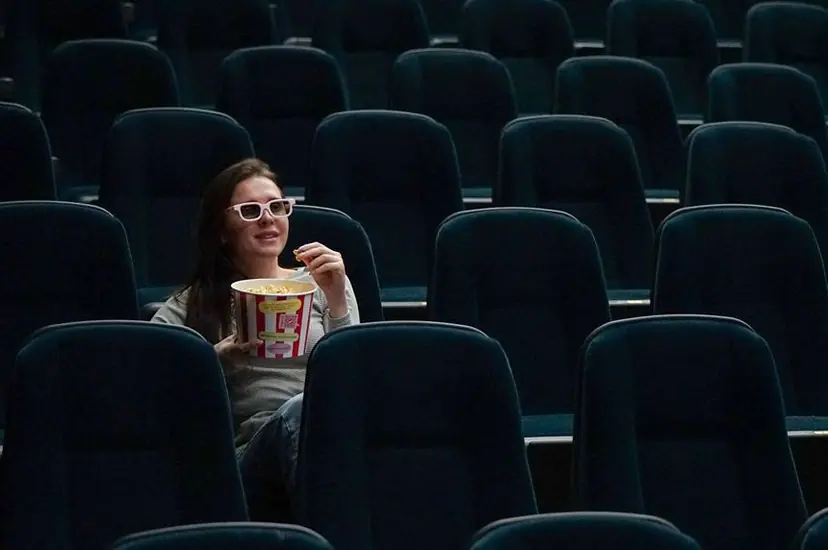
Since neither film could afford a massive production budget, one was produced on a smaller budget and with a smaller team in a short period. As a result, experimental and diverse genres were attempted. While they may have lacked polish, unconventional direction was possible. It was possible to identify independent or genre-specific characteristics not found in mainstream commercial films. Although these films differed from the hit formulas of mainstream commercial cinema, they provided a fresh stimulus and built a cult following through their unique concepts, styles, and direction.
The film industry often gained a reservoir of talent from which it could overcome the limitations of A-movies and move forward through B-movies. Because of this, a tendency emerged to view B-movies as superior. Since new directors who would later become masters came from these B-movies, it was not a bad idea to pay attention to them early on. However, there is no absolute truth in B-movies, nor is there a fixed set of B-movie styles or identities.
Nowadays, social media acts in the role of the B-movie of the past. Crucially, YouTube has suddenly become the reservoir for Hollywood films. Beyond simply generating buzz on social media to increase theater attendance, it now intervenes directly from the film production stage. A representative example is the film 'Backrooms'. This film is a production of A24, the American independent film production and distribution company that produced 'Minari'. A24 cast Kane Parsons as the director three years ago. He was only 20 years old at the time. Moreover, he was a YouTuber.
Why did A24 hire a young YouTuber as a director? Naturally, because he had made a film. Kane Parsons created a 9-minute mockumentary titled 'Backrooms' in 2022, which became a global sensation through YouTube. 'Backrooms' refers to a backstage area, and the material actually stemmed from content that had long garnered attention—a single photograph.
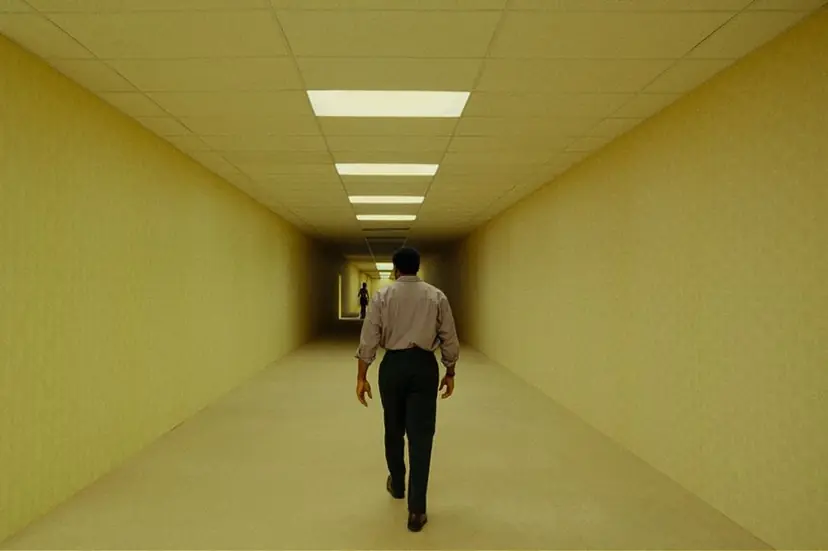
On May 14, 2019, a photograph was uploaded to the mystery board /x/ of the online community 4chan. It depicted an unrecognizable space where rooms with yellow wallpaper seemed to continue indefinitely, and the interior appeared damp. This photo soon became an 'urban legend.'
The urban legend narrative combined with 'noclip' to create a phenomenon of horror. The term 'noclip' originated in gaming, referring to the ability to bypass standard gameplay rules, pass through objects, or move freely through restricted areas. In other words, it is a setting where players can pass through walls or obstacles at will. Now, it refers to the phenomenon of entering and becoming trapped in a dimension or reality beyond our own. People feel more fear when familiar spaces feel unfamiliar. If a space should be occupied but is completely empty, and if it is a bright yellow room that feels damp with only the humming sound of fluorescent lights, it feels like something terrifying is about to happen. This was amplified and spread as content. 'Backrooms' topped the box office in its opening week, defeating other major commercial films, and earned 14 times its 14 billion won production cost in just one week.
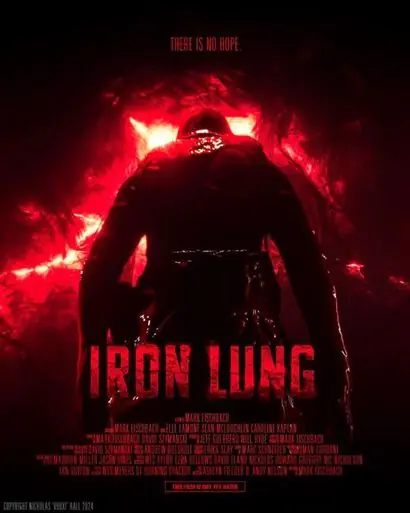
There are several directors who started as YouTubers. Markiplier, a YouTuber with 38 million subscribers, directed, produced, and starred in the film 'Iron Lung' in January 2026, based on the indie horror game of the same name. He gained attention for his horror short 'Milk & Serial,' which he produced for just $800 and released for free on YouTube in 2024, leading him to direct 'Iron Lung'.
The horror film 'Oddity', directed by YouTuber Curry Barker (born 1999, age 26), was an ultra-low-budget production with a budget of $750,000, but it grossed $16 million in its opening weekend alone. Ultimately, it recorded profits of over 300 billion won. Thanks to this success, he was tapped to direct and write the reboot of the classic horror film 'The Texas Chain Saw Massacre'.
David F. Sandberg continuously uploaded short horror films to YouTube until his short 'Lights Out' caught the eye of the industry, leading him to direct the feature film of the same name, as well as 'Annabelle: Creation' and 'Shazam!'. The Philippou brothers (Danny & Michael Philippou), who run an action-comedy YouTube channel with about 7 million subscribers, directed the feature film 'Talk to Me' (2023).
Those from YouTube fall largely into two categories. One involves using items shared on social media or using those platforms as a launchpad for their work. Furthermore, they create genre-focused works with cult followings, such as horror. These characteristics mirror those seen in B-movies. In the future, there is a high possibility that film directors, materials, and stories will be discovered through these services, and it seems to be only a matter of time before this happens in Korea as well.
Whether they are called B-grade films or B-movies, the fact that new experiments and attempts originate from social media may be unfamiliar to the older generation, but it is natural for the new generation. It seems the day is not far off when this will be accepted as the norm for future generations. For this, it is time to prepare and adapt. However, it seems that a wider range of experiments and attempts are needed rather than being biased toward specific genres. In any case, we are in a media climate where reasons to visit the theater are always needed.
The author, Kim Heon-sik, has walked through and navigated the forest of pop culture phenomena since his 20s, driven by the belief that there is a way to make the world a better place through culture. He continues on the same path with the same faith in the 21st century, where artificial intelligence and quantum computers are active.