

[비즈한국] We live in an era where a single advertisement tagline can be interpreted as a brand's 'stance.' As 'political consumerism,' where consumption becomes an expression of political views, becomes a part of daily life, even words and expressions carelessly chosen by companies are re-read within social and political contexts. Heightened consumer sensitivity has become a domain that companies must duly consider, but at the same time, concerns are growing that if all expressions are filtered out based solely on the potential for controversy, only 'bland, safe messages' will remain. The Starbucks '5·18 Tank Day' controversy and the promotional text case for books by online bookstore Aladin illustrate these two dual challenges.
Intentions do not matter… The phenomenon of becoming a 'stance' the moment it is read
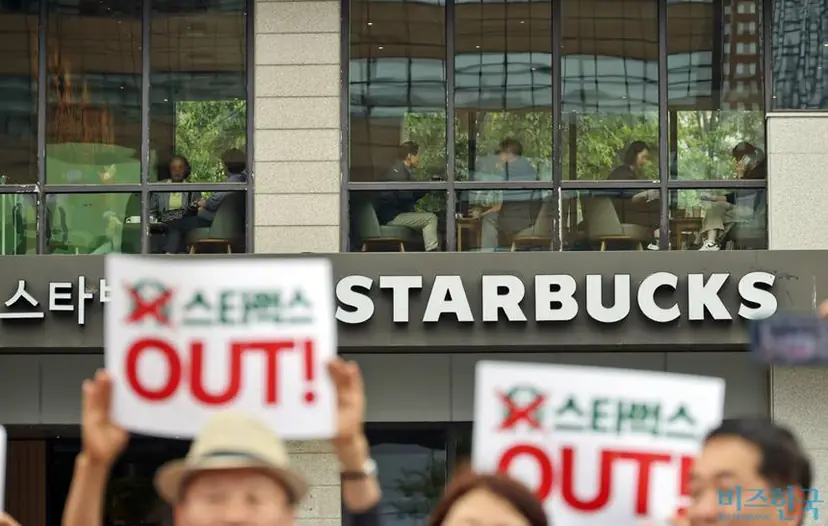
The most prominent example is undoubtedly Starbucks. It proceeded with a promotion containing the phrase 'Tank Day' ahead of the 5·18 Democratization Movement anniversary, faced criticism for failing to consider historical context, and issued an apology and follow-up measures, but the aftermath has not easily subsided. Musinsa faced criticism for trivializing the Park Jong-cheol torture-death incident after a phrase used in a 2019 sock advertisement, 'I tapped the quick-drying desk, and it dried with a bang,' was belatedly re-examined. However, Musinsa received good evaluations for its crisis response by issuing a sincere apology, albeit belatedly. It has essentially become a structure where consumer complaints raise corporate sensitivity, and how a company responds to this determines brand evaluation.
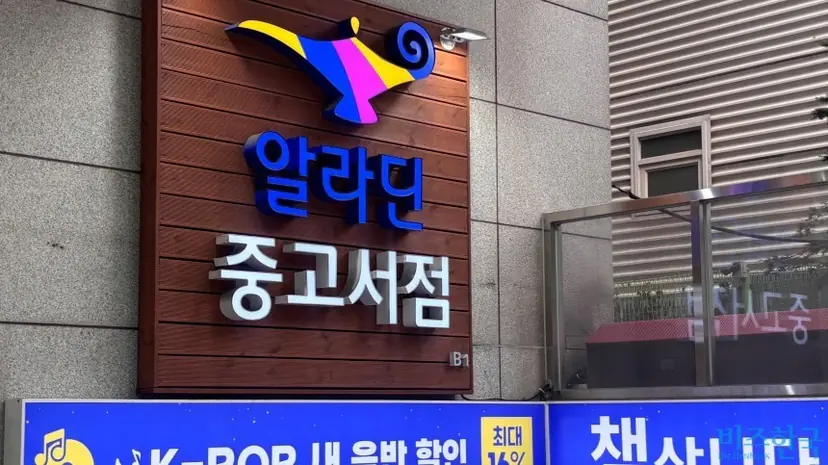
On the other hand, the Aladin case is different. Aladin Communication sent promotional texts to members on the 5th introducing political commentator David Packman's new book, 'Those Who Only Believe What They Want to Believe.' The text included phrases from the book such as, "We protected democracy through voting," and "To survive with one's sanity in a world where the far-right is rampant and fake news echoes ever louder." Some conservative-leaning consumers interpreted this as the bookstore expressing a political stance, leading to boycotts and member cancellations. The message of the book and the message of the bookstore became conflated, causing controversy.
With controversies continuing regardless of political orientation, corporate responses are converging on strengthening comprehensive inspections. The food and beverage industry, ahead of the peak summer marketing season, is in a mood to completely re-examine its marketing from the planning stage. Binggrae005180 is debating whether to proceed with its annual event of delivering its 'Tank Boy' ice cream to military units during the Month of Patriots and Veterans and Armed Forces Day. This is because, as the Starbucks 'Tank Day' became a target, reactions online asked, 'Is Tank Boy okay?' Events that had been held for years became subject to re-examination simply because they shared the same controversial expression or word.
Fashion platform Ably is known to be supplementing its internal inspection system, such as by sharing the meanings of potentially controversial expressions or online memes within the company. AI-generated text is no exception. An industry official said, "With AI usage high, especially among young employees, we are in a situation where we have to re-verify even how it might be connected to specific incidents or online memes in what context."
'Filtering' is a safety measure, but… all that remains is mediocrity
It is the common diagnosis among industry experts that the trend of consumers holding companies accountable for their expressions is irreversible. Lee Jong-woo, a professor in the Department of Distribution and Marketing at Namseoul University, said, "In the past, noise marketing sometimes worked to increase attention, but now it is an environment where controversy can lead directly to brand attacks," adding, "As consumer sensitivity changes rapidly, it is important for marketers to look more closely at consumer psychology and filter out expressions that could be perceived negatively in advance."
However, there are also concerns about the method of filtering out all expressions by the same standard. The publishing industry reacts that it is difficult to view book promotional text by the same standards as general retail advertising. As bookstores are spaces that handle various social science books, it is explained that it is difficult to conclude the bookstore's political stance simply because it introduced a specific book. An official from a large bookstore said, "We always look at marketing copy with caution," while adding, "It is difficult to say that internal standards have changed significantly due to this incident."
There is also criticism that risk avoidance can lead to the uniformity of marketing. Kim Dae-jong, a professor in the School of Business Administration at Sejong University, stated, "Companies with a lot to lose, like large corporations, have no choice but to place more weight on risk management than aggressive marketing," adding, "If you try to avoid risks, there is a high possibility that only bland and safe messages will remain, rather than unconventional or unique ideas."
Ultimately, experts point out that what is required of companies is not a uniform 'filtering' based on the potential for controversy, but the sensitivity to read the social and historical context in which an expression is placed. As the Musinsa case shows, since the subsequent response determines brand evaluation rather than the controversy itself, avoiding it by settling for mediocrity without the capability to read context could be another cost that companies have to pay.