

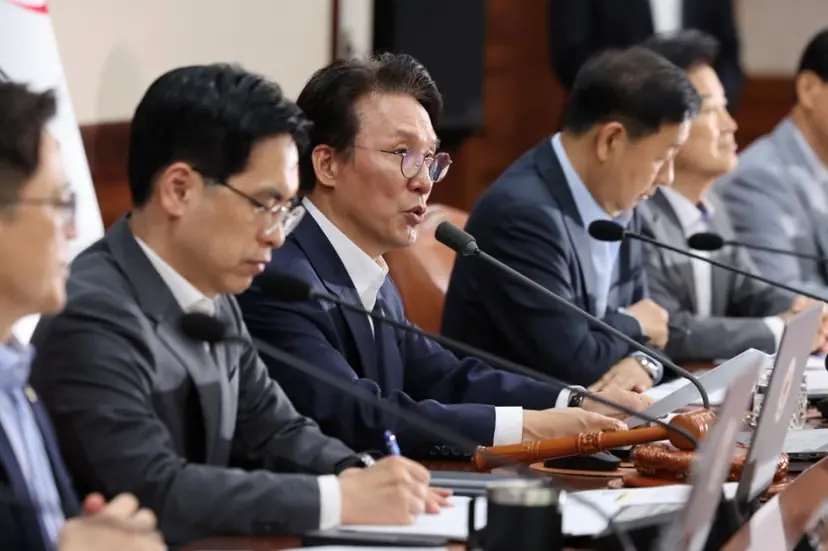
[비즈한국] On June 9, the 27th Steel Day, the enforcement decree for the so-called 'K-Steel Act,' designed to support carbon neutrality in the steel industry, passed the Cabinet meeting. While there is positive feedback that a government-level institutional framework has been established ahead of its full implementation on the 17th, there is also criticism that it falls short of driving substantial carbon reduction and a major industrial transformation.
Will the K-Steel Act Be the Savior of Korea's Steel Industry in Crisis?
The 'Enforcement Decree of the Special Act for Strengthening Competitiveness and Carbon Neutral Transition of the Steel Industry' was approved as drafted at the 25th Cabinet meeting. The K-Steel Act and its enforcement decree were enacted to support the low-carbon and high-value-added transition of the Korean steel industry, which is facing difficulties due to intensifying global oversupply and increasing trade uncertainties. The main contents of the bill include the establishment of a basic plan for the steel industry's carbon-neutral transition, the selection and support of low-carbon steel technologies, the expansion of demonstration bases, the introduction of a low-carbon steel certification system, and demand creation mechanisms.
Currently, the Korean steel industry is being urged to undergo a massive process transformation to survive amidst global environmental trade barriers, including China's dumping of low-priced steel products, severe domestic stagnation in forward industries like construction, and the European Union's (EU) Carbon Border Adjustment Mechanism (CBAM). The K-Steel Act is significant in that it has established the grounds for systematic institutional support amidst this crisis.
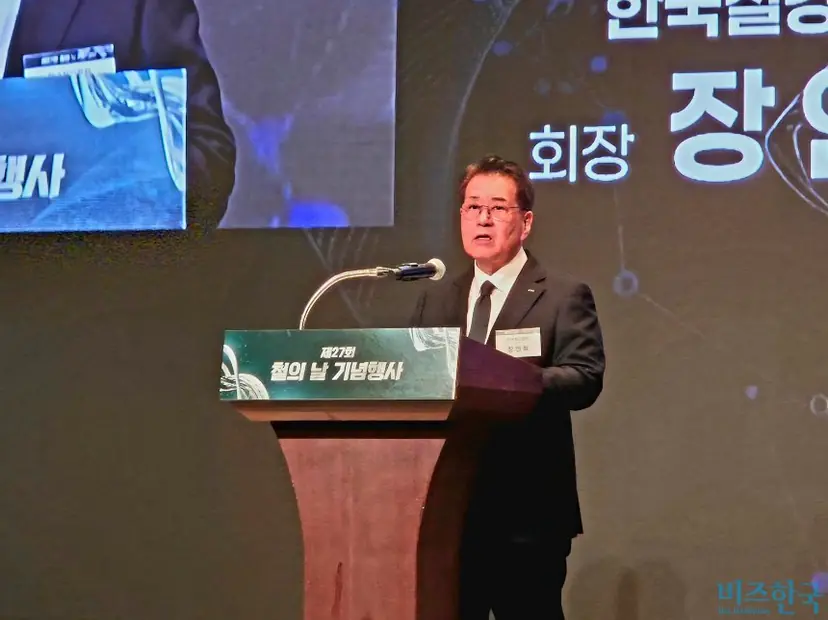
The crisis facing the Korean steel industry and ways to overcome it were also addressed at the 27th Steel Day commemorative event held at Lotte Hotel World in Songpa-gu, Seoul, on June 9. Jang In-hwa, Chairman of POSCO Group and Chairman of the Korea Iron & Steel Association, emphasized in his commemorative speech, "The steel industry is currently facing difficult challenges such as domestic demand stagnation, global oversupply, deepening protectionism, and the need for a successful decarbonization transition." He added, "We must accelerate the decarbonization transition centering on high-value-added, low-carbon products and secure market value for low-carbon steel materials so that our steel industry can attain a leading status in the global decarbonization market."
Lack of Large-Scale Commercialization Support… Concerns Over 'Lock-in' That Extends Old Facilities
Some are raising sharp criticisms, pointing out loopholes and limitations in the K-Steel Act's enforcement decree. The biggest issue pointed out is the lack of visible long-term financial support for the large-scale commercialization stage, which requires massive funding. The government's institutional support specified in the current decree is mainly concentrated on the level of expense subsidies and loans required for research and development (R&D) and demonstration stages, as well as some financial support for cooperative models.
Given the nature of the steel industry, which requires trillions of won in capital, companies will inevitably hesitate to invest initially for fear of risks if there is no clear government financial support structure for the full-scale commercialization and facility transformation stage after demonstration. Critics warn that if transitional technologies—such as merely improving the efficiency of existing blast furnaces—are recognized as low-carbon steel technologies, a huge budget could inadvertently create a 'lock-in' effect that prolongs the life of existing high-carbon facilities. The lock-in effect refers to the phenomenon where, once investments are made in specific technologies or old facilities, one becomes trapped in that path, making it difficult to transition to completely new, zero-carbon innovative technologies. To prevent this, it is pointed out that the system should specify conditional support linked to the closure of existing blast furnaces, as seen in major overseas countries, to prevent budget wastage on maintaining high-carbon facilities.
Ahn Hye-seong, a researcher at the Steel Team of Solutions for Our Climate (SFOC), noted, "The currently discussed financial support could actually contribute to extending the lifespan of existing blast furnaces." She pointed out, "Even if companies receive government support at the R&D or demonstration stage, the point where astronomical costs begin to incur for companies is the commercialization stage, and concrete details on the government's firm commitment to financial support at this stage are missing."
The demand-creation clauses intended to help low-carbon steel products settle into the market are also evaluated as ineffective. Article 33 of the decree and other sections are stipulated as recommendation clauses at the level of being able to 'request' public institutions to submit priority purchase plans for the following year. Simply having recommendation clauses where purchases are not mandatory is unlikely to act as a catalyst for forming an initial market for low-carbon steel, which companies have invested heavily to create.
Moreover, much of the steel currently used in the public procurement market consists of steel based on electric arc furnaces that melt scrap metal. Ultimately, the core target for achieving carbon neutrality is to completely replace existing blast furnace processes. To this end, a low-carbon transition in the high-end steel market used in automobiles, shipbuilding, and construction is essential. It is urgent to create incentives to lead the private sector's transition to purchasing low-carbon steel.
Vague Certification Standards; Concerns Spread Over 'Fake Reductions' If 'Mass Balance' is Allowed
The fact that the standards for legally defining and certifying low-carbon steel technologies and products are vague has also come under fire. The current enforcement decree does not present clear judgment principles regarding the certification of low-carbon steel products.
Civil society is concerned that if the standards are loose, the so-called 'Mass Balance' approach could be recognized as low-carbon steel. The mass balance method refers to a system where, despite carbon still being emitted in the actual production process, the carbon reduction volume is allocated only to a few specific products on paper to be recognized as low-carbon products. For example, when 1 million tons of steel are produced in a process where only 10% of carbon is reduced, 900,000 tons are sold as general steel, and the remaining 100,000 tons are sold as '100% carbon-zero steel.'
To prevent this at the source, there is a strong demand to specify the 'physical emission reduction-based' principle, which blocks fake reductions, as a core principle in the decree and public notices. Furthermore, it is pointed out that a strict 'step-by-step grading system (sliding scale)' should be introduced based on product-level carbon intensity to ensure consistency with international standards such as those of the International Energy Agency (IEA).
Regarding this, the subordinate public notice that will specifically define low-carbon steel has not yet been announced. An official from the Steel and Ceramics Division of the Ministry of Trade, Industry and Energy stated, "How to specifically define low-carbon steel has not been clearly decided yet, and we are continuing to review and discuss it with the industry." The official added, "We are examining various methods from multiple angles, and we are seeking a direction that helps the practical low-carbon transition of the domestic steel industry with the goal of announcing it in the second half of the year."
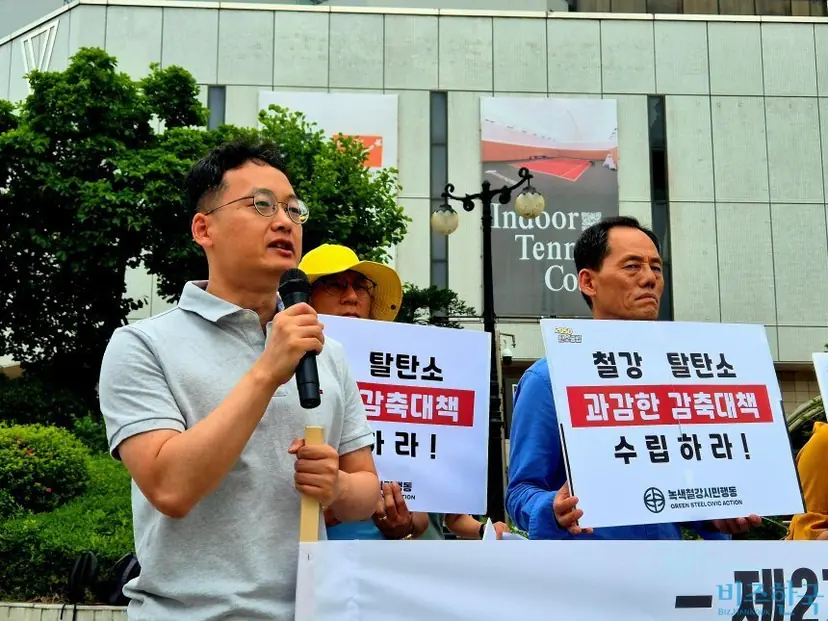
Meanwhile, a condemnation press conference by the 'Green Steel Citizens' Action,' comprised of nine civil environmental groups nationwide including SFOC, the Korean Federation for Environmental Movement, and Big Wave, was held in front of Lotte Hotel, where the Steel Day commemorative event took place on the 9th. They strongly urged the current government and steel companies to establish decarbonization implementation measures with speed that transcend the current sluggish system.
The Green Steel Citizens' Action criticized that even though the 2030 reduction target for the steel sector set during the Moon Jae-in administration was insufficient (2.3%), the Yoon Suk-yeol administration has not even transparently disclosed the sector-specific reduction targets at all. Furthermore, they expressed concern that by maintaining 100% free allocation of emission permits for most major carbon-leaking industries with high export proportions while finalizing the 4th Basic Plan for the Emissions Trading Scheme, the government is actually eroding the competitiveness of the domestic steel industry amidst overseas regulatory waves like the EU's Carbon Border Adjustment Mechanism (CBAM).
They also demanded prompt and responsible institutional improvement, stating that the government is failing to create a low-carbon market through green public procurement for large demand sources such as public construction projects and has failed to establish even the clear definition and criteria for 'green steel,' which could be considered its basic premise. Yoo Jong-jun, Executive Committee Member of the Green Steel Citizens' Action, said, "We must not only recommend the purchase of low-carbon steel products but also make it mandatory for the public sector to purchase them."