

[비즈한국] Apple's WWDC26 has begun. This year was a bit different from typical keynotes. As WWDC is a developer-centric event, the focus has long been on introducing new operating system features and development elements to help them create better apps. With so many OS platforms produced by Apple, the 2-hour keynote was always packed, and the delivery was so rapid that it felt breathless to watch.
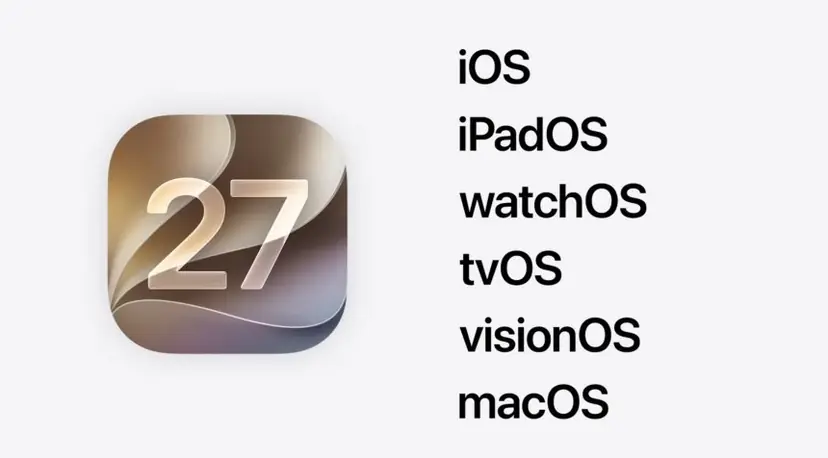
However, this year, there was almost no introduction to OS-specific features. Other than the usual fun of explaining that the nickname for the macOS, which is nearby, is 'Golden Gate Bridge', there were no announcements highlighting OS features. Instead, Apple stated that they have refined the foundation of all operating systems. The new operating systems have become faster and smoother through optimization.
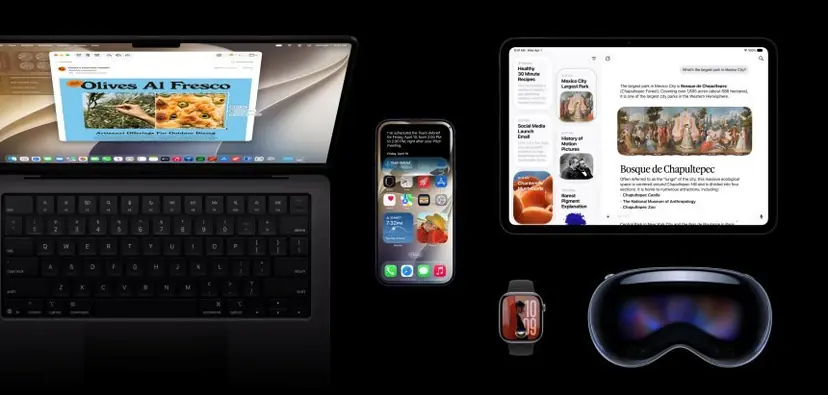
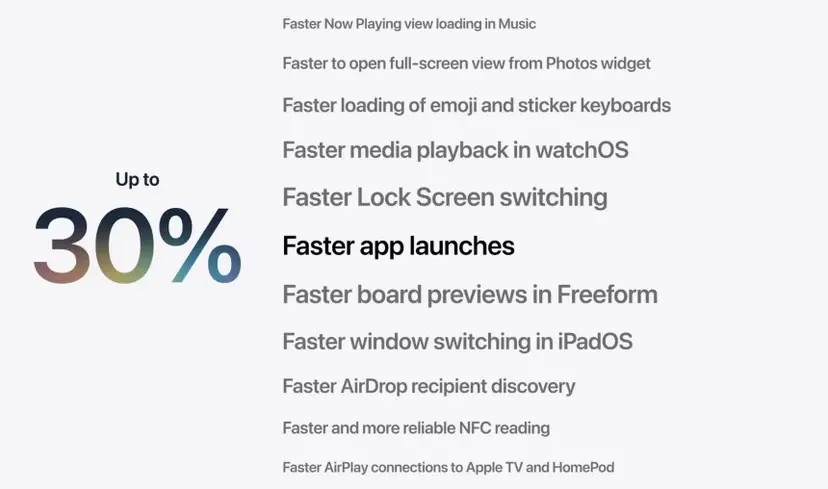
Apple completely redesigned the CPU scheduler for all devices and operating systems and improved overall system performance, including memory usage, to increase the operating system's direct responsiveness. The animation effects and responsiveness visible to the eye when flipping screens or switching between apps have improved. App launch speeds on iPhone and iPad have also increased by about 30%.
The speed of loading content, including the photo library, is said to be about 70% faster, and sending files via AirDrop has improved by 80%. The speed of browsing and transferring files on the iPad has increased fivefold.
In particular, the change to the CPU scheduler is expected to have a significant impact. While the latest processors already have better CPU schedulers, refining this at the OS level allows even devices released a long time ago to distribute tasks to the processor more effectively. This iPhone OS update applies to all devices capable of running iOS26, covering all devices since the iPhone 11. Users will likely feel that their devices have become snappier.
Everything else proceeds as a policy covering Apple's entire ecosystem rather than features unique to specific OSs or devices. This isn't simply because there were no OS improvements. Such a shift in presentation style has been predicted for a long time. While there are differences in the UX that each device's OS must provide, the apps running within them have effectively been integrated into a single environment, and since users perceive devices based on those apps, it is no longer appropriate to talk about each device individually. It often leads to repeating the same changes for every device.
Apple Intelligence-Centered Experience is Key
Furthermore, since the core of the device experience now shifts from the OS to Apple Intelligence, OS features are no longer the protagonist. 'Siri', which was previously just a single feature, now effectively takes on the role of another 'operating system' that runs all applications, from phone calls to messages, calendar, and even Apple Music. The role of the existing OS—launching apps, finding features, and issuing commands when something needs to be done—is now replaced by Siri through voice.
As expected, most of the keynote focused on the evolution of Apple Intelligence and the new Siri. Earlier this year, Apple decided to work with Google to develop the core foundation model for Apple Intelligence. In particular, for the language model, the second version of an on-device AI model that reflects various human senses such as language, images, and voice based on Google's Gemini will be applied to the devices.
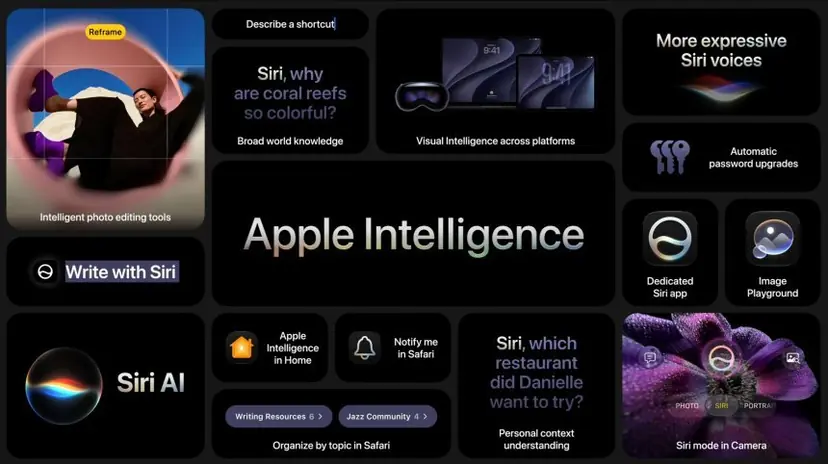
Through cooperation with Google, the precision of the language model has increased, allowing it to handle spelling corrections and summaries far more accurately in all text areas, and it interprets images and cameras with much more accurate and extensive information than before. The 'Clean Up' feature, which removes unnecessary elements from photos, was also a constant point of comparison, but it now provides accurate processing at a level similar to Google's service.
Ultimately, the expectations for Apple Intelligence were difficult to resolve with the first-generation model, and Apple decided to solve all problems by developing a second-generation intelligence model based on the most advanced general-purpose model. They might return to using a completely proprietary model someday, but for now, the direction regarding the sudden rise of AI is clear, and they are moving with the simple answer that achieving that goal requires an advanced model.
Naturally, Siri based on this model is now able to do its part. The new Siri has been named 'Siri AI'. Like the existing Siri, it issues commands and obtains information through conversation. However, as discussed two years ago, it understands the context of all input based on personal information within the device and provides more detailed answers. Above all, it now leads to appropriate actions.
Siri AI: Becoming an AI Agent That Reads Context and Acts
Apple's presentation was also centered on how Siri AI works in each app, rather than the previous OS-by-OS breakdown. The main flow is to accurately understand the content of the conversation and take action accordingly. The question, "When is the World Cup opening and what is the match schedule?" leads to a follow-up like, "What is the national dish of the two countries playing that day?", creating an appropriate list of foods, and even sending invitation messages to members of a group chat to come for a cheering party along with the time.
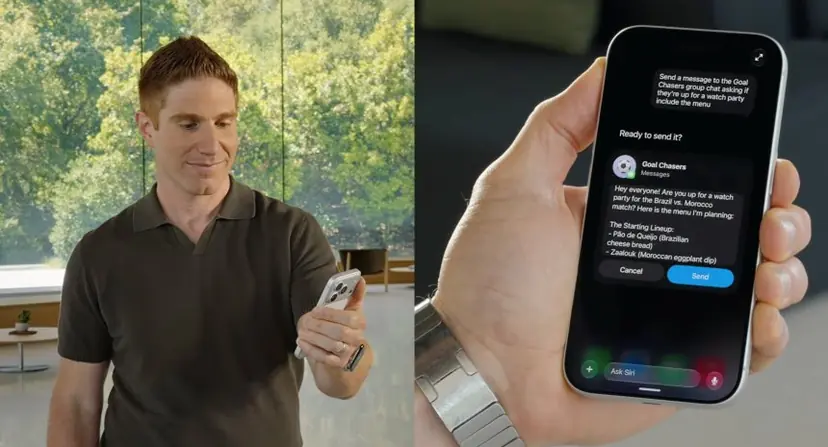
While exchanging messages, Apple Intelligence reads the context to determine whether to put the content of a specific message into the calendar or save it separately as a memo. The core of Siri AI is ultimately 'action'. All actions using a smartphone end up finding information and accomplishing a purpose. The direction Siri AI looks toward is also focused on what to do in the end.
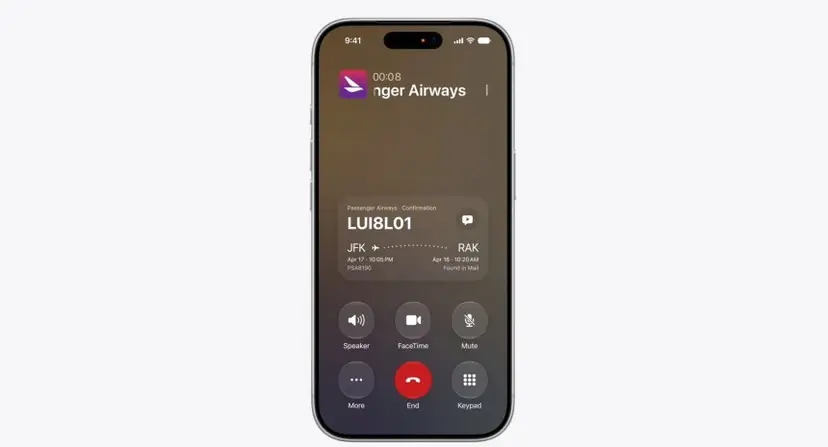
Sometimes it works very simply and clearly. There are several reasons for calling an airline. It would likely be for things like reservations, changing flight schedules, or seat bookings, but since Apple Intelligence already indexes all messages, emails, and schedule information on the iPhone, it has the reservation information, and as soon as you call the airline, it displays the information needed for the consultation, such as schedules and reservation numbers, on the screen right away.
Although it is not yet in its complete form, Siri AI can be read as heading down the path of an agent AI. In effect, Siri AI keeps an eye on all information and actions behind all the apps it has been granted permission to use and suggests what action to take at the right moment. Going further, it seems it will embrace the role of an agent AI like 'OpenClo' recently installed on Mac, which handles assigned tasks on its own. Google has already begun that journey online with 'Gemini Spark'. Apple will eventually handle all of this internally on the device, and with this Apple Intelligence and Siri AI, it is taking its first full-scale step in that process.
Late But Clear Direction: Time to Create an 'Apple-like' Experience
Apple Intelligence and Siri now seem to have neared people's expectations. However, we will have to wait a little while for Korean. While Apple Intelligence and Siri AI will work in almost every language, including Korean, starting with the developer beta OS that was released immediately, the official distribution this fall will be targeted only at users in the U.S. using English. It will then expand to various languages.
Apple unveiled Apple Intelligence and Siri on this stage exactly two years ago, but it took longer than expected for it to become a reality. That shows how difficult AI is, and Apple walked a rough road by setting a major goal of handling a significant portion of it alone and within the device. However, what Apple tried to show through the keynote wasn't a sudden story, but rather things Apple had long intended to do with artificial intelligence. It was just that it wasn't perfect due to device performance and early-stage AI technology at the time.
The assessment that 'Apple is late' is clear, but because Apple knew what it needed to do, the path it had to take was clear, regardless of the method, such as applying Google's model. Of course, the Siri that will be shown in this OS27 will not provide the world's most outstanding AI experience immediately. But now, the direction and the ingredients are ready, and devices with powerful processors to handle them are beginning to spread. Now it is time to show AI in an Apple-like way. The important thing is not whether 'Apple possesses the source technology' but 'creating a convenient experience with appropriate technology'.