

[비즈한국] OCI Holdings010060 is accelerating the restructuring of its pharmaceutical and biotech business. A key executive from the holding company has been tapped as the one-year CEO of Korea Union Pharm080720, which was acquired by the subsidiary Bukwang Pharm003000. His role is to serve as a "relief pitcher" to consolidate the fragmented value chain and boost profitability. The market is now watching whether the post-acquisition integration of Korea Union Pharm will serve as the catalyst to speed up OCI Holdings' process of acquiring additional shares in Bukwang Pharm.
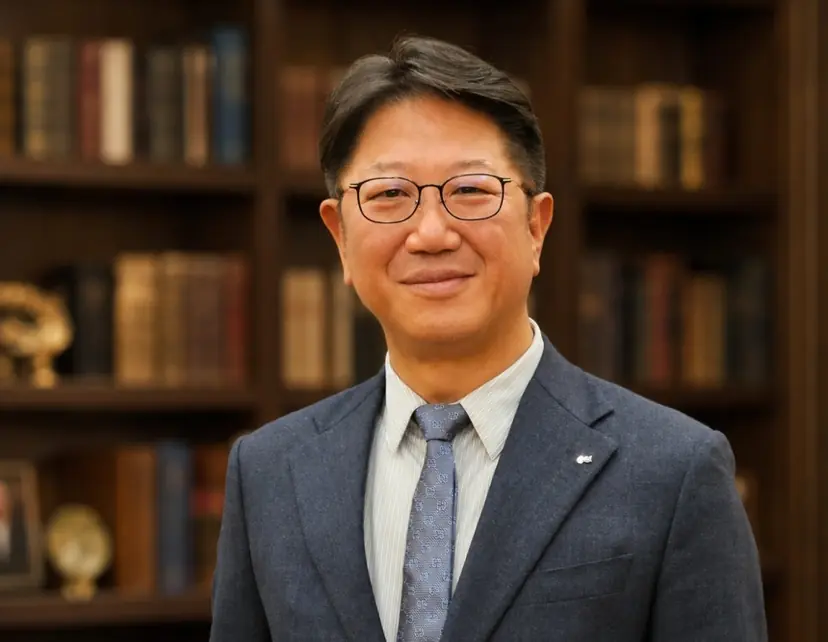
Korea Union Pharm is scheduled to hold an extraordinary shareholders' meeting on the 23rd to appoint Vice President Seong Gwang-hyun, who previously served as Executive Director of HR at OCI Holdings, as an internal director and officially inaugurate him as CEO for a one-year term. As a key personnel expert within the group, his placement at the forefront of a sub-subsidiary's management is interpreted by the industry as a sign that OCI Holdings is tightening its grip on its pharmaceutical business.
He is a figure who has steered the group's internal decision-making and organizational operations while overseeing HR and general affairs at OCI Holdings. He also led the acquisition of Korea Union Pharm while managing the Bukwang Pharm acquisition task force (TF).
Given that he has been appointed for a one-year term, CEO-designate Seong's role appears clear: to generate synergy between Bukwang Pharm and Korea Union Pharm in the short term. Until now, Bukwang Pharm has struggled to improve profitability due to limitations in its in-house production infrastructure and the cost burden of external contract manufacturing (CMO). Based on his organizational leadership and ability to integrate corporate cultures, it is expected that Seong will focus on serving as a central point for organizations that have worked in different environments, ensuring that Korea Union Pharm's production facilities are perfectly combined with Bukwang Pharm's R&D and sales networks.
Industry experts predict that if the value chain of 'OCI Holdings (Capital/Strategy)-Bukwang Pharm (R&D/Sales)-Korea Union Pharm (Production)' operates stably and leads to performance improvements, the process of OCI Holdings acquiring additional shares in Bukwang Pharm will gain significant momentum.
However, the difficult situation facing the OCI Group remains a variable. Under the Monopoly Regulation and Fair Trade Act (Fair Trade Act), the parent company, OCI Holdings, must secure 30% of the shares in its listed subsidiary, Bukwang Pharm, by September next year. As of the end of March, OCI Holdings held a 17.11% stake in Bukwang Pharm, meaning it must acquire an additional 12.89%. Based on the closing price on the 8th (4,090 KRW), this requires approximately 51.9 billion KRW.
However, the OCI Group's core business is currently surrounded by uncertainty. As the chemical sector, its primary cash cow, continues to underperform due to overlapping negative factors such as cooling demand in the global solar market and falling polysilicon prices, the company is running low on cash, leaving little room to focus on Bukwang Pharm.
In the first quarter, OCI Holdings' operating cash flow—the actual cash inflow on a consolidated basis—recorded a deficit of 66.7 billion KRW, a reversal from the 593 billion KRW surplus recorded in the same period last year. The cash and cash equivalents readily available at the end of the period also fell by 16.6% compared to the same period last year (986.5 billion KRW), totaling only 823 billion KRW.
In this situation, OCI Holdings has also announced large-scale investment plans to overcome the crisis in its core business.
To move away from the commodity-focused solar market and preempt the non-Chinese premium market, OCI Holdings is investing approximately 850 billion KRW solely into expanding its polysilicon production facilities in Malaysia. Furthermore, the company has utilized the full 125 million USD (approx. 190 billion KRW) secured from the International Finance Corporation (IFC) under the World Bank Group in March to establish a joint venture (OTSM) with Tokuyama of Japan and has begun construction of a high-profit, ultra-high-purity polysilicon plant for semiconductors. Effectively, trillions of won in capital expenditure are tied up in transforming the core business toward high-value-added advanced materials. With funds concentrated on upgrading its core business, the financial burden of purchasing additional Bukwang Pharm shares within the deadline is significant for OCI Holdings.
What happens if OCI Holdings fails to acquire the Bukwang Pharm shares by the September deadline next year? According to Articles 36 and 38 of the Fair Trade Act, violating the restrictions on holding company activities could result in massive fines from the Korea Fair Trade Commission of up to 10% of the book value of the violating shares, or require the forced disposal of shares under a corrective order. This could mean that the "de-chemicalization" gamble by OCI Holdings Chairman Lee Woo-hyun, who has invested years into the pharmaceutical business for diversification, could end up in failure.