

[비즈한국] Oral obesity drugs are set to shake up the global healthcare market. It is being evaluated that the oral formulation, which can be taken easily, has lowered the psychological barriers for patients who were hesitant to undergo treatment, thus opening an era of popularized obesity therapy.
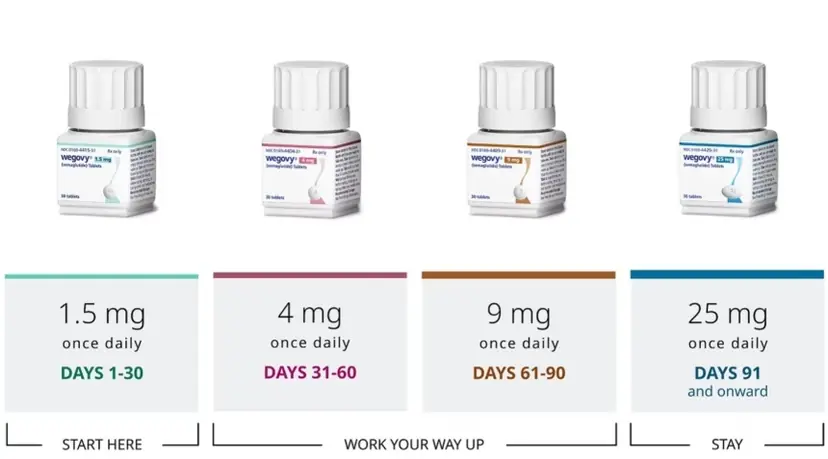
Novo Nordisk announced on the 7th that the oral obesity treatment 'Wegovy tablet' exceeded 3 million cumulative prescriptions just 5 months after its US launch in January of this year. Considering that it is estimated to have taken approximately 2 years and 6 months for the injectable Wegovy and about 11 months for Eli Lilly's Zepbound to surpass the 3 million mark, the market penetration speed of the Wegovy tablet is 2 to 10 times faster than that of injectables.
A notable point is that the rapidly growing number of Wegovy tablet patients did not switch from injections to tablets. According to Novo Nordisk, approximately 82% of patients who received the Wegovy tablet are new patients who have not taken GLP-1 (glucagon-like peptide-1) class medications, such as injections or diabetes drugs, in the past 12 months. This means that the oral formulation is expanding the obesity drug market itself rather than replacing existing treatments. IQVIA, a global pharmaceutical market research firm, projected that the global obesity drug market will reach between $74 billion and $131 billion (approximately 115 trillion to 204 trillion KRW) by 2028.
The Wegovy tablet offers a weight loss effect comparable to existing injectables. It was designed with a high dosage of 25mg to overcome the absorption limitations of tablets compared to injections, and clinical trials have confirmed an average weight loss of approximately 15%, which is nearly equivalent to the Wegovy injection.
The Wegovy tablet is considered a 'game changer' in the obesity drug market as it is the first GLP-1 pill that safely controls appetite by mimicking hormones, unlike older generation oral obesity drugs that caused side effects like fatty stools by inhibiting fat absorption or had clear limitations on long-term prescriptions due to being classified as psychotropic drugs (narcotics).
The market expansion speed of the Wegovy tablet is expected to accelerate even further.
Novo Nordisk has set the price of the Wegovy tablet in the US at $149 to $299 (230,000 to 460,000 KRW) per month, which is lower than the injection (at $1,349 per month). This is a radical measure considering the high entry barriers for patients due to the high price of injections. Furthermore, accessibility for patients is expected to improve significantly once the 'Medicare GLP-1 Bridge' program is implemented on July 1st, which allows Medicare-enrolled obesity patients in the US to access the Wegovy tablet for $50 (80,000 KRW) per month.
Unlike the injection, which struggled with initial market expansion, the Wegovy tablet has a lower risk of production bottlenecks due to supply shortages. While the injection suffered from severe shortages for years due to supply chain constraints for syringes, such as plastic pens and specialized needles, the oral formulation can utilize existing tablet production lines immediately, making mass production and smooth supply much easier.
To meet global demand for the Wegovy tablet, Novo Nordisk has continued to invest heavily in expanding manufacturing facilities at its Måløv plant in Denmark, an exclusive production base for oral drugs. In addition, it is accelerating investments in production infrastructure, such as acquiring key factories of the global contract manufacturing organization (CMO) Catalent for a total of $16.5 billion (approximately 24 trillion KRW) to expand an all-encompassing supply chain that covers both injections and oral drugs.
Meanwhile, interest in the domestic launch of the Wegovy tablet in Korea is also rising. Novo Nordisk announced its plan to launch officially in regions outside the US, including Asia, starting in the second half of this year; given that Korea is a hub for obesity drug trends in Asia, an early introduction is anticipated. Earlier this month, Novo Nordisk announced that it would launch the Wegovy tablet in the United Arab Emirates (UAE), the first country outside the US to do so.
The pharmaceutical and bio industry expects that the introduction process, including domestic approval applications, will begin in earnest as early as the second half of this year, making a launch by early next year a tangible possibility. Although no bridging clinical trials were conducted on Koreans, analysts suggest that the Ministry of Food and Drug Safety's review could be expedited, as Novo Nordisk has prior experience with the approval of 'Rybelsus,' an oral diabetes drug with the same active ingredient (semaglutide), without bridging clinical trials in Korea.