

[비즈한국] A library and sports center located on the basement floor of a newly built apartment complex in Seoul. A daycare center located inside the complex. At first glance, these look like spaces for apartment residents, but they are all public facilities operated and managed by the local government using taxpayer money. This is because they are public facilities donated (gibu-chaenap) by private developers in exchange for incentives such as floor area ratio bonuses during construction. However, as the benefits of some of these facilities lean more heavily toward the residents, questions are being raised about whether the true purpose of them being "public facilities" is actually being fulfilled in practice.
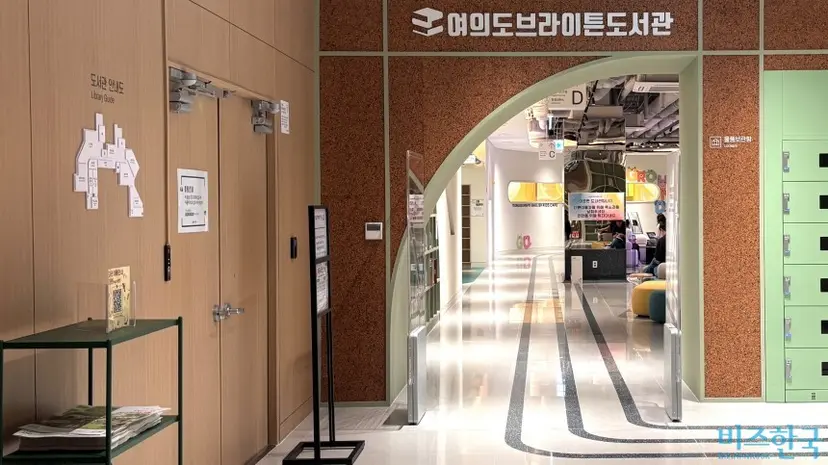
Brighten Library: A public facility, but with a ‘resident-only entrance’
The Brighten Library in Yeouido, Yeongdeungpo-gu, Seoul, is a donated public facility that opened on April 28th. During the development of the Brighten Yeouido apartment complex, the developer was granted a floor area ratio of 960.41% and donated 3,488㎡ of exclusive area on the basement floor. The district invested a total of 7.089 billion won, including 3.897 billion won of Seoul city budget, special grants, and district funds, to establish this space as a library. It also covers approximately 2.6 billion won in annual management and operating costs.
This library is a public facility open to any citizen. However, Biz Hankook's investigation confirmed that since the library was built in the apartment's basement, Brighten Yeouido residents can access it through an internal connecting passage. By using their household access card, they could travel between the apartment and the library through a passage connected to Building 101. Even when the library gets crowded shortly after opening, causing window seats and power-outlet seats to fill up quickly, residents have the advantage of accessing the library directly from within their complex. During a one-hour visit at approximately 1 p.m. on the 29th, the reporter observed about 7 residents entering and exiting through the dedicated passage. On that day, the window seats and power-outlet seats were completely filled without any empty spots.
A person surnamed A, who runs a real estate agency in Gangdong-gu, Seoul, promoted the apartment by saying, "While outsiders line up from the morning and have to turn back because it's full, residents have a completely different morning. They don't need to do an 'open run' because they can go straight into the basement floor of the library.”
Furthermore, it was confirmed that although some parking spaces were secured for the library at the time of the donation, parking is not currently supported for library users. Even though it is a public facility open to all district residents, its location inside the apartment building limits vehicle access for outside visitors.
Regarding this, the Yeongdeungpo-gu Office explained, "Yeouido is an area where parking fees are a heavy burden, so there is a possibility of abuse, such as non-library users visiting to receive parking benefits. Unlike a sports lounge, the library is a facility where users come and go frequently, making it difficult to verify actual usage, so we are not currently providing separate parking support.”
Regarding the resident access passage, they added, "It was already connected from the time the donation was received," and "It could not be blocked due to the need to secure evacuation routes.”
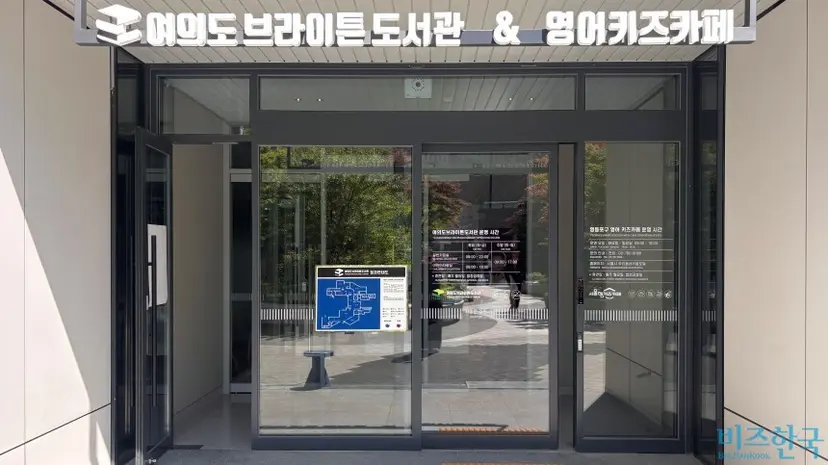
Donation: A means to secure life-oriented SOC, but issues with ‘resident priority’ remain
Donation (gibu-chaenap) is a system where ownership of land or parts of buildings is transferred to a local government during development projects. In this process, developers receive incentives in urban planning, such as relaxed floor area ratios. Effectively, this allows them to increase the number of households or build taller buildings. In this context, because public funds are invested into donated facilities, they must be accessible to all local residents, and the location and flow of the facilities are key criteria for determining their "public" nature.
In some cases, priority access is given to residents of a specific complex. National and public daycare centers grant priority admission opportunities to the children of residents in the apartment complex that donated the land. Under current standards, the entity donating the facility and the local government can agree to grant priority admission to residents' children for 30–70% of the capacity. The remaining capacity is allocated based on general admission priorities without distinguishing between residents and non-residents.
Although the system aims to expand national and public daycare centers, critics point out that general slots are insufficient in popular areas or newly built complexes. This is because, excluding the priority admission slots, the seats available for residents from outside the complex are limited. In particular, since national and public daycare centers receive government support, they are highly preferred by parents due to their childcare environment and operational stability.
In fact, as the number of daycare centers in Seoul decreased from 5,049 in 2021 to 4,010 in 2025, and with the continued preference for national and public centers, it has been found that some facilities have waiting lists exceeding 100 people.
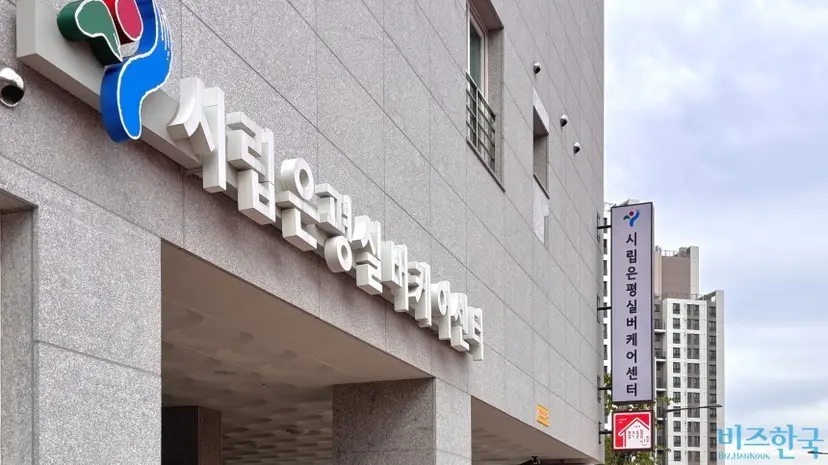
Welcoming cultural facilities, opposing 'elderly daycare': Mixed reactions to donated facilities
The construction industry notes that preferences for donated facilities vary by type. Facilities with high daily convenience, such as libraries, sports facilities, daycare centers, and kids' cafes, often increase resident satisfaction and serve as positive factors for the complex's value. Conversely, some facilities like day care centers for the elderly or public toilets are sometimes viewed as avoided facilities due to concerns about safety and potential drops in property values, leading to resident opposition.
In fact, the Sibeom Apartment in Yeouido, Seoul, experienced conflict in 2023 over the installation of a so-called "No-chi-won" (a daycare center for the elderly). At the time, the Seoul Metropolitan Government required the installation of a day care center for the elderly as a condition for the donation in exchange for allowing up to 400% floor area ratio and up to 65 stories for reconstruction, but residents opposed it for over a year, citing potential negative impacts on property prices.
Last month, in an apartment complex in Bupyeong-gu, Incheon, a series of civil complaints were filed demanding the immediate withdrawal of plans to install a public toilet in a children's park. The toilet was a facility the Bupyeong District 2 redevelopment project operator had agreed to donate, and it was included in the completion permit conditions, but nearby residents opposed it, claiming that if installed next to the front gate, it could cause odors and unsanitary conditions.
Experts argue that it is difficult to judge the "publicness" of a facility simply based on the fact that it was built as a public facility. This is because the perceived sense of public benefit can vary depending on actual operating methods. The argument is that one must examine whether the facility is sufficiently open to outside citizens and whether access opportunities are restricted during operation.
Baek In-gil, a professor at Daejin University's Department of Smart Construction and Environmental Engineering, stated, "Donations vary depending on project conditions and the nature of the facility, so it is difficult to judge them uniformly," adding, "Basically, if a facility is meant only for residents of a specific complex, it is difficult to view it as a proper donation." He continued, "General citizens, including those in the complex, should be able to use it with equal rights.”
Bae Sun-hye, an associate research fellow at the Architecture & Urban Research Institute, said, "Facilities that need to be widely opened at the living area level, such as libraries, sports facilities, and cultural facilities, require review on how they are well-established and operated from the perspective of public architecture," adding, "For donations, management standards regarding which facilities are accepted and how are important.”