

[비즈한국] Conventional medicine typically identifies and targets specific causes of disease. It works by blocking certain proteins, acting on specific receptors, or attacking harmful cells. In contrast, microbiome-based new drugs are therapeutics that adjust the body's internal ecosystem itself. Within the gut, good bacteria, bad bacteria, and neutral bacteria coexist in a state of balance; when this balance is disrupted, issues such as inflammation, infection, or immune dysfunction can occur.
Microbiome therapeutics do not just eliminate bad bacteria; they aim to stabilize the body's environment by supplementing good bacteria or utilizing beneficial substances produced by microorganisms. In simple terms, it is a method of restoring the entire forest by planting healthy trees and revitalizing the soil in a damaged landscape.
Despite being hailed as a next-generation biopharmaceutical due to this novel approach, the industry is struggling to clear the high threshold for commercialization. With FDA-approved new drugs failing to achieve commercial success, skepticism has emerged in the market. Major domestic companies have also entered 'survival mode,' halting clinical trials or restructuring their business models.
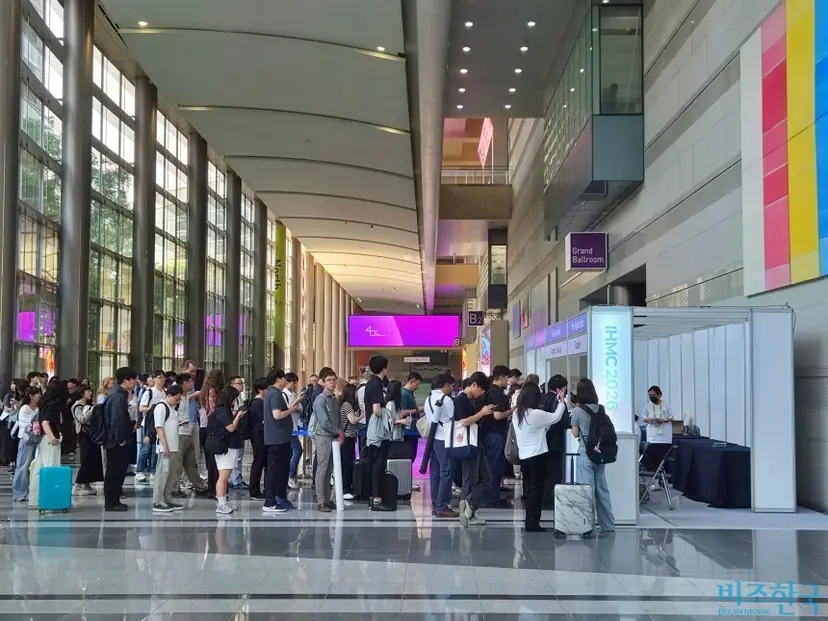
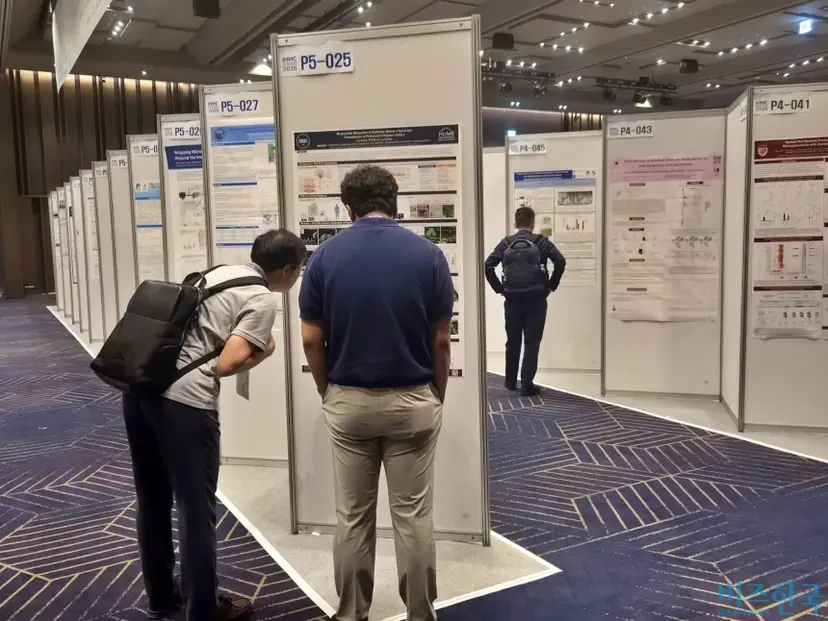
Amidst this, the 'IHMC (International Human Microbiome Consortium) 2026,' held at COEX in Seoul from the 3rd to the 5th, was bustling with over 700 attendees even on the first day, which was a public holiday—demonstrating that enthusiasm for the microbiome industry has not yet extinguished.
Stagnant Progress for New Drugs Due to Massive Commercialization Barriers
Market concerns regarding the microbiome are primarily driven by the sluggish performance of new drug candidates. 'Rebyota,' the world's first microbiome therapy launched by Ferring Pharmaceuticals in 2022, was highly anticipated as a treatment for recurrent Clostridioides difficile infection (CDI). However, with global sales figures not even publicly disclosed, it fell far short of market expectations, casting doubts on its commercial viability. Following Rebyota, Seres Therapeutics' 'Vowst,' introduced in 2023, also missed projections significantly with first-year sales remaining at only $19.6 million (26 billion KRW), leading to a business blow as its assets were eventually sold to Nestle Health Science.
This poor performance of new drugs has affected the domestic industry as well. Last month, CJ Bioscience announced the suspension of its domestic and international clinical trials for 'CJRB-101,' a microbiome-based immuno-oncology candidate for solid tumors, while Genome & Company, one of the first-generation domestic microbiome firms, shifted its strategy toward ADC (Antibody-Drug Conjugate) new drugs. Microbiome drugs are inherently difficult to develop because individual differences in ecosystems make it hard to prove a Mechanism of Action (MoA), leading to the perception that achieving statistical significance during development is more challenging than for conventional drugs.
Transformation for Survival: 'Securing Autonomy' Through Wellness
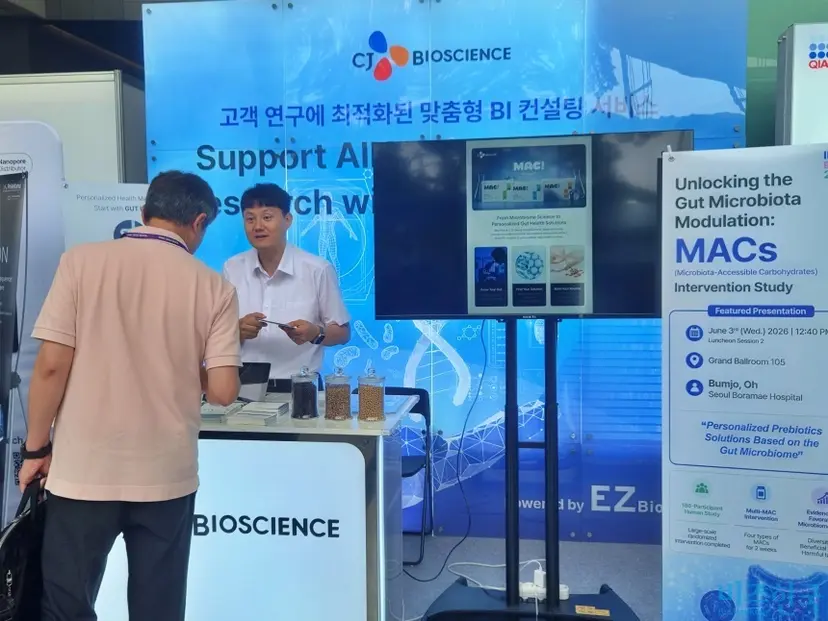
Facing a crisis, companies are improving their fundamentals by shifting toward wellness businesses that offer faster monetization to build stamina for continued R&D. While CJ Bioscience still retains pipelines such as the inflammatory bowel disease (IBD) treatment 'CJRB-201,' the Parkinson's disease treatment 'CJRB-302,' and the asthma treatment 'CJRB-401,' it has put data-driven personalized wellness at the forefront.
In the second half of this year, CJ Bioscience plans to launch new products optimized for individual gut types based on gut microbiome test results. They intend to provide personalized solutions by recommending probiotics and prebiotics based on clinical trials conducted on 186 people at Seoul Boramae Hospital. A CJ Bioscience official explained, "Rather than just calling them dietary fiber, we will promote our products using the term 'MAC' (Microbiota-Accessible Carbohydrates) to emphasize the microorganisms, and we plan to categorize the gut into three types and introduce products tailored to each."
Scientific Breakthroughs Through Identification of Molecular Mechanisms
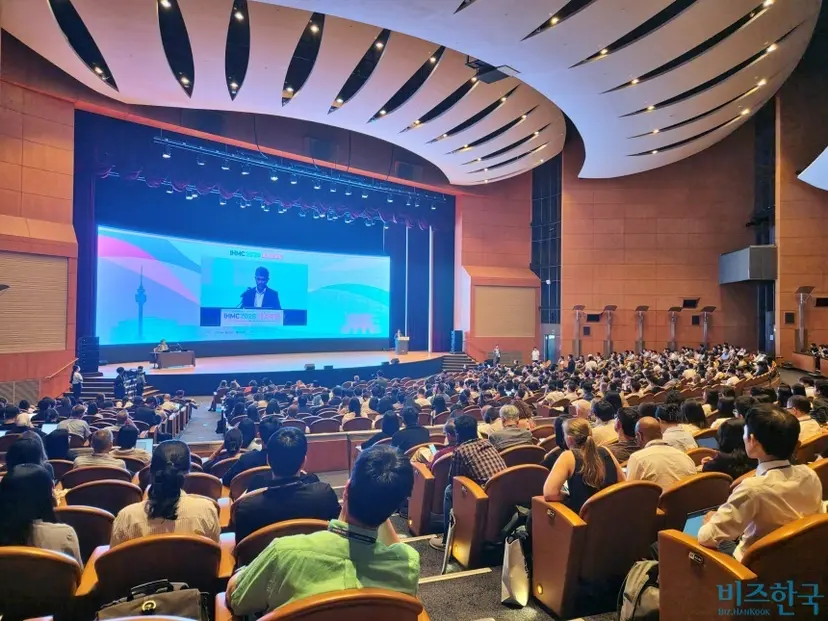
Despite market concerns, discussions on expanding the microbiome ecosystem continued at the event. Junhua Li, Director at BGI Research, emphasized the importance of infrastructure for collective growth, stating, "For the credibility of microbiome research, building a federated learning infrastructure that ensures global data standardization and data sovereignty among research institutions is essential."
In his presentation titled 'Microbes, Metabolites, and Mucosal Homeostasis' on the 3rd, Ramnik J. Xavier, a professor at Harvard Medical School, introduced molecular-level interactions between the microbiome and the immune system.
He revealed the discovery of a new subset of cells overexpressed in IBD patients and a microbe-derived agonist that acts on 'GPR35,' a genetic risk receptor. The presentation drew significant attention as an example proving that microbiome drugs can also be developed based on scientific mechanisms. Regarding Professor Xavier's talk, Cho Yu-hee, a professor at the College of Pharmacy at CHA University, commented, "For the microbiome to be recognized as a new drug, such research clearly identifying mechanisms of action must continue. Scientific data proving mechanisms at the molecular level will eventually be a powerful factor in dispelling the concerns of the strict FDA and lowering the barrier for approval."
Realistic Alternatives: Maximizing Clinical Efficiency and CDMO Capabilities
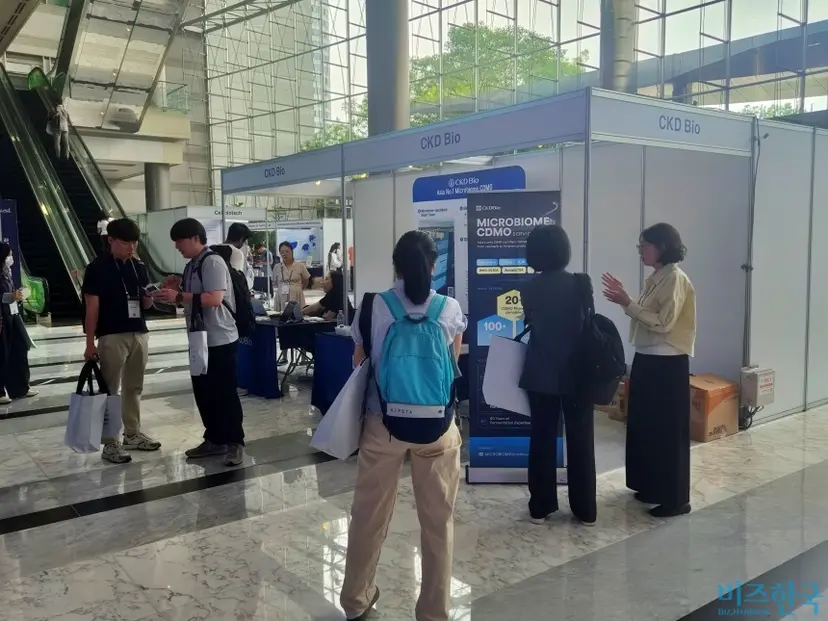
Efforts to combine practical production capabilities with clinical efficiency are also visible to overcome the hurdles of new drug development. Chong Kun Dang Bio is focusing on its microbiome CDMO (Contract Development and Manufacturing Organization) business, centered around its Ansan plant, the only microbiome production facility in Asia.
Kim Jin-oh, Director of Development at Chong Kun Dang Bio, stated, "Compared to other modalities, microbiome new drugs have fewer toxicity issues, making it easier to enter clinical trials and offering the advantage of being able to verify drug efficacy at an early stage. We can develop efficiently by, for example, terminating projects early if they are ineffective."
Director Kim dismissed market concerns regarding a crisis in the microbiome industry following the recent string of pipeline suspensions. Instead, he assessed that the industry has entered a stage of qualitative maturity through a process of 'weeding out.' "Compared to the past when the microbiome received excessive attention, research and clinical trials have now progressed significantly," he diagnosed. "While there was a massive, indiscriminate quantity of pipelines before, we now have many valuable assets remaining through selection and concentration."
Chong Kun Dang Bio currently has over 20 microbiome-related projects in progress, including work with about 10 client companies. It has the production capacity to conduct Phase 3 clinical trials for 500 to 1,000 people. Beyond the CDMO business, the company is pursuing a two-track strategy by developing treatments for dementia and Metabolic Dysfunction-Associated Steatohepatitis (MASH) targeting the gut-brain axis.
The Need for Government Vision and Regulatory Innovation
Professor Cho Yu-hee suggested that full-scale government support is necessary for a robust microbiome industry ecosystem. She noted that while the field is transitioning into the realm of precision science through scientific data, it is a situation where immense time and resources are inevitable, and the burden on companies must be eased. "As it is difficult for the private sector to handle everything with its own capital alone, the government should move beyond short-term performance-oriented projects like preliminary feasibility studies and create a foundation where they can invest in large-scale basic research and wait for the long term," she said.
Pointing to rigid regulatory realities, Professor Cho emphasized the need for regulatory improvements to build a foundation for commercialization. She raised her voice, stating, "The reality is that even if we develop a new microbiome strain, it is effectively impossible to gain approval for anything other than probiotics, as regulators ask, 'How can you sell this as a health supplement when it's a strain we've never seen before?' We urgently need regulatory innovation to improve industry perception and discover additional functionalities, such as lowering the barrier to allow strains with proven scientific grounds to be launched as health supplements first to accumulate data."