

[비즈한국] Potential last-minute variables are emerging regarding the sale of SK Siltron, which has been considered a key asset in SK Group's business restructuring, or so-called 'rebalancing.' Although Doosan Group was selected as the preferred bidder and has been conducting negotiations, recent discussions within and outside the group regarding a potential re-evaluation of the sale have drawn attention to the final outcome.
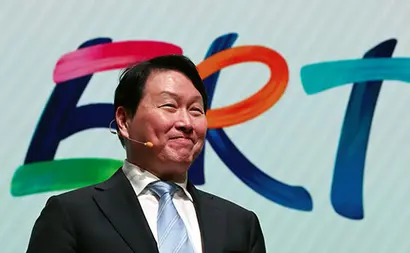
According to the business community, SK Group Chairman Chey Tae-won responded to a question about whether SK Siltron would be sold at the Computex 2026 event held in Taipei, Taiwan, on the 2nd, stating, "That is decided by those below." This remark came amidst speculation that the sale of SK Siltron might be reconsidered. While no official conclusion has been reached at the SK Group level, the market is focusing on the background of why the sale negotiations are taking longer than initially expected.
Main Contract Delayed After Doosan Selected as Preferred Bidder
On December 17 last year, SK Inc. disclosed that it had selected Doosan Corp. as the preferred bidder for the sale of its stake in SK Siltron and had notified them accordingly. Doosan also announced that it had received notice of its selection as the preferred bidder from SK and was conducting acquisition reviews and discussions between the parties. It was also stated that details such as sale terms and transaction structure had not yet been finalized.
The subject of the sale is the 70.6% stake in SK Siltron held by SK Inc. SK Siltron's corporate value has been estimated at 4 to 5 trillion won. Some in the market have projected that the scale of the SK Inc. stake sale could reach the 3 to 4 trillion won range. For SK Group, this transaction is expected to have the effect of securing cash and improving financial structure by disposing of non-core assets.
However, as the signing of the main contract has been delayed following the selection of the preferred bidder, the calculations surrounding the sale have become complex. Initially, the market speculated that after Doosan acquired the stake held by SK Inc., it might also acquire the remaining 29.4% stake held by Chairman Chey Tae-won personally, potentially reaching 100% ownership within the year. However, recent interpretations suggest that internal judgments may be shifting regarding the recovery of the semiconductor industry, the strategic value of SK Siltron, and the pace of group rebalancing.
Value of Semiconductor Wafer as Strategic Asset Highlighted
SK Siltron is a semiconductor wafer manufacturer. Wafers are the foundational material for making semiconductor chips and are essential for memory and foundry production. SK Siltron is considered a major global player in 12-inch wafers, and an acquisition by Doosan would have the effect of strengthening its semiconductor materials business.
Doosan already owns companies such as Doosan Tesna, a semiconductor back-end testing firm. By adding SK Siltron, they could build a business portfolio ranging from wafers, a key material for the semiconductor front-end process, to back-end testing. For Doosan Group, which aims to transform its business structure from heavy industry to the AI and semiconductor fields, the acquisition of SK Siltron is a highly symbolic transaction.
For SK Group, the opportunity cost of selling semiconductor wafers must also be considered. As SK Hynix benefits from rising demand for AI semiconductors, led by High Bandwidth Memory (HBM), concerns may be growing about whether it is appropriate in the long term to spin off SK Siltron, a semiconductor materials subsidiary. Korea Ratings projected that SK Siltron's performance would be supported by 300mm wafers used in advanced memory semiconductor production, as robust demand driven by AI continues.
Between Need for Financial Improvement and Strategic Asset Value
SK Group has been pursuing large-scale rebalancing since last year. The goal is to reduce the financial burden that grew during the investment expansion process and to concentrate resources on core businesses such as AI, semiconductors, and energy. The sale of SK Siltron was mentioned as a major cash-generating card in this trend of business restructuring.
However, the purpose of rebalancing is not merely the sale of assets. It is also necessary to determine how long to hold assets with significant long-term growth potential and strategic necessity. SK Siltron is evaluated as an asset that possesses both stable cash-generating ability and the strategic importance of the semiconductor materials business. While the effect of securing sales proceeds is significant, the burden of exiting the semiconductor value chain is not small.
Chairman Chey's personal stake is also considered a variable in the transaction structure. Chairman Chey acquired the remaining 29.4% stake in a personal capacity during SK Inc.'s acquisition of LG Siltron in 2017. Although this transaction led to past controversies over the appropriation of corporate opportunity, a 2025 Supreme Court ruling confirmed the cancellation of the Fair Trade Commission's corrective orders and fines.
The key question is what conclusion SK Group will reach between improving its financial structure and holding on to semiconductor material assets. If the sale is completed, SK Group can secure large-scale cash and demonstrate the results of its rebalancing to the market. Conversely, if the sale is reconsidered or conditions are adjusted, it could be interpreted as a sign that the strategic value of SK Siltron has been reassessed.