

[비즈한국] The competition for AI server investment is spreading beyond data centers and semiconductors to the electronic components industry. The market sentiment has shifted as expectations grow that component manufacturers, who actually implement these technologies, may benefit even more than the AI semiconductor design companies themselves. Samsung Electro-Mechanics and LG Innotek are prime examples. Analysts suggest that a new phase is opening for the "materials, parts, and equipment" (so-bu-jang) industry, which had to endure profitability issues due to sluggish demand for smartphones and PCs, characterized by structural demand expansion and Long-Term Agreements (LTA).
Component shortages triggered by AI servers: Reshaping the MLCC and substrate supply chain
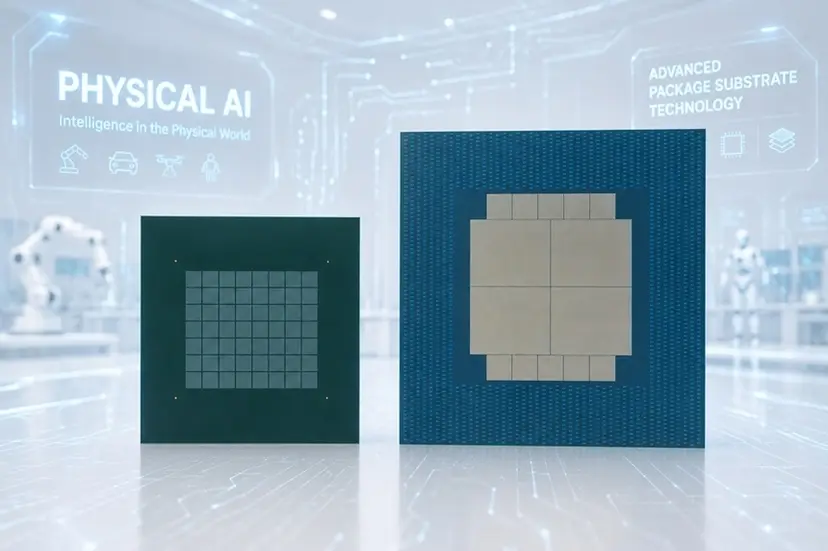
A representative item benefiting from this trend is the FC-BGA (Flip-Chip Ball Grid Array). FC-BGA is a high-performance package substrate that connects semiconductor chips to boards, used in highly integrated semiconductors such as GPUs and AI accelerators. As the computational performance of AI semiconductors increases, they must process more signals faster, which causes the technical difficulty of the substrate to rise sharply. This is the background for the assessment that the competition in semiconductor micro-fabrication is expanding into a competition in packaging.
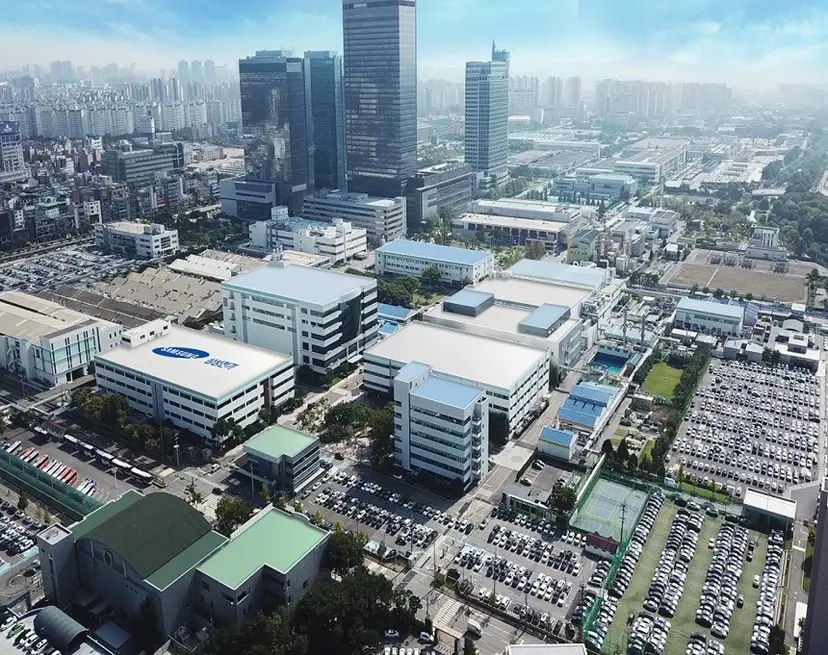
Currently, the leading company in Korea is Samsung Electro-Mechanics. Samsung Electro-Mechanics is considered a rare company capable of supplying both server-grade FC-BGAs and MLCCs (Multi-Layer Ceramic Capacitors) for AI servers simultaneously. If the FC-BGA plays the role of connecting the semiconductor to the system, the MLCC acts to store and supply current, ensuring the circuit operates stably.
Because AI servers use significantly more power than general IT devices, the amount of MLCCs installed increases dramatically. The industry currently views the situation as one where supply for both MLCCs and FC-BGAs cannot keep up with demand. Some estimates suggest that MLCC demand exceeds production capacity by more than 30%, while FC-BGA demand exceeds it by over 50%. The MLCC production lines have already surpassed a 90% utilization rate, and FC-BGA is also expected to reach 100% starting from the third quarter of this year.
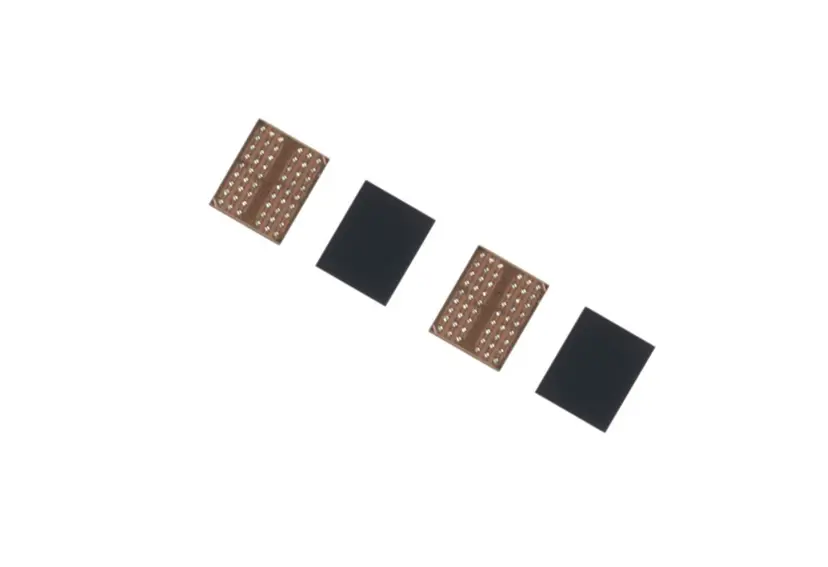
Samsung Electro-Mechanics is receiving attention recently not only due to the growth of its existing businesses but also for the commercialization potential of new products. Last month, Samsung Electro-Mechanics signed a silicon capacitor supply contract worth approximately 1.5 trillion won with a large global corporation. The contract period is two years, from January of next year to December 2028. Silicon capacitors are next-generation electronic components produced using semiconductor processes; they can maintain stability even in high-frequency environments, making them essential for the expansion of AI servers.
Kim Yeon-mi, a researcher at Daol Investment & Securities, stated in a recent report, "This order is significant in that it is the first large-scale supply achievement secured in the silicon capacitor business. It confirms their entry into the AI server supply chain, and further supply is expected in the future."
The trend of expanding long-term supply contracts is also becoming apparent in the MLCC business. In its Q1 earnings conference call, Samsung Electro-Mechanics projected, "In the second half, the strong demand related to AI and servers, the expansion of long-term supply contracts, and the effect of rising average selling prices will continue." Yang Seung-soo, a researcher at Meritz Securities, observed, "If anything, the movement toward price increases is spreading, centered on general-purpose products, and there is a growing consensus across the entire supply chain regarding the possibility of further MLCC price hikes."
Samsung Electro-Mechanics has the capability to combine silicon capacitors, MLCCs, and FC-BGAs into a single packaging technology, rather than just supplying individual components. Kim Yeon-soo, a researcher at KB Securities, said, "Samsung Electro-Mechanics is the only company in the world that is top-tier in both key AI component fields: MLCCs and packaging substrates. Future earnings growth is expected due to the high growth of both markets and product mix improvements."
The company also invested early in the FC-BGA business. Since successfully mass-producing server-grade FC-BGA for the first time in Korea in November 2022, it is known to have secured major customers such as Nvidia, Google, and AMD. It is currently executing an additional investment of $1.2 billion (approximately 1.81 trillion won) in its Vietnam plant. It is also concretizing its next-generation glass substrate business, which reduces warping and signal loss compared to existing FC-BGAs. It is known that a pilot line has been established at the Sejong plant and trial production has begun.
LG Innotek shifts its growth axis in a move to 'break away from Apple'
If Samsung Electro-Mechanics is in the stage of translating AI demand into actual performance, LG Innotek is in the process of shifting AI into a new axis of growth.
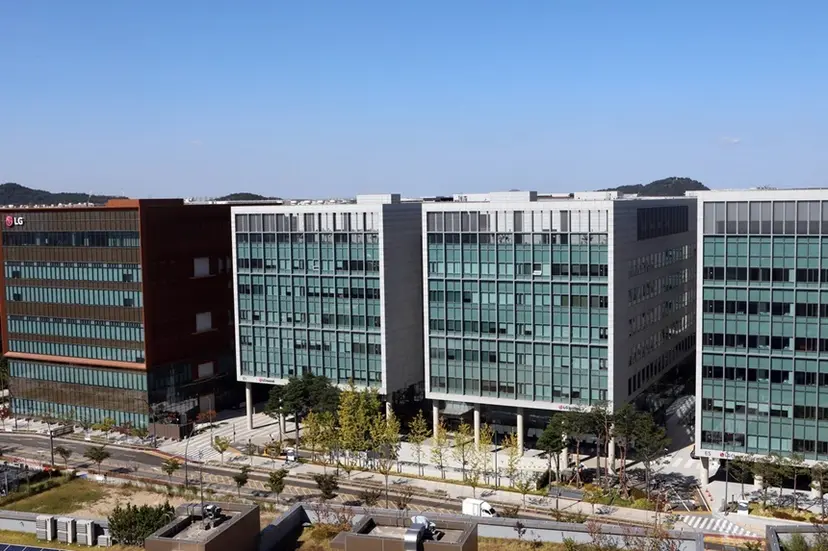
For a long time, LG Innotek grew primarily around the camera module business for Apple's iPhone. However, as the slowdown in the smartphone market has been prolonged, it is nurturing semiconductor substrates, vehicle components, and robot parts as future businesses. In particular, it has selected FC-BGA as a key next-generation business and is focusing on expanding production capacity and securing customers. Despite being a latecomer that entered the FC-BGA business in 2024, it is evaluated that demand is rushing in so quickly that its production line utilization rate currently exceeds 90%.
Moon Hyuk-soo, CEO of LG Innotek, mentioned the need for expansion, stating, "The substrate business is currently at full capacity." Securities firms predict that LG Innotek's substrate business revenue will increase from last year's 1.7 trillion won to 2.7 trillion won by 2027. Some diagnose that annual operating profit this year could reach 1.0983 trillion won, marking a return to the "1 Trillion Club" for the first time since 2022.
It is also active in securing technical competitiveness. At 'ECTC 2026', an international conference on semiconductor packaging held in Florida, USA, from the 26th to the 29th of last month, next-generation substrate technologies such as FC-BGA and RF-SiP (Radio Frequency System-in-Package) were unveiled. The company applied "Cu-Post" technology to smartphone semiconductor substrates for the first time in the industry. This technology utilizes a fine copper pillar structure that connects the semiconductor to the substrate, reducing substrate thickness by about 20% while lowering heat generation; it is known to have already been applied to the Apple iPhone. It is considered a technology with potential application in AI semiconductor packaging, which requires high integration and high performance.
Preemptive volume-securing moves by Big Tech companies are also appearing. Kim Dong-won, head of research at KB Securities, said, "Many Big Tech customers are proposing long-term supply contracts with binding clauses, including large-scale advance payments similar to memory semiconductor contract structures and penalty clauses, as well as facility investment support for LG Innotek's substrate business."
Researcher Yang Seung-soo predicted, "The substrate business is judged to have entered a structural growth phase, moving beyond simple industry recovery, based on the expansion of LTA contracts with major customers and mix improvements due to entry into the AI server-facing FC-BGA supply chain."
The market predicts that both companies will benefit as AI infrastructure competition continues. This is because as performance competition among AI semiconductors intensifies, the importance of high-performance substrates and capacitors will inevitably grow. Both companies are also cultivating the humanoid robot component business as a future revenue source. Samsung Electro-Mechanics plans to start mass-production of humanoid robot vision components starting in the second half of this year and expand its business into the robot joint (actuator) field in the mid-to-long term. It is reported that LG Innotek will begin supplying vision sensing modules this year to major humanoid companies such as Figure AI, Boston Dynamics, and Tesla.
A Samsung Electro-Mechanics official stated, "Based on the ultra-fine process capabilities we have accumulated in the existing MLCC and package substrate business, we have successfully entered the core AI semiconductor supply chain. Starting with this large-scale contract, we plan to diversify our supply sources into high-performance computing fields such as autonomous driving systems and mobile, in addition to AI servers."
An LG Innotek official emphasized, "We are pursuing capacity expansion to respond to the surging demand in the booming AI/semiconductor market, and we will grow the revenue scale of our package solution business to over 3 trillion won."