

[비즈한국] Following a decision by the Financial Supervisory Service's (FSS) Financial Dispute Mediation Committee, credit card companies have begun the process of refunding installment payments to victims of the TMON-WeMakePrice (TMep) crisis. While victims expressed hope that the refund process has finally started after two years, they are feeling the burden of having to re-acquire evidence to prove they did not use the services, especially given the significant time that has passed since the incident. Meanwhile, consumers who paid in lump sums are feeling increasingly dejected, as they remain excluded from refunds despite suffering the same damages.
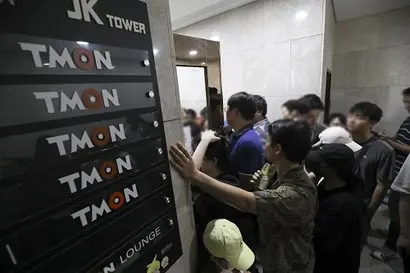
Targeting Consumers of Travel, Airfare, and Accommodation Products... Struggling to Gather Supporting Documents
According to industry sources, major credit card companies have recently begun sending text messages to affected TMep consumers guiding them on the required documentation for refund processing. This follows the FSS Financial Dispute Mediation Committee's decision to recognize the rights of consumers to cancel contracts and raise objections under the Installment Transactions Act regarding disputes involving TMep.
Last April, the FSS committee determined that the exercise of contract cancellation rights under the Installment Transactions Act was valid in disputes raised by TMep victims against card companies. Consequently, they set a standard stating that installment payments already made should be refunded and the obligation to pay remaining installments should be extinguished.
In accordance with the committee's decision, card companies have initiated refund and installment objection processing for consumers who were unable to use travel, airfare, or accommodation products due to the TMep crisis. Refunds are applicable to payments that meet the requirements of the Installment Transactions Act (installments of 200,000 KRW or more, lasting 3 months or longer). It is understood that card companies have sent guidance texts to consumers, requesting the submission of payment records, travel product information, and materials verifying that the services were not used.
While victims are relieved that the refund process has started after two years, many say it is difficult to secure proof of non-use, travel details, and payment records after such a long time. With TMON and WeMakePrice platforms being inaccessible and some travel agencies having gone out of business or become unreachable, victims are struggling to compile the necessary evidence.
In particular, some card companies are requiring certificates from travel agencies or documents containing official company seals during the review process. However, victims point out that it is impossible to obtain these documents when travel agencies have already ceased operations or are unreachable.
One victim said, "The travel agency says they need to review whether they can issue a seal, while the card company says the certificate is necessary. In the end, the consumers are the ones left sweating to match up the paperwork." Another victim shared, "The travel agency where I purchased the product has gone out of business and changed its name. I contacted the new entity, but they have no knowledge of the transaction and won't confirm whether they can provide the data, leaving me at a dead end."
Meanwhile, there is a sense of despondency among victims who paid in lump sums. They suffered the same damages but are excluded from card company refunds simply because their payment method was different. Under current law, the right to object is only granted for installment transactions that meet certain criteria. Consequently, card companies are proceeding with refunds only for installment payments backed by legal grounds. One victim lamented, "It was heartbreaking to see that card companies only contacted those who paid in installments when we suffered the same damage. I regret so much that I didn't pay in installments."
An FSS official explained, "Under the current legal framework, there is virtually no way to directly provide relief to lump-sum consumers. We decided to prioritize relief for installment-paying consumers first." The official added, "Lump-sum victims are currently pursuing individual lawsuits. While the Korea Consumer Agency issued a mediation proposal suggesting that the merchants who signed final contracts with consumers bear the responsibility, some merchants have rejected this, leading to litigation. It appears that whether refunds will be issued will be determined by the court's final ruling."
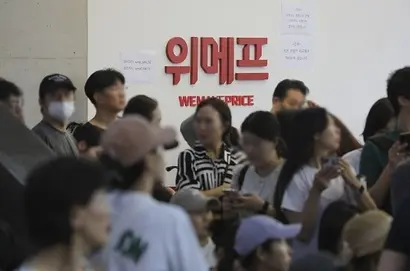
"13.2 Billion KRW in Refunds: Who Will Bear the Cost?" Conflict Between Card Companies and PG Firms
As the consumer refund process gains momentum, the conflict is spilling over between the credit card industry and the Payment Gateway (PG) industry. Interests are clashing over who should ultimately bear the cost of the refunds. According to the FSS, there have been 11,696 complaints filed with the FSS and card companies regarding installment payments for travel, airfare, and accommodation, and once the refund process is completed, the amount to be borne by card companies is approximately 13.2 billion KRW.
The card industry maintains that it is difficult to shoulder this cost entirely. They argue that since TMON and WeMakePrice were not direct merchants to the card companies but rather indirect merchants via PG firms, the burden should be shared with the PG companies. It is reported that card companies are considering refunding consumers first and then filing subrogation claims against PG companies or offsetting the costs against future settlement funds.
Conversely, the PG industry is pushing back, calling it an attempt to shift responsibility. They argue that the "right to object" to installments, which is the basis provided by financial authorities, is a right exercised by consumers against the credit provider (the card company), and that extending this responsibility to payment intermediaries like PG firms contradicts the intent of the law. In April, the PG Association issued a statement criticizing the move, stating, "The payment industry already absorbed hundreds of billions of won in losses through proactive refunds during the TMep crisis. Now, the card industry is trying to pass the burden back to PG firms by mentioning subrogation and settlement offsets."
The tug-of-war over responsibility between card companies and PG firms has persisted since the beginning of the TMep crisis. In 2024, conflicts arose over who should bear the initial costs of payment cancellations and refunds. While the situation seemed to settle at the time as some PG firms like Naver Pay, Kakao Pay, and Toss Pay handled refunds using their own funds, the current card company refunds have reignited the dispute.
The FSS stated, "Under the Installment Transactions Act, the primary responsible party is the card company. PG firms are not explicitly named as responsible parties under the Act. However, since there is a business contract relationship between card companies and PG firms, the issue of cost-sharing remains a separate point of contention."