

[비즈한국] Every year, new driver models are released. The rationale for these releases is always flashy and grand. Looking at the ads alone, they appear to be groundbreaking, 'unprecedented' new weapons, just as they claim. Sometimes, they even present specific numbers to demonstrate increased driving distance.
The common promise is 'further and straighter.' Sometimes the numbers on the driver increase, new numbers appear, or mysterious English letters are changed. Sometimes, in a complete break from previous models, they undergo a total 'rebranding' to signal the adoption of new DNA.
That is how the driver has reached where it is today. If their promises of adding a few yards—or up to 10 yards—in driving distance every year were true, I should be hitting the ball over 400 yards by now. That holds true even if I account for a one-yard loss in distance for every year I age. Of course, that is not the reality. And so, we continue to crane our necks and keep an eye out for the next new driver.
Aaron Rai, who won the 2026 PGA Championship, is a topic of conversation for many reasons. It is very rare for a male professional player to wear two gloves, and not even leather ones, but synthetic leather gloves. It is also rare for a male pro to use iron covers and use the 'stepped' height-adjustable tees that many amateur golfers use.
The biggest topic, however, is Aaron Rai’s driver—the TaylorMade M6, a driver from seven years ago. In short, it is an outdated club that can be purchased for about $150 on the used market today. Despite being a top-class professional who could easily acquire any newly released driver every year, the driver that suits him best remains one from seven years ago.
England’s Matt Fitzpatrick used 10-year-old PING irons when he won the US Open. During his peak, Brooks Koepka kept a Nike 3-iron in his bag for years, even after Nike had already pulled out of the golf club market. Daniel Berger scoured eBay to find a discontinued iron he liked. And Steve Stricker, who is still performing well on the Champions Tour, has been using the same old putter for over 20 years.
In a slightly different vein, the Philippines’ Juvic Pagunsan won the 2021 Mizuno Open on the Japan Golf Tour using only 11 clubs instead of 14 during the COVID-19 pandemic. With no caddies allowed due to the pandemic, he removed his 3, 4, 6, and 8 irons from his bag.
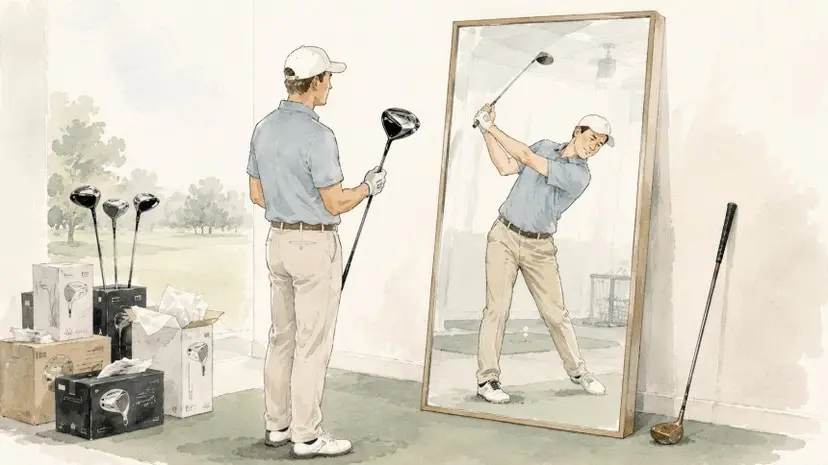
These are examples that new clubs and new equipment are not always the answer, yet weekend golfers still turn their heads toward new models today. Why? Because there is an expectation that if it is new, it must be better. The mindset is, 'Surely they made it better; why else would they release it if it were the same?'
Of course, club makers release new models after countless research and tests. They bring out models that are, on average, bound to be better. The problem is whether that club fits you.
When I first started golf, I bought over ten putters in three years. Back then, I believed my inability to score was solely because of my 'putting,' so I didn't regret the money I spent on them. Of all those putters, the one I performed best with was the cheapest one, costing around 100,000 won.
Most people who change golf clubs do so because they are dissatisfied with their current ones. However, some golfers change them despite having no particular complaints, fueled by the vague expectation that a new club will improve their shots. The problem is that the results rarely live up to those expectations.
'I shouldn't have switched.'
Haven't you heard this a lot? When you change golf clubs frequently, you start finding the cause of every swing problem in the clubs themselves. This is even though it is impossible for me to be the same person I was when I was playing my best.
That might be true at the level of professional players with consistent swings. But don't they say that for weekend golfers, even yesterday's swing is different from today's? Even golf club fitting is more effective for golfers who have reached a certain level and possess a consistent swing.
Of course, replacing equipment can be a great joy, and there are golfers who enjoy the process itself. Naturally, there are some who see their shots change after upgrading. However, there is such a thing as too much of a good thing; when done in excess, it is worse than doing nothing at all. You don't necessarily have to change just because it's time or because a friend did.
Perhaps your current club is the one that fits you best for the time being. I sometimes think about this: before changing your clubs, what you need to change is yourself. Your swing. The most important piece of equipment in golf is you—your body.