

[비즈한국] Looking at the history of rocket development, one strange commonality emerges. The decisive ideas that propelled humanity into space were not always born at the center of the establishment. Instead, it was often the eccentrics, the outsiders, and the people who dreamed of space too early who pushed the history of rockets forward.
One of the most intriguing figures carrying on that tradition today is Peter Beck, who leads Rocket Lab.
Peter Beck did not graduate from a university. He was not a rocket scientist who built his career at traditional aerospace firms like NASA, Boeing, or Lockheed Martin. He was a precision machinery technician at a New Zealand home appliance company, where he built dishwashers and industrial equipment. By day, he worked at the factory; by night, he carved, tested, blew up, and rebuilt rocket parts. He is, quite literally, a self-taught rocket scientist.
Interestingly, the history of rockets is full of such individuals. Konstantin Tsiolkovsky, who established the foundations of the rocket equation, was like this, as was Germany’s Hermann Oberth. At the time, they were all treated as eccentrics who were too far ahead of their era, but eventually, as time passed, their imaginations became reality.
Today, SpaceX’s Elon Musk and Blue Origin’s Jeff Bezos, who symbolize the New Space era, continue this lineage of space dreamers. However, Peter Beck is a bit different from them. Beck did not start with billionaire capital. He had no Silicon Valley network. He is closer to a true space geek—someone who used to play around by mounting turbochargers on his family’s Mini Cooper and building rocket-propelled bicycles.

Rocket Lab did not start with a massive rocket like SpaceX. Instead, it targeted a very specific problem: sending small satellites into desired orbits at desired times. The rocket born from that answer is 'Electron'.
Electron might seem unimpressive at first glance. It is a small, slender rocket about 18 meters tall. It is not a heavy-lift rocket like the Falcon 9, which lifts tens of tons of cargo into Low Earth Orbit (LEO). Instead, it specializes in precisely placing small, hundred-kilogram-class payloads into orbit.
This is precisely Rocket Lab’s strategy. While SpaceX moved toward massive markets like large satellites, manned spacecraft, large government contracts, and Starlink, Rocket Lab targeted the niche market of dedicated launches for small satellites.
For customers operating small satellites, cost is not the only factor. Currently, large rockets can reduce costs by carrying multiple satellites at once. However, launch schedules and orbit options are limited because they must match the schedule and destination of the primary payload. Electron tapped into this gap. It allowed small satellite customers to choose their own launch schedule and orbit.
Electron's most unique technology is the Rutherford engine. The Rutherford is known as the first electric pump-fed rocket engine used in an orbital launch vehicle. Traditional liquid rocket engines usually use gas generators or staged combustion cycles to turn turbopumps. In this method, propellant is burned in a small combustion chamber to turn a turbine, which then rotates a pump to force fuel and oxidizer into the chamber at high pressure.
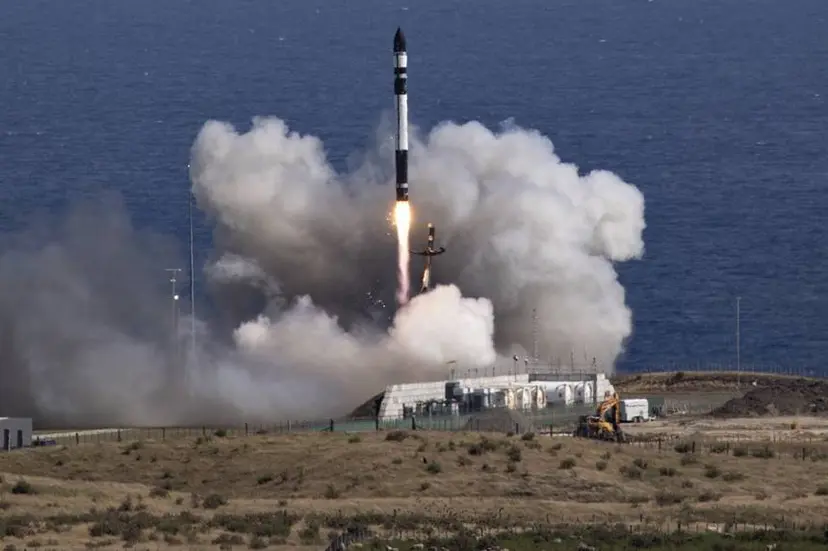
However, Rutherford replaced this complex drive system with electric motors and batteries. The structure became much simpler, control became easier, and the difficulty of development was lowered. Furthermore, 3D printing technology was actively utilized to rapidly manufacture key components like combustion chambers, pumps, and valves. For a small rocket, this is a very rational strategy.
But this method has clear limitations. Batteries have lower energy density compared to chemical propellants. As the rocket gets larger, the power required to turn the pumps increases dramatically, and the mass of the batteries grows. Ultimately, while the electric pump-fed engine is innovative for a small launch vehicle like Electron, it is difficult to scale up to large rockets.
This is where the difference from SpaceX becomes clear. The Falcon 9 evolved from the beginning with the goal of vertical landing and reuse. It reignites its engines, controls its attitude with grid fins, and deploys landing legs to descend onto a drone ship or ground pad. On the other hand, Electron is too small to apply the same method. The moment you load the necessary fuel and equipment for landing onto a small rocket, its original payload capacity is significantly reduced. They once conceived an attempt to catch it in mid-air with a helicopter, but it ultimately failed.
So, Rocket Lab has now taken on a bigger challenge. Its protagonist is Neutron.
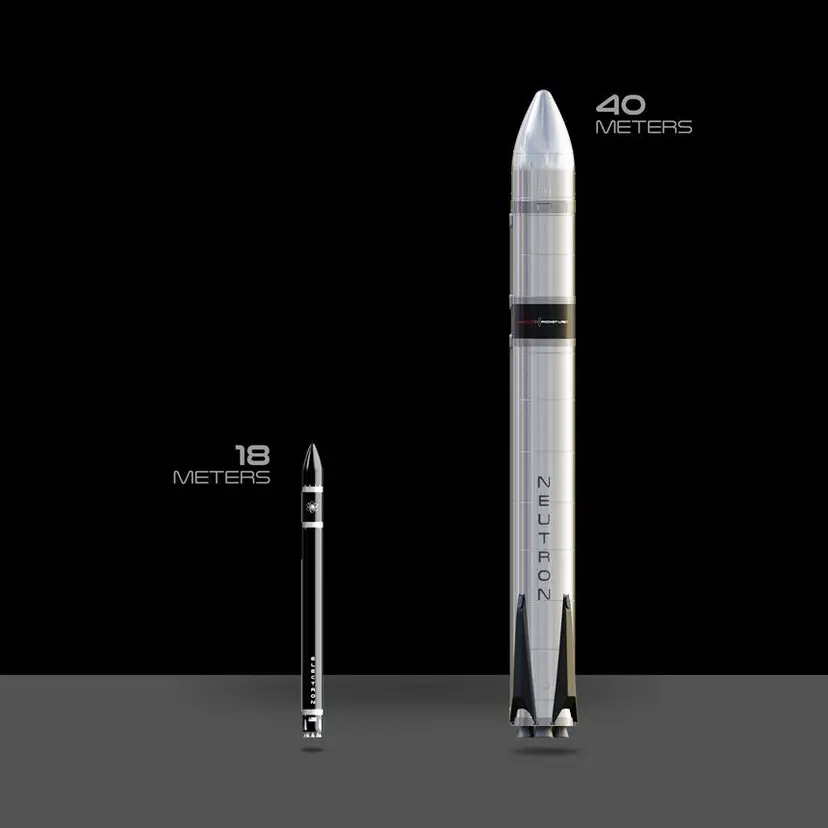
According to the plan, Neutron is a reusable rocket approximately 43 meters tall, capable of sending about 13 tons of payload to Low Earth Orbit. This market is already dominated by SpaceX's Falcon 9. Therefore, Neutron is not just a new rocket; it is a testing ground to determine if Rocket Lab can truly enter the major launch market.
Neutron's engine is Archimedes. It is not simply an enlarged version of the electric pump-fed Rutherford engine. Archimedes is a next-generation engine that uses liquid oxygen and liquid methane. Methane burns relatively cleaner than kerosene. Using RP-1 like the Falcon 9's Merlin engine tends to leave soot and residue, requiring cleaning and inspection during the reuse process. Conversely, methane engines cause less pollution, allowing for faster reuse. This is the reason why the Starship's Raptor, New Glenn's BE-4, and Neutron's Archimedes all lean toward methane-based systems.
However, the development of Neutron is not smooth. The first flight was originally targeted for 2025, but it has now been pushed back to 2026 or later. Developing large carbon-composite structures, new engines, new fairings, and new recovery systems all at once is by no means easy. Whether Rocket Lab's persistence will lead to innovation or become too much of a technical burden remains to be verified.
So, can Rocket Lab beat SpaceX?
The outlook is not simple. Falcon 9 is already a proven rocket with hundreds of launches and landings. In terms of launch frequency, reuse experience, ground infrastructure, and customer trust, SpaceX is overwhelming. However, there is an opportunity for Rocket Lab as well. Space launches will become more frequent in the future. Various customers are emerging, from governments, companies, and universities to research institutions and small satellite startups. SpaceX cannot handle all of this demand by itself. In particular, the market that wants to send relatively small payloads to specific orbits on specific dates remains important.
To use an analogy, SpaceX's large rocket is like a large bus headed for space. It is cheap and powerful, but it does not drop you off exactly at the time and place you want. On the other hand, Rocket Lab is more like a space taxi. It might be more expensive, but it can take you to the destination the customer wants with greater precision.
Rocket Lab's story does not end in Low Earth Orbit. The company is already reaching into the solar system exploration market.
A representative example is the Mars exploration mission ESCAPADE. Meaning 'a daring act' or 'escapade', ESCAPADE is a NASA mission sending two probes, Blue and Gold, to Mars to study how solar winds caused Mars to lose its atmosphere. The company that built these probes is Rocket Lab. Ironically, however, the rocket that launched these probes was not a Rocket Lab rocket, but Blue Origin's New Glenn. From Rocket Lab's perspective, it was like sending their own Mars probe on a competitor's large rocket.
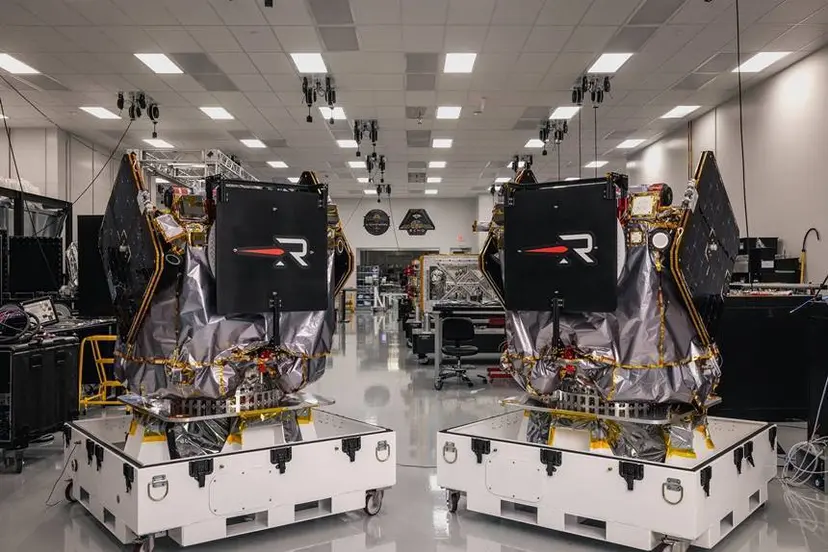
The next stage is Venus. Rocket Lab is preparing for the 'Venus Life Finder' mission with MIT researchers. This mission is an attempt to search for chemical traces that could be related to life in the Venusian atmosphere. The surface of Venus is extremely hot and high-pressure, but some cloud layers have sections where one can discuss the possibility of life in terms of temperature and pressure. The probe is scheduled to enter the Venusian atmosphere and analyze its chemical composition while passing through the cloud layers for about 5 minutes.
This approach is very 'Rocket Lab'. Traditional planetary exploration usually proceeds as large-scale, trillion-won missions, and development takes over 10 years. In contrast, Rocket Lab aims to answer specific scientific questions with small, fast probes. Not all planetary explorations need to be massive flagship missions. If it targets a specific altitude, a specific time, and a specific composition, even a small probe can be a sufficiently sharp scientific tool.
The Mars Sample Return can be viewed in the same context. NASA's existing plan to return Mars samples is in great danger due to cost and scheduling issues. Although the Perseverance rover has already collected important samples from the Martian surface, bringing them to Earth has become much more difficult and expensive than expected. In this process, Rocket Lab has proposed a simpler and cheaper alternative, claiming they can redesign the Mars sample return architecture.
Perhaps this is the method that best suits the person named Peter Beck. From the beginning, he was not a person of the center. He started from the geographical periphery of New Zealand, the institutional periphery of being outside of universities, and the industrial periphery of being outside the large rocket market. However, as the history of rockets shows, new innovations sometimes bloom precisely from such peripheries.
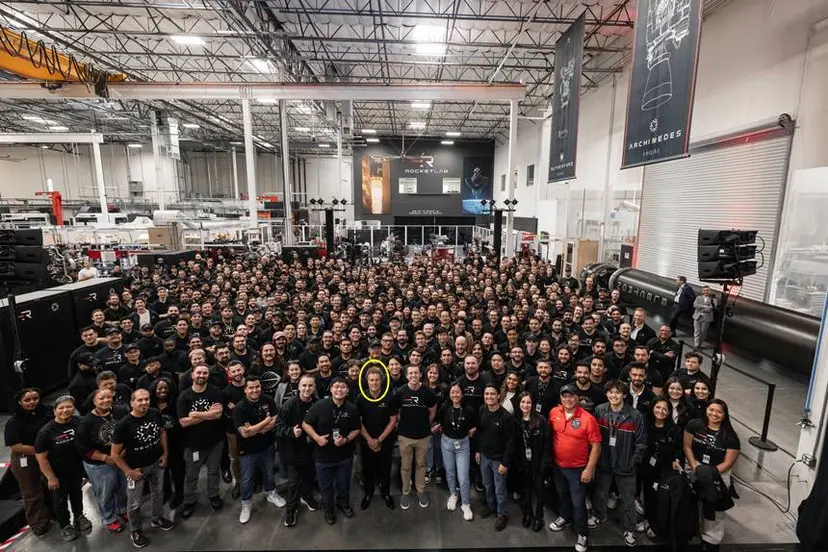
Just as Tsiolkovsky wrote the equations for spaceflight in a small village, and Goddard launched liquid-fueled rockets amidst ridicule, Peter Beck’s Rocket Lab is also creating a new path to the solar system from a place that is not the center of the world.
Whether Rocket Lab can compete with SpaceX is still unknown. Perhaps that question itself is wrong. The true value of Rocket Lab may not lie in seizing someone’s throne. Rather, it may lie in opening the way for more scientists, smaller institutions, and faster missions to reach space.
About the writer Ji Ung-bae? He loves cats and space. After watching 'Galaxy Express 999' as a child, he dreamed of spreading the beauty of the universe. Currently, as an assistant professor at Sejong University's College of Liberal Arts, he engages in various scientific communication activities such as lectures and writing. He has written books such as 'Regarding the Uselessness of Astronomers', 'We Are All Born Astronomers', and 'Strange Questions That Come to Mind When Looking at the Universe', and translated 'How I Killed Pluto', 'Quantum Life', and 'UFO'.