

[비즈한국] It has been confirmed that the Industrial Bank of Korea (IBK) has halted the process of selling its equity stakes. In 2022, IBK established a plan to sell its stakes in DB Asset Management, Korea Investment Holdings, and Korea Finance Security. While it successfully completed the sale of its DB Asset Management stake and partially sold its Korea Investment Holdings stake, the suspension of the sale process means IBK is expected to retain its remaining shares in Korea Investment Holdings and Korea Finance Security for the time being.
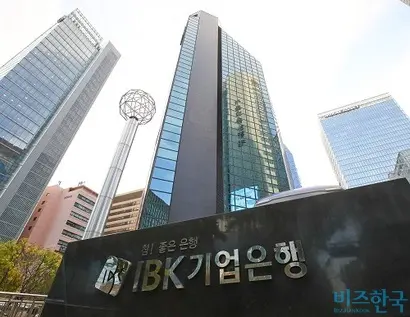
At the end of 2022, IBK formulated an internal policy to sell its stakes in DB Asset Management, Korea Investment Holdings, and Korea Finance Security. This reportedly reflected the Yoon Suk-yeol administration's demand to streamline assets that are less relevant to the core functions of public institutions. At the time, the stakes held by IBK included 9% of DB Asset Management, 2.24% of Korea Investment Holdings, and 14.67% of Korea Finance Security.
Following this policy, in December 2024, IBK sold its entire stake in DB Asset Management to DB Financial Investment (now DB Securities) for 7.56 billion won. DB Financial Investment also acquired all shares of DB Asset Management previously held by Shinhan Bank, Hana Bank, Woori Bank, and Busan Bank. As a result, DB Asset Management became a wholly-owned subsidiary of DB Financial Investment.
IBK has gradually sold its shares in Korea Investment Holdings, leaving it with only 0.11% currently. The stake in Korea Finance Security has yet to be sold. Although IBK pursued a joint sale with other shareholders such as KB Kookmin Bank, Shinhan Bank, and Woori Bank, no progress was made.
Amidst this situation, the Lee Jae-myung administration ordered a halt to the sale of assets by public enterprises and public institutions. Prime Minister Kim Min-seok issued a directive last November, stating, "As a principle, all ministries and related agencies must completely stop the sale of government assets," and "I expect everyone to strictly recognize and thoroughly implement the President's order to obtain prior approval from the Prime Minister in unavoidable cases."
Following this, it was confirmed that IBK also halted the sale of its remaining stakes. An official from IBK stated, "We have suspended the sales due to the government's directive for a total halt on asset sales by public institutions," adding, "Sales can only resume after prior approval from the Prime Minister in unavoidable circumstances."
Some suggest that there is no need to halt the sale of the Korea Investment Holdings stake. While the 14.67% stake in Korea Finance Security could impact management rights, the 0.11% stake in Korea Investment Holdings is negligible. Furthermore, given that the stock price of Korea Investment Holdings has been on an upward trend over the past few years, selling it would not result in a financial loss.
According to the Financial Supervisory Service (FSS), as of the end of March this year, IBK's Common Equity Tier 1 (CET1) ratio under the Basel Accords stood at 11.52%. While this is not at a severely concerning level compared to the 14.56% average CET1 ratio of the 20 domestic banks, it remains the lowest among them. This is why some argue that IBK needs to continue selling unnecessary assets.