

[비즈한국] Recently, a "Special Act on Support for Coal-fired Power Plant Workers and Phase-out Regions" was passed by a standing committee of the National Assembly. However, contrary to its original intent, the coal phase-out target year was deleted, and a clause providing grounds for extending the lifespan of coal-fired power plants was included, sparking strong criticism from the labor sector and civil society.
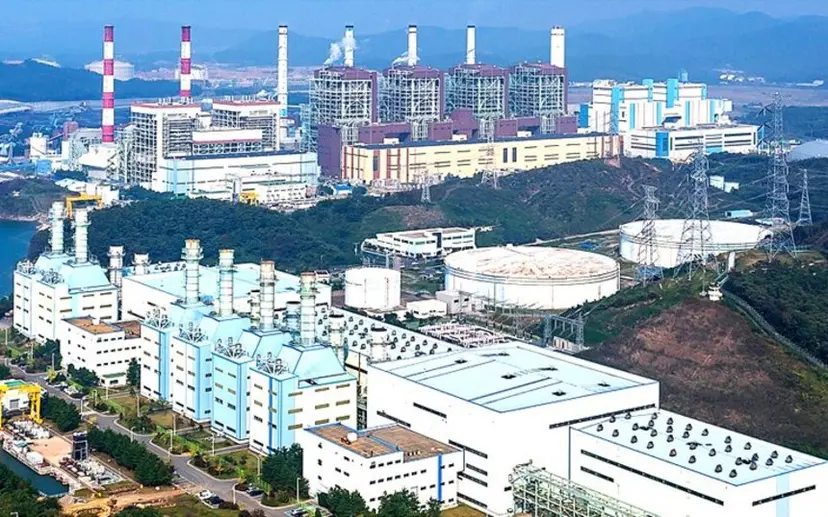
On May 19, the special act was passed at a plenary session of the National Assembly's Climate, Energy, Environment, and Labor Committee. This bill was enacted to mitigate the economic shock in regions housing coal-fired power plants that are inevitably closed during the carbon neutrality transition process and to support the job transition of workers in related power industries.
Key contents include fostering alternative industries in affected regions, financial support for revitalizing the local economy, and the establishment of a "Worker and Phase-out Region Support Committee" to collect opinions from workers and local residents.
"Security Power Source" Clause Emerges as a Key Issue
The most controversial part of the special act is the clause designating coal power plants as "security power sources." The Ministry of Climate, Energy, and Environment has maintained that a legal basis is needed to flexibly utilize existing fossil fuel power infrastructure during energy supply emergencies to prepare for uncertainties in the global supply chain caused by factors such as the prolonged Middle East war. Accordingly, Article 6 of the bill allows the Minister of Climate to designate coal generators scheduled for closure as "security power source generators" or order extended operation for grid reliability if necessary.
Minister of Climate Kim Sung-hwan stated at a cabinet meeting on April 6, "21 coal power plants still have design lifespans remaining past 2040," adding, "We will minimize transition costs by utilizing the remaining coal power plants as security power sources." The government explains that such measures are an alternative to prevent potential instability in power supply for the sake of energy security.
Concerns over Inflexibility and 10.7 Trillion Won in "Capacity Payment (CP)" Burden
However, energy experts and civil society point out that maintaining coal plants as security power sources could lead to financial burdens and inefficiency in grid operation. The first issue raised is the inherent "inflexibility" of coal power. Although not to the extent of nuclear power, coal power takes a long time to adjust output or start up/shut down compared to liquefied natural gas (LNG) power.
With the current domestic power grid saturated to the point where many substations are designated as grid management substations, if large-scale coal power plants occupy grid capacity for long periods, it is highly likely to delay or restrict the connection of new renewable energy. Regarding the inflexibility issue, Minister Kim Sung-hwan mentioned at the cabinet meeting that it takes "roughly 8 hours to reduce output."
A more direct issue is the massive fixed cost required to maintain these facilities. Lim Jang-hyuk, a researcher at Solutions for Our Climate, analyzed, "As Minister Kim Sung-hwan mentioned, if 21 coal plants are kept in standby for the power market, power companies will bid into the wholesale electricity market, which inevitably results in massive 'Capacity Payments (CP)'." Capacity payment is a fixed subsidy paid by the government to power facilities that are ready to supply electricity, even if they are not actually producing it. According to Solutions for Our Climate, if capacity payments are paid while these 21 units remain operational, the cost is estimated to reach approximately 10.7 trillion won.
Even assuming a "mothballed" state—where they do not bid in the electricity market and are completely shut down, prepared only for emergencies—the cost issue remains. Lee Tae-sung, branch head of the Korea Public Transport Workers' Union's Power Non-regular Workers Solidarity, explained, "Due to the nature of power plant facilities, even in a mothballed state, periodic management and maintenance are essential to prevent corrosion and maintain basic equipment performance, and significant maintenance costs continue to be incurred during this process."
Regarding concerns over costs, the Ministry of Climate maintains that specific operating methods, compensation systems, and the scale of the security power sources will be reviewed and specified in the future during the enactment of sub-regulations.
Merging Two Distinct Bills... Workers' Protection Left Behind
Criticism of the bill's merger process also continues. Originally, there were two main types of bills in the National Assembly: the "Just Coal Phase-out Act," which addressed clear phase-out schedules and job protection for power workers, and the "Coal Phase-out Region Support Act," which supported local economies hit by plant closures. Critics argue that during the process of reviewing these two bills with different characters and purposes together, key elements related to a "just transition" were omitted.
Above all, the final bill passed by the standing committee does not specify a clear "coal phase-out target year." Rep. Seo Wang-jin of the Rebuilding Korea Party stated in a committee meeting, "The alternative lacks the specific target year for 'early closure of coal plants' and government authority regulations for closures, which were the core intent of the original bill," adding, "This not only significantly weakens the original legislative purpose of early coal plant closure and carbon neutrality, but also provides the wrong signal to power operators that early closure is merely a voluntary option."
Voices are also saying that protective measures for on-site workers who have to leave the power plants lack specificity. Branch head Lee Tae-sung pointed out, "The bill severely lacks binding measures to effectively guarantee the complete job retention or succession for existing subcontracted/cooperative company workers and non-regular workers during the reorganization process into new industries."
The limited authority of the governance body that should lead the just transition is also cited as a problem. The "Worker and Phase-out Region Support Committee" specified in the bill acts merely as an opinion-collecting body without real budget execution or policy deliberation/decision-making power, creating a structure where the voices from the field are difficult to fully reflect in policy.
This special act is being criticized for retaining the "security power source" clause, which increases uncertainty about the timing of the coal phase-out and incurs financial costs, despite its original justification of regional support. It is known that the National Assembly plans to prepare follow-up legislation to clearly designate the coal phase-out date after the upcoming local elections, considering the critical public opinion and policy limitations.