

[비즈한국] Ahead of the June 3 local elections, a flood of pledges has emerged across Gyeonggi-do, including the creation of semiconductor clusters, the attraction of specialized complexes for materials, parts, and equipment (Sobu-jang), and the cultivation of AI-convergence industries. It is not just Gyeonggi gubernatorial candidates, but also candidates for local government heads in Suwon, Yongin, Pyeongtaek, Icheon, Osan, and Anseong who are placing semiconductor and AI-related pledges at the forefront, regardless of their region or political party.
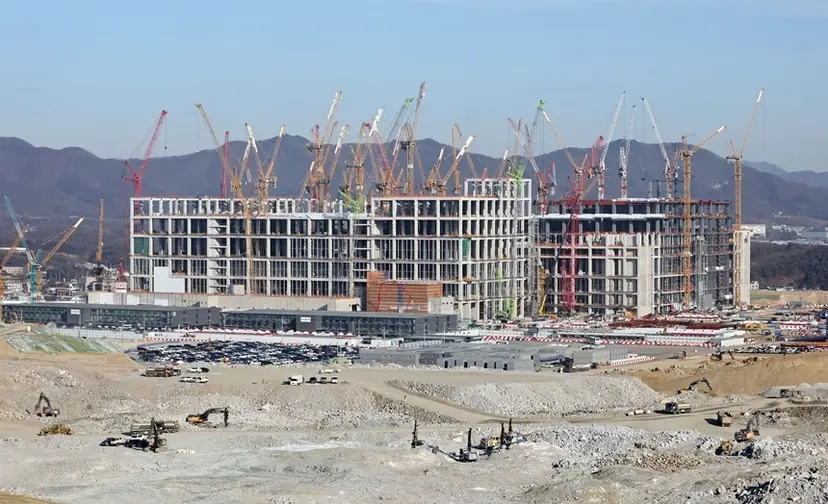
In Gyeonggi-do, where large-scale investments from Samsung Electronics and SK Hynix are concentrated, promises to become a semiconductor hub or to maximize the benefits of such investments are aimed at raising expectations for regional economic revitalization. However, the prevailing view is that the weight of these pledges inevitably differs based on the existing administrative calculations and the gap in living conditions between municipalities that have already secured investments and neighboring ones that are late to jump on the bandwagon.
Three Gubernatorial Candidates: Same "Semiconductor" Theme, Different Colors
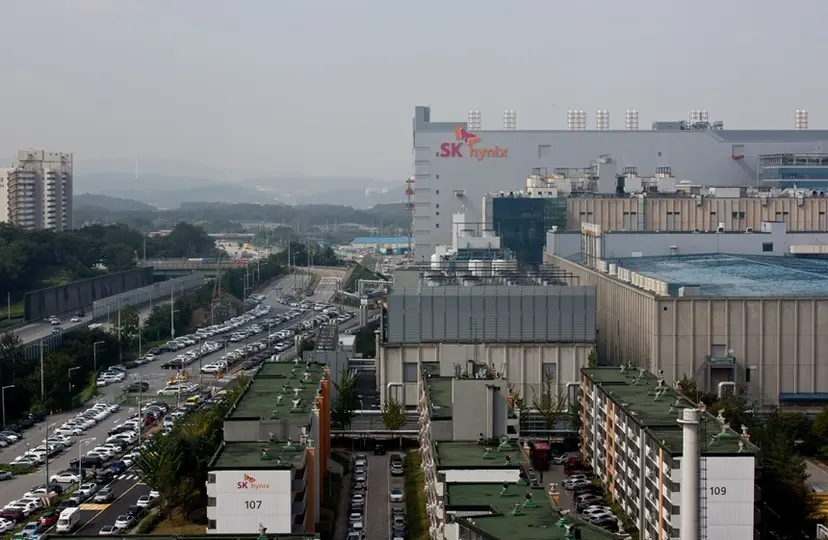
In this election, semiconductor pledges appear to be expanding beyond simple factory attraction into "lifestyle zone reorganization pledges" that encompass transportation, housing, education, and talent cultivation. Given the nature of an industry where a single fab requires tens of trillions of won, analysis suggests that competition for securing infrastructure and functioning as a back-office city has become more important than the production facilities themselves. This is because Samsung Electronics has committed to investing 300 trillion won in the Yongin system semiconductor cluster by 2042, and with talk of SK Hynix's Yongin cluster investment scale reaching up to 600 trillion won, the entire southern Gyeonggi region is effectively being reorganized into a "semiconductor living sphere."
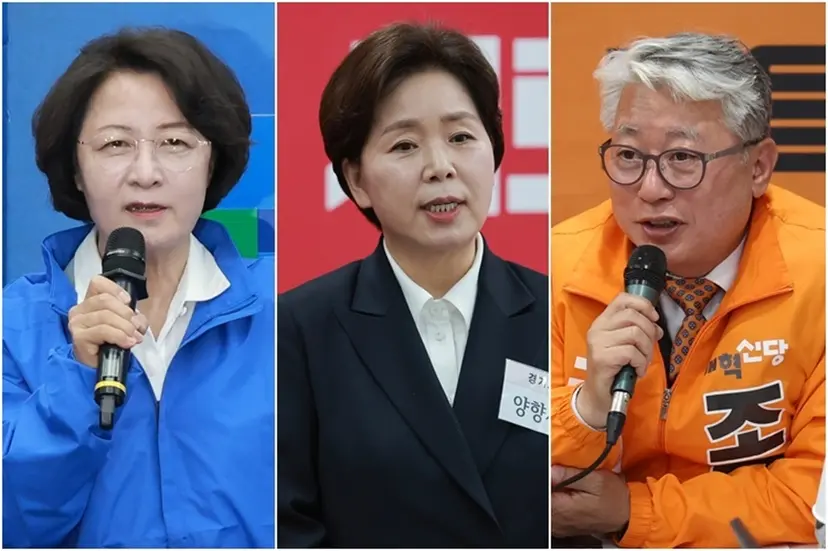
Common tasks for the Gyeonggi governor include completing the Yongin semiconductor national industrial complex, expanding power and water infrastructure, and relaxing the Seoul Metropolitan Area Readjustment Planning Act. Democratic Party gubernatorial candidate Choo Mi-ae’s semiconductor pledge focuses on creating a full-cycle ecosystem linking fabless (design), production, materials/parts/equipment (Sobu-jang), and back-end processes. Her vision includes institutionalizing the development foundation through the establishment of the "Gyeonggi Future Investment Corporation (tentative name)" and attracting a Semiconductor Technology Institute and Semiconductor Graduate School. She also presented a balanced development card by combining the establishment of an "AI Semiconductor Strategy Committee" and a development plan for a peace zone in northern Gyeonggi. In short, she emphasized the construction of industrial policy organizations and public investment platforms over simple competition for attraction.
People Power Party candidate Yang Hyang-ja is more aggressive, leaning on her background as a Samsung Electronics executive. The backbone of her pledge is the construction of "K-Belt," an ultra-wide AI-semiconductor cluster connecting eight cities: Suwon, Seongnam, Yongin, Pyeongtaek, Hwaseong, Icheon, Osan, and Anseong. Along with deregulation, designation as an economic free zone, and the attraction of global Sobu-jang companies, she promised to attract overseas engineering universities like Nanyang Technological University (NTU) and the Hong Kong University of Science and Technology (HKUST), introduce "Future Technology Vouchers" to support the cost of professional training courses from global companies like Nvidia, and establish AI high schools and semiconductor high schools.
Reform Party candidate Cho Eung-cheon opted for a transportation and logistics-centered approach. By linking the "Semiconductor Express" connecting Icheon, Yongin, Hwaseong, Suwon, and Pyeongtaek with a vision for the Southern Gyeonggi International Airport, he emphasized the efficiency of global personnel and logistics movement. A notable feature is his approach to solving high-tech industrial competitiveness through issues of commuting and airport accessibility.
Special City-Level Competition: Pledges Diverge Based on "Ties with Samsung and SK"
In Suwon, two candidates presented regional connectivity in different ways. Democratic Party candidate Lee Jae-jun, seeking re-election, proposed an AI/semiconductor research hub city through designation as an economic free zone and the creation of Tapdong Innovation Valley and an R&D Science Park. Conversely, People Power Party candidate An Gyo-jae focused on building a regional transport network that bundles Samsung Electronics' Suwon and Hwaseong sites, and SK Hynix's Icheon and Yongin clusters into a single "1-hour living zone." His calculation is to solve the issue of housing proximity for semiconductor complex workers through transportation networks.
In Yongin, considered the biggest battleground in Gyeonggi, where massive investments by Samsung Electronics and SK Hynix are already underway, the competition has shifted from "attraction" to "accommodation," or completing back-office infrastructure.
Democratic Party candidate Hyun Geun-taek promoted the early operation of Samsung Electronics' first fab, designation as an economic free zone, and a 500-billion-won venture fund. His picture is to connect fabless and AI semiconductor startups centered around the national semiconductor industrial complex. On the other hand, incumbent mayor and People Power Party candidate Lee Sang-il emphasizes "normal project progress" through rapid licensing and priority support for resident relocation as his key achievement. This is closer to administrative pledges that manage realistic issues such as large-scale compensation, traffic congestion, and the creation of residential districts.
In Hwaseong and Osan, linkage strategies with neighboring cities are prominent. Hwaseong focused on wide-area rail pledges such as the extension of GTX-C and the Shinbundang Line, while Osan placed AI/semiconductor technovalley and smart city visions at the forefront. Osan is cited as a region where the competitive awareness of being a "semiconductor back-office city" has strengthened since losing out to Anseong in the 2023 public contest for the semiconductor Sobu-jang specialized complex. This is the background for why both People Power Party candidate Lee Kwon-jae and Democratic Party candidate Jo Yong-ho put the attraction of AI and semiconductor companies at the core of their growth axes.
For Pyeongtaek and Icheon, the main agenda is how to expand already formed industrial bases. As Pyeongtaek is a production hub centered around the Samsung Electronics Pyeongtaek Campus, pledges are focused on transportation, power, water, and logistics. Democratic Party candidate Choi Won-yong mentioned RE100 compliance by linking an AI-semiconductor convergence cluster with a hydrogen power hub, while People Power Party candidate Cha Hwa-yeol emphasized one-stop administrative support linked to the Special Act on Semiconductors and preemptive construction of power and water infrastructure. It has the character of competition for securing practical infrastructure needed for expanding manufacturing lines.
For Icheon, the key is how to reduce its dependency on SK Hynix. Democratic Party candidate Seong Su-seok pledged to "break away from reliance on a single conglomerate" through a Sobu-jang industrial complex and the Icheon Innovation Center, while People Power Party candidate Kim Kyung-hee proposed the establishment of a 50-billion-won Icheon Industry Promotion Agency and the creation of a hands-on semiconductor museum. This is an approach to link industrial infrastructure with educational and tourism resources.
The Osan region feels a sense of crisis after losing out to nearby Anseong in the 2023 semiconductor Sobu-jang specialized complex contest. Building on the strength of creating a research complex linked with global equipment firm Applied Materials (AMAT), candidates have proposed designation as an AI special zone and creation of a "K-AI Smart City Pilot District" (Democratic Party candidate Jo Yong-ho), and an "AI/Semiconductor-centered Osan Technovalley" linked to the Yongin-Dongtan-Pyeongtaek industrial belt (People Power Party candidate Lee Kwon-jae).
Anseong is in the stage of connecting its already secured Sobu-jang specialized complex to a real ecosystem. Incumbent mayor and Democratic Party candidate Kim Bo-ra simultaneously proposed the creation of a 1,168,000-square-meter semiconductor Sobu-jang Anseong Campus, early groundbreaking for the specialized complex, and the creation of a future mobility mega-special zone.
However, many of these election pledges are difficult for local governments to solve alone. Many tasks presuppose consultation and legislation by the central government, such as relaxing the Seoul Metropolitan Area Readjustment Planning Act, support linked to the Special Act on Semiconductors, designation of specialized complexes, and reflection in the national railway network. It is in this context that Gyeonggi-do and its cities and counties have begun a joint response after the government recently specified "non-metropolitan areas" as a requirement for new semiconductor cluster designations in the enforcement decree of the Special Act on Semiconductors.
Gyeonggi-do officially submitted an opinion to the Ministry of Trade, Industry and Energy to delete the clause, and on the 28th, held an emergency countermeasure meeting at the provincial government building with 31 cities and counties in the province and related agencies to discuss joint response plans. Hyun Byeong-cheon, Director of the Future Growth Industry Bureau, pointed out, "As speed and execution power are key to the semiconductor industry, a method that uniformly excludes the Seoul metropolitan area is not desirable from the perspective of national competitiveness either."
Debates surrounding this continued until the very end of the election. At the Gyeonggi gubernatorial candidate debate on the same day, Reform Party candidate Cho Eung-cheon and People Power Party candidate Yang Hyang-ja launched an offensive, asking, "Would you agree if they said they would exclude the Seoul metropolitan area?" while candidate Choo countered, "We must find a way to coexist," adding, "Gyeonggi-do must complete the full cycle of semiconductors to maintain its super-gap."
However, all three candidates agreed that existing semiconductor industrial complex plans should be maintained in their original form. There is a strong observation that even after the election, Gyeonggi-do and its cities and counties are likely to work together on government policy responses based on their shared interest as a "Seoul Metropolitan Semiconductor Belt.".