

[비즈한국] For several years, LG Electronics has been running the ‘Batteryturn’ campaign, which encourages consumers to return used vacuum cleaner batteries for recycling. However, despite the noble intentions, the operation of the campaign—ranging from guidance on eligible returns to verification procedures—leaves much to be desired. Experts point out that the company needs to provide clearer information to avoid consumer confusion.
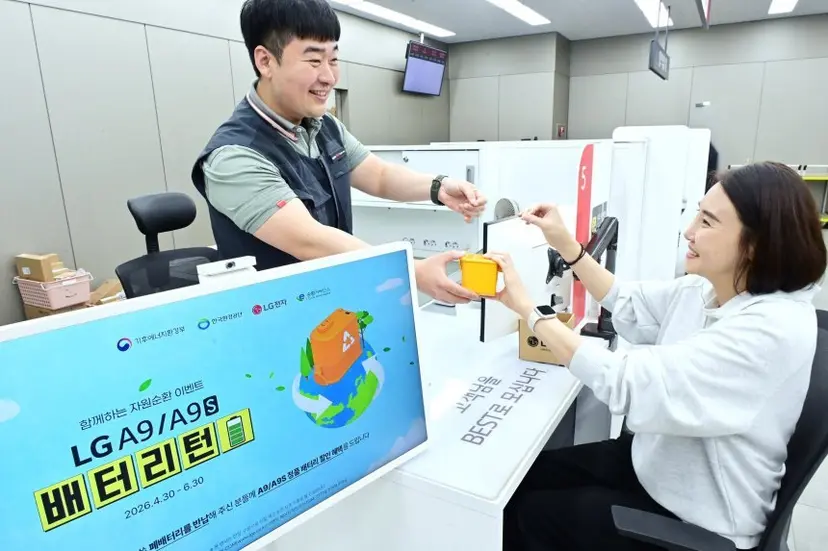
Since 2022, LG Electronics has conducted the Batteryturn campaign twice a year, supported by the Ministry of Environment and in partnership with the Korea Environment Corporation and E-Circular Governance. The initiative aims to collect exhausted vacuum batteries and turn them back into resources. According to LG Electronics, approximately 128 tons of used batteries have been collected over the past four years. The collected batteries are dismantled to recover over 11 tons of rare metals—such as nickel, cobalt, lithium, and manganese—that are essential for high-tech industries. Furthermore, funds raised through the campaign have been donated to child welfare facilities.
Consumers who return their waste batteries receive discounts on new purchases: 40,000 won when returning and purchasing at offline service centers, and 25,000 won at online brand shops. However, Bizhankook found that the online brand shop lacks a functioning mechanism to verify whether a battery has actually been returned.
On the 28th, this reporter purchased a battery via the LG Electronics Batteryturn event page. As promised by the company, a 25,000 won discount was applied. The problem, however, was that the purchase process did not verify whether a used battery was actually being returned.
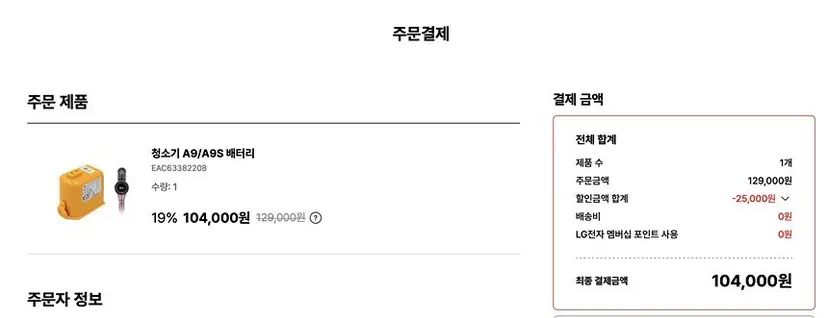
Once the battery product was selected, the 25,000 won discount was applied, and payment was completed without any return verification. Given the campaign's goal of recycling waste resources, it is disappointing that there is no system in place to at least certify the return of the old battery.
The guidance regarding the types of batteries collected also requires attention. While LG Electronics stated in press releases that they collect batteries regardless of the manufacturer, the event page on their official website prominently displays the phrase, “Return of genuine A9/A9S batteries.”
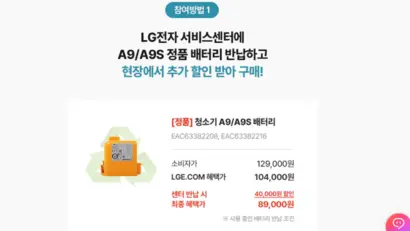
In particular, information about batteries from other manufacturers was inconsistent. While an LG Electronics representative and offline service centers stated that they accept batteries from any manufacturer, the customer service center advised that only specific products from other brands were eligible for returns and discounts.
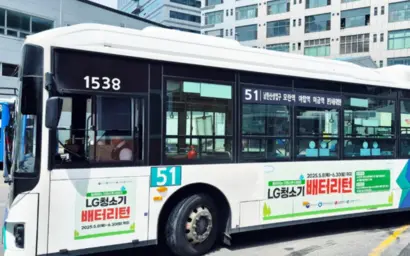
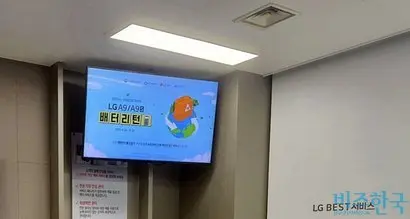
The promotional strategy also left something to be desired. LG Electronics stated that they are currently promoting the campaign through banners on their website and TV screens inside service centers. Compared to 2025, when they even ran advertisements on city buses nationwide, the channels for consumer exposure have significantly decreased.
Vacuum cleaner batteries are items for which regular consumers find it difficult to know how to dispose of properly. As such, the manufacturer’s effort to provide a collection channel combined with discount incentives could be an effective way to encourage consumer participation in resource circulation. LG Electronics introduces the Batteryturn campaign as a “customer-participatory resource circulation campaign that practices environmental protection and neighborly love at the same time.” For the campaign to be more than just a superficial gesture and to reach a wider audience, a more delicate approach to guidance and promotion seems necessary.