

[비즈한국] Domestic battery and battery materials companies are expanding the proportion of lithium iron phosphate (LFP) in their business structures, which have traditionally been centered on high-nickel ternary batteries (NCM/NCA). This is interpreted as a portfolio diversification strategy following the prolonged slowdown in global electric vehicle market demand (chasm) and the rising demand for energy storage systems (ESS) due to the expansion of artificial intelligence data centers. Major battery cell and material companies are accelerating the introduction of LFP-related facilities through production line conversions and new factory construction.
Battery Cell Industry Responds to Rising ESS Demand
LG Energy Solution has begun expanding its LFP-based business by securing large-scale supply volumes in the North American ESS market. On May 28, LG Energy Solution announced that it had signed an agreement to supply 6GWh of ESS batteries to DTE Energy, the largest integrated energy company in Michigan, USA. The contract is valued at $1.6 billion (approximately 2.4 trillion won) with a supply period of two years.
The ESS batteries supplied through this contract will be used in eight power grid construction projects currently being pursued by DTE Energy in Michigan. This project includes building the power grid for a new AI data center being established by global big tech company Oracle in Saline Township, Michigan. Due to the nature of AI data centers that operate 24 hours a day, the role of ESS is growing as power infrastructure capable of stably controlling massive power consumption and frequent load fluctuations is essential.
In line with this demand, LG Energy Solution is in the process of converting its existing electric vehicle battery production lines for ESS use. To diversify its product portfolio, it is converting some lines at its Ultium Cells Tennessee factory into LFP lines for ESS.
Battery Material Companies Launch LFP Cathode Production Facilities
In step with the battery cell manufacturers' shift to LFP, domestic material companies producing cathodes and other components are also pushing for the localization of LFP materials and securing production capacity.
POSCO Future M announced the start of construction on a dedicated LFP cathode factory on May 28, aiming for market entry. 'CNP Advanced Materials Technology,' a joint venture between POSCO Future M, PINO, and CNGR, held a groundbreaking ceremony for its LFP cathode plant in the Yeongilman 4 General Industrial Complex in Pohang, North Gyeongsang Province. The plant aims for mass production by 2027 and plans to increase production capacity in stages to a maximum of 50,000 tons per year.
Separately from building the new dedicated plant, POSCO Future M is also concurrently converting some of the existing ternary production lines at its Pohang cathode plant to LFP cathode lines to respond quickly to market demand. The company explained that it plans to start prototype production during the second quarter of this year and enter a full-scale mass production system starting in the second half of the year.
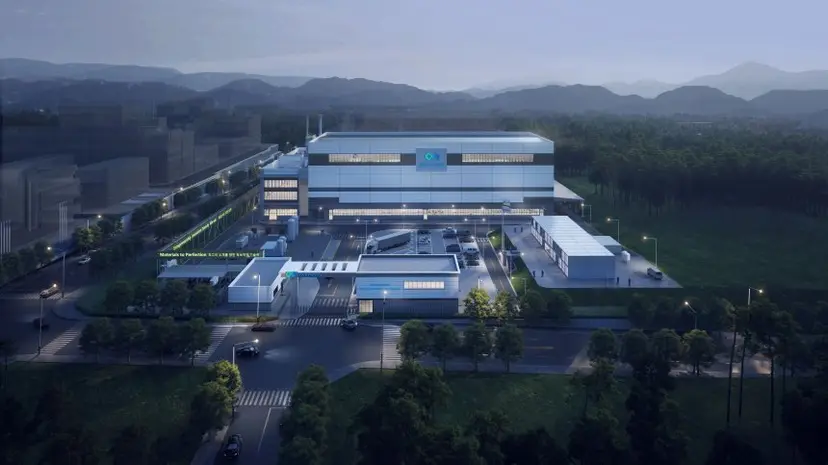
L&F also completed the construction of a factory for its wholly-owned subsidiary, 'L&F Plus,' which is dedicated to the production and sale of LFP cathode materials, on May 18, and will begin full-scale mass production from the end of the third quarter of this year. A total of 338.2 billion won is expected to be invested in this plant, which is built on a 100,000-square-meter site within the National Industrial Complex in Guji-myeon, Dalseong-gun, Daegu.
L&F plans to start with an annual capacity of 30,000 tons by the end of the third quarter of this year and build a total annual production system of 60,000 tons by the first half of 2027, in line with the schedule for securing mid- to long-term North American ESS volumes. In particular, it plans to respond to non-Chinese LFP supply chain demand based on its 3rd-generation high-density LFP technology, which implements higher energy density than general LFP.
Heo Je-hong, CEO of L&F, stated, "The completion of the L&F Plus factory signifies the beginning of a two-track cathode system where the existing high-nickel business and the new LFP business grow together," adding, "By adding a new growth axis called LFP, we will leap forward as a key partner in the global battery material market that encompasses both electric vehicles and ESS."
US Trade Regulation Changes and LFP
These moves by domestic battery material companies are closely related to the reorganization of supply chains and the strengthening of regulations in global markets, including the United States. Although Chinese companies currently account for about 90% of the global LFP cathode supply, the demand for non-Chinese materials is gradually increasing as the intensity of US trade pressure rises.
In particular, according to the 'One Big Beautiful Benefit Act (OBBBA),' a tax cut law enacted by the US government, batteries produced in North America must meet the Materials and Components Requirements (MACR) to receive Advanced Manufacturing Production Credit (AMPC) benefits. This refers to the proportion of direct battery material costs not procured from Foreign Entities of Concern (FEOC) such as China; the requirement starts at 60% this year and will be strengthened annually to reach 85% by 2030.
The US government's de-risking policy regarding the supply chain is expected to further solidify the cooperative system between domestic battery cell and material companies. Additionally, domestic battery cell manufacturers that have entered the North American market face the task of diversifying their stable supply chains to replace existing Chinese materials in order to maintain tax benefits.