

[비즈한국] As the bio-healthcare industry emerges as a key future growth engine for the nation, local governments are vying fiercely to attract bio-clusters. Currently, there are 6 bio-clusters in Seoul alone and over 20 nationwide. However, there is no small amount of criticism that this is an “indiscriminate proliferation” in terms of the efficient allocation of limited resources. With the National Bio Committee launched last month vowing to build a “Korean-style bio-cluster” ecosystem, suggestions are being made that each cluster must specialize in its own strengths and enhance overall competitiveness through mutual collaboration.
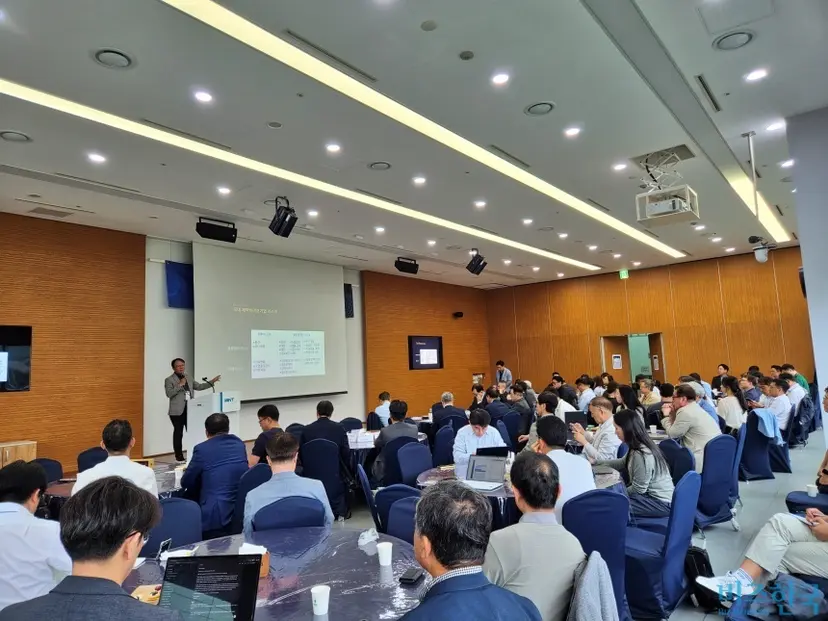
Kim Young-ok, President of the K-Bio Strategy Research Institute, who previously served as Director of the Pharmaceutical Safety Bureau and Bio-Hemp Bureau at the Ministry of Food and Drug Safety, served as a speaker at the Munjeong Bio CEO Forum held at the Hans Biomed auditorium in Munjeong-dong, Songpa-gu, Seoul, on the 27th, calling for strong structural improvements in bio-clusters. While acknowledging that competition between clusters should be a driving force for innovation, President Kim pointed out that if all bio-clusters continue to pursue the same “full-package” model as they do now, it will be difficult to demonstrate global competitiveness. A full-package bio-cluster refers to a model equipped with the manpower and facilities of industry, academia, research, and hospitals, covering the entire value chain under a step-by-step system managed by a general support organization.
She advised, “The problem is that local government heads make the construction of full-package bio-clusters a campaign promise every election,” adding, “Some bio-clusters located in provincial areas are struggling with operations to the point where they find it difficult even to attract tenant companies. A control tower is needed to coordinate them to ensure there are no wasteful elements between clusters.”
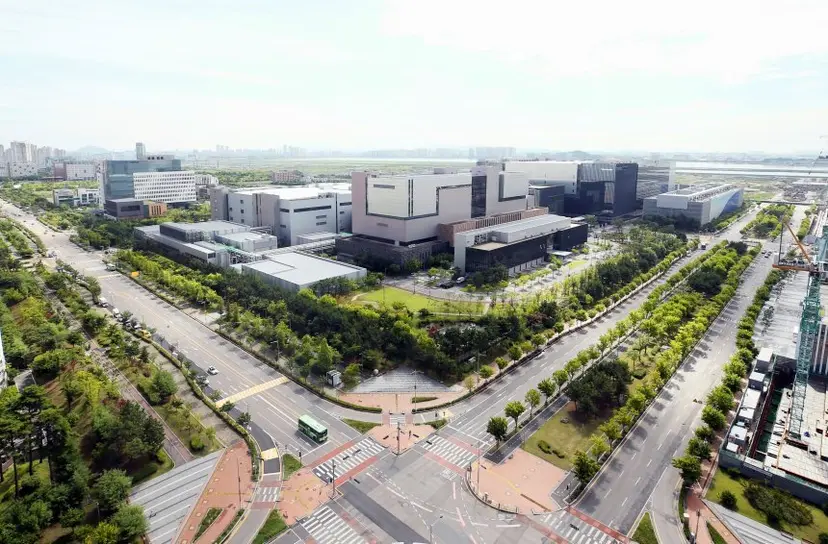
President Kim cited Songdo as the most ideal full-package bio-cluster model. Songdo is home to large bio-companies such as Samsung Biologics, Celltrion, and SK Bioscience, and has a robust industry-academia ecosystem including Yonsei University International Campus, University of Incheon, Catholic University of Korea Incheon, and the Asian campuses of SUNY Korea, George Mason University Korea, and the University of Utah. President Kim forecasts that if the Songdo Severance Hospital opens in 2029 and a Seoul National University Hospital is built in Siheung, adjacent to Songdo, an industry-academia-research-hospital ecosystem comparable to Boston, a representative global bio-cluster, can be completed.
She cautiously stated, “Boston is a structure where over 20 prestigious universities including MIT and Harvard, numerous hospitals, ventures, CROs (Contract Research Organizations), and VCs (Venture Capitalists) are gathered, and high-quality personnel are continuously supplied,” adding, “Given the scale of our country, it will not be easy for regions other than Songdo to grow into a full-package cluster of this level.”
The National Bio Innovation Committee, which launched last month as an inter-ministerial control tower, is also looking at the reality of domestic bio-clusters with a sober eye. The judgment is that because there was no unified control tower, each ministry and local government competitively attracted budgets and fostered clusters according to individual laws and projects, and as a result, synergy effects between clusters were hindered. They are also presenting an analysis that there is virtually no proper cluster where industry, academia, research, and hospitals are organically linked.
Accordingly, the National Bio Innovation Committee announced a plan to systematically promote bio-cluster innovation to connect global-level hub clusters with regional and individual clusters across the country. The strategy is to foster functionally specialized hub clusters by region through selection and concentration, and connect them with individual clusters.
The committee’s goal is to connect eight major hubs including Songdo, Osong, Daejeon, and Daegu by 2028, and then build a bio-cluster information integration platform that can utilize AI to link hub and individual clusters nationwide to expand into the private ecosystem by 2030.
Ultimately, the success or failure of policy depends on the field. Lee Seung-kyu, Vice President of the Korea Biotechnology Industry Organization, urged for field-oriented policy implementation, saying, “No matter how many policies the government releases and no matter how many visions they put forward, what is the point if the industry cannot feel them?” He added, “Since they said they would think about it and release policies in the second half of the year so that the industry can feel them, I am going to try to trust the government once more.”