

[비즈한국] In the second civil trial regarding the suspension of redemptions for Lime Asset Management funds (Lime Funds), the court has once again ruled partially in favor of an investor against Daishin Securities. Similar to the first trial, the appellate court acknowledged damages for only one investor while dismissing the claims for contract cancellation by the others. Investors have protested, arguing that denying contract cancellation despite fraudulent practices sets a 'bad precedent' that makes it impossible to protect those investing in high-risk products.
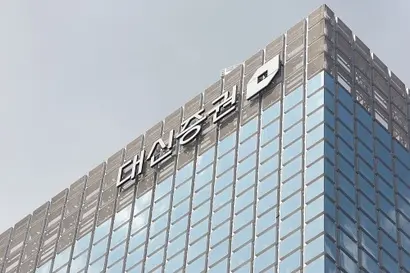
On May 15, the 18-2 Civil Division of the Seoul High Court issued a partial victory for the plaintiffs in a lawsuit filed by three Daishin Securities investors against Daishin Securities regarding the return of unjust enrichment, upholding the original ruling. As in the first trial, the court ordered Daishin Securities to pay approximately 267.25 million won plus interest to only one investor, Mr. A, while dismissing the claims of the other investors for restitution through contract cancellation.
The lawsuit was first filed in October 2022, and it took nearly three years for the first trial result to be delivered (Related article: First Civil Judgment in Daishin Securities 'Lime Incident' After 3 Years… Damages Acknowledged, Contract Cancellation Dismissed). Both Daishin Securities and the investors appealed in September 2025, and the verdict was delivered two months after a single hearing held in March.
In the first trial, 23 investors appeared as plaintiffs, but all claims except for those of Mr. A were dismissed. The court only recognized the damages for Mr. A, who had not participated in the mediation process set by the Financial Dispute Mediation Committee. Consequently, in the second trial, only three investors including Mr. A participated to claim contract cancellation and full compensation, but once again, only Mr. A's compensation was recognized. However, the scope of Mr. A's compensation increased as the appellate court moved the timeline for damages caused by the incomplete sale back to September 2020.
The 'Lime Incident' refers to a scandal where funds set up and managed by Lime Asset Management suspended redemptions in 2019, causing over 1 trillion won in damages. Daishin Securities was one of the major sellers of these funds, with most of the Daishin-sold Lime Funds being distributed through its Banpo WM Center.
Jang, the former head of the Banpo WM Center, was indicted and sentenced to two years in prison and a 200 million won fine for violating the Capital Markets Act through fraudulent and unfair trading practices, having sold funds through incomplete disclosure despite known structural issues. Daishin Securities was fined 100 million won for failing its duty of care and supervision to prevent such violations.
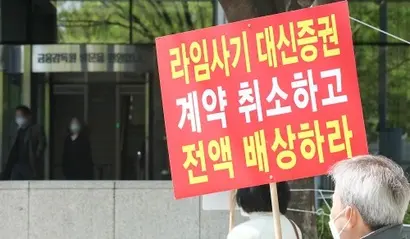
Investors maintained that the second trial result was unjust, particularly in its refusal to grant contract cancellation. The first court had previously denied contract cancellation, citing reasons such as: the inclusion of loss warnings in investment proposals; documentation indicating investors received terms and conditions; signatures confirming explanations of investment risks and principal loss potential; and the distinction between 'fraud' in a civil/criminal sense and the 'fraudulent trading' violation under the Capital Markets Act for which former center head Jang was convicted. Investors refuted this, stating, "It is a ruling that ignores the nature of the materials provided."
Jung Gu-jip, co-representative of the Daishin Securities Lime Fraud Victims Committee, said, "Former center head Jang was convicted of fraudulent and unfair trading, and Daishin Securities' responsibility for that was clearly acknowledged. It is not that there is a legal vacuum or a lack of evidence. It is difficult to understand why, even when criminal trials proved that false information was distributed to encourage investment, the court refuses to acknowledge contract cancellation." He added, "This will remain a bad precedent where contract cancellation is deemed impossible even when fraudulent trading occurs."
Representative Jung further remarked, "If investors are held responsible even after a conviction for fraudulent trading is secured, how can we trust products sold by domestic financial firms in the future? There is high interest in government-led public-growth funds, but these are essentially high-risk products as well. Problematically structured products continue to emerge in the financial market, and this ruling will be recorded as a case where investors in fundamentally flawed products remained unprotected."
Meanwhile, Daishin Securities did not disclose its stance regarding the second trial result of the Lime incident civil suit. Neither side has confirmed whether they will appeal to the Supreme Court. The investors' side stated they are considering an appeal given the difficulty in getting contract cancellation recognized.