

[비즈한국] The 'Korea Art Promotion Project' Season 12 begins, a program designed to cultivate the fertile soil of Korean art. This initiative is now recognized within the art community as a meaningful event for discovering and fostering artists. It has a well-established reputation among artists as a project they want to participate in. The core keyword that the 'Korea Art Promotion Project' has pursued from the start was 'embracing the diverse currents of Korean art and seeking developmental change.' As a result of these principles, it is evaluated as having established a perspective for viewing contemporary Korean art.
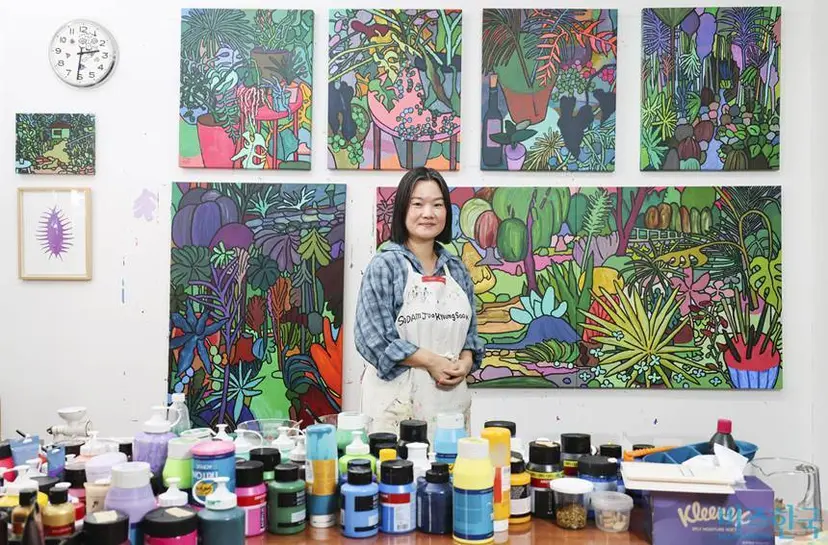
Do lines truly exist in nature? Strictly speaking, lines do not exist. What we perceive as lines are merely the results of surfaces meeting one another; lines themselves do not exist. Yet, we perceive lines constantly in our daily lives. When drawing a picture, the first thing we encounter is a line. Everything in nature is also expressed through lines. Thus, the line occupies an essential and important position as the most fundamental element in painting.
In Western art, which was faithful to the visible world, the line struggled to be treated as an independent formative element. Interest in lines emerged in earnest during the 20th century. Until then, lines were used merely as auxiliary means to define contours or clarify the nature of surfaces to describe objects, or as rough sketches for basic composition.
Artists who showed interest in lines and presented them with an independent character in the early 20th century include Expressionist painters Raoul Dufy and Georges Rouault. Dufy infused lines with musical qualities to provide sensory pleasure, while Rouault became a name in art history by expressing the depth of the religious spirit through bold, thick lines.
With the advent of abstract art, the line emerged as the most important formative element. The line itself came to possess an independent character. This led to the emergence of the concept of 'drawing' based on lines.
In contrast, in Eastern art, the line has always been at the center. It can be said that Eastern painting has evolved and developed based on how lines were handled. Calligraphy is considered the most successful art form that infuses meaning into lines.
In calligraphy, lines contain not only meaning but also the artist's character and spirituality. By the late Joseon Dynasty, calligraphic lines reached a level of creating a new style of painting. This is the brush-focused painting referred to as 'New Sensibility Landscape'.
A representative artist of this school, Buksan Kim Soo-cheol, brought out the flavor of neat natural scenery with the clear and concise lines of calligraphy, while Ubong Jo Hee-ryong showed the meaning of a vibrant, spirited landscape with the rhythmic lines of cursive script. Chusa Kim Jeong-hee created his own unique lines, opening a world of sharp literati painting that demonstrated the dignity of the scholar's spirit.
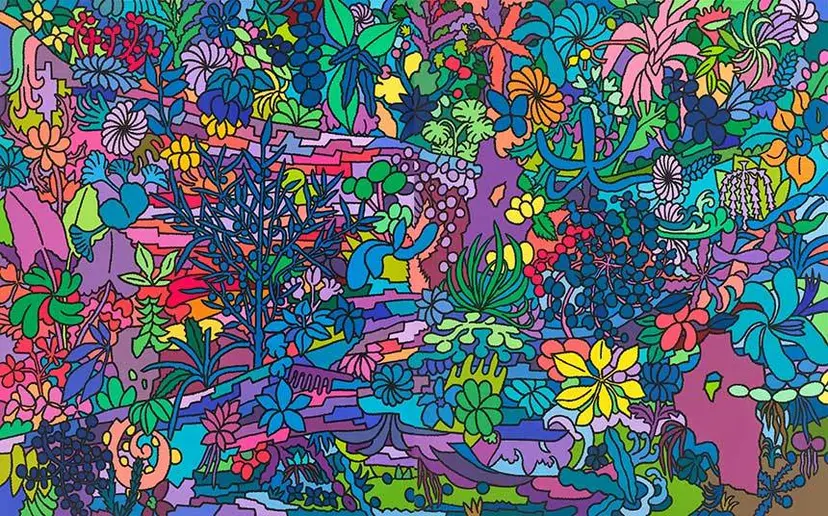
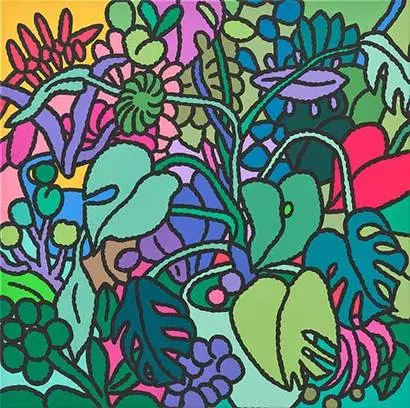
The essence of Joo Kyung-sook's painting is also the line. The meaning of the lines she pursues aligns with the aesthetics of the 'New Sensibility Landscape' of the late Joseon Dynasty, which can be called a uniquely Korean style of painting. It is so because she takes nature as her subject, imbues her lines with human character, and seeks the nature of lines from the brushwork of calligraphy.
She finds the energy of life and the order of existence in plants commonly seen around her and creates paintings from them. She expresses the invisible links that connect the ecology of plants to her own life through these lines. In Joo's paintings, these lines appear as contours describing the plants. However, they do not stop at being lines that merely explain the shape of a plant. They are significant because she depicts plants with textured, substantial lines that reflect the brush skills honed through calligraphy.
![[Korean Art Support Project Season 12] Kwon Ji-hyun - The Message in Wildflowers](https://s.bizhankook.com/attachments_thumb/2026/05/98175_thumb.webp)
![[Korea Art Promotion Project Season 12] Seo Je-ah - Growing Pains Expressed Through Leather Art](https://s.bizhankook.com/attachments_thumb/2026/05/98480_thumb.webp)
![[Korea Art Promotion Project Season 12] Kim Hyun-bin: Capturing the Traces of Time in Abstraction](https://s.bizhankook.com/attachments_thumb/2026/05/98642_thumb.webp)
![[Korea Art Promotion Project Season 12] Joo Kyung-sook - Lines Containing the Energy of Life](https://s.bizhankook.com/attachments_thumb/2026/06/106488_thumb_74bfae90.webp)
![[Korean Art Support Project Season 12] Kim Kyung-won - Original Paintings Created Through Optical Illusions](https://s.bizhankook.com/attachments/2026/07/4942ec34bbf7_bd974ed4.jpg)
![[Korea Art Promotion Project Season 12] Claire Kim - Cartoon-like Paintings](https://s.bizhankook.com/attachments/2026/07/79ed5c5967a3_47729c25.jpg)