

[비즈한국] As the international shipping industry faces stricter environmental regulations, the paradigm for marine fuel is rapidly shifting from heavy fuel oil (Bunker C) to liquefied natural gas (LNG). In this process, the power systems of ships are also undergoing restructuring. Seizing this change as an opportunity, the Korean shipbuilding industry is aiming to diversify away from the monopolistic structure of core technologies for large ship engines, which has long been dominated by Europe. There is also a growing sense of securing a foothold in the next-generation shipbuilding market by consolidating technical achievements in the field of LNG bunkering vessels, which supply fuel at sea.
Environmental Regulations Tighten, but Battery Technology Hits Limits
The International Maritime Organization (IMO) is implementing a phased regulatory roadmap to reduce greenhouse gas emissions in the global shipping sector. By applying the Energy Efficiency Design Index (EEDI) to new ships and the Energy Efficiency Existing Ship Index (EEOI) to existing ones, they are strengthening carbon emission controls. In particular, as the Carbon Intensity Indicator (CII) system, which evaluates carbon efficiency based on annual operational data, has taken hold, ships that repeatedly receive low ratings face restrictions on commercial operations. In addition, the demands for ESG management from global asset managers are acting as factors pressuring shipping companies to transition their fuels.
Bunker C, the primary fuel for existing ships, emits significant amounts of air pollutants such as sulfur oxides (SOx) and particulate matter. While marine gas oil (MGO) is mentioned as a substitute, its high price due to refining costs is cited as a volatility risk. Installing exhaust gas cleaning systems (scrubbers) also has vulnerabilities, such as the issue of treating contaminated sludge and the limitations of direct carbon dioxide reduction.
Pure electric propulsion using batteries, another potential method, can be introduced for small-scale, short-distance ships, but its limitations for large merchant vessels are clear. Because energy density is lower than fossil fuels, a significant portion of a ship's interior must be dedicated to battery storage for long-distance ocean voyages, leading to reduced cargo space and lower economic viability.
In contrast, when LNG is cooled to minus 163 degrees Celsius and liquefied, its volume is reduced to 1/600th compared to its gaseous state, resulting in high transport efficiency. Compared to conventional fuels, it can block most sulfur oxide and particulate matter emissions and reduce carbon dioxide emissions by approximately 23%. This is why it is evaluated as the most effective "bridge fuel" at this point in time.
'DFDE' System Increases Spatial Efficiency and Fuel Economy
As the LNG propulsion method moves into full swing, the adoption of the 'Dual Fuel Diesel-Electric (DFDE)' system, which combines the advantages of internal combustion engines and electric propulsion, is increasing in the large merchant vessel market. A dual-fuel engine is an internal combustion engine that uses two or more fuels (diesel and LNG, methanol, ammonia, etc.) either selectively or simultaneously. Multiple dual-fuel engines placed within the DFDE ship drive generators to produce electricity, which then powers the electric propulsion motors to move the vessel.
In the past, mechanical propulsion systems required the large main engine and the propeller to be directly connected via a shaft, limiting the engine room's location to the lower stern. Conversely, because the DFDE system connects the engine and motor via power cables, internal spatial arrangement is much more flexible. This allows for reduced engine room space and the acquisition of additional cargo space, thereby increasing transport efficiency.
Loads based on operational conditions can also be reduced. Because only the necessary engines can be selectively operated in low-load situations such as slow steaming, fuel efficiency can be maintained. Being a multi-engine structure, the ship can continue to operate using the remaining engines even if one requires maintenance. If mechanical engines are used in icebreakers, the crankshaft is subjected to heavy loads, increasing the risk of failure. In contrast, the DFDE method, which utilizes electric motors, allows the engine to be mechanically decoupled from the motor's load, enabling safe power generation at a constant speed, while the motor can break through ice with powerful torque, increasing the overall mechanical stability of the ship's system.
There are also advantages in operational efficiency. The DFDE system maintains optimal fuel economy by operating only the required number of engines during low-load operations and completely shutting down the rest.
Will the Royalty Structure for Core Ship Engine Technology Change?
The rise of multi-engine and electric propulsion systems using dual fuels goes beyond the mechanical engineering benefits of improved fuel efficiency and space savings; it is directly linked to the deeply rooted issue of "ship engine sovereignty." Although South Korea is a shipbuilding powerhouse boasting the world's number one ship construction capacity, it carries an Achilles' heel of technological dependence in the field of "large 2-stroke engines," the propulsion units for large merchant vessels that account for the largest proportion of ship costs.
Currently, the original design and core technology for main engines for large ships are effectively split and monopolized by two giant companies: Germany's 'MAN Energy Solutions (MAN-ES)' and Switzerland's 'WinGD (Winterthur Gas & Diesel).' Since major Korean shipbuilders like HD Hyundai Heavy Industries, Hanwha Ocean, and Samsung Heavy Industries, along with their affiliated engine manufacturers, do not possess the core design technology for large engines, they manufacture them in the form of 'technology collaboration (licensee),' receiving blueprints from the two European firms to supply shipyards. This means paying hefty technology royalties every time an engine is produced.
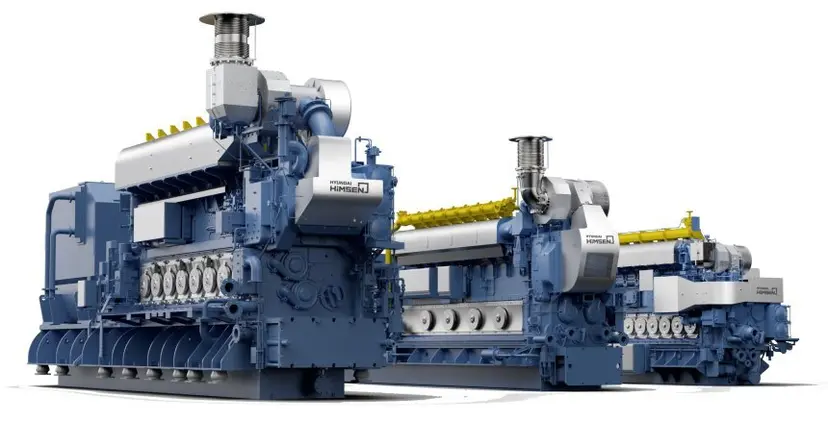
However, as the adoption of DFDE systems increases, the status of domestic companies that possess independent technology in the medium-sized engine segment has expanded. Medium-sized dual-fuel engines such as the 'HiMSEN engine,' developed with HD Hyundai Heavy Industries' own technology, are increasing their share in the market, complementing the existing ecosystem dominated by foreign large engines.
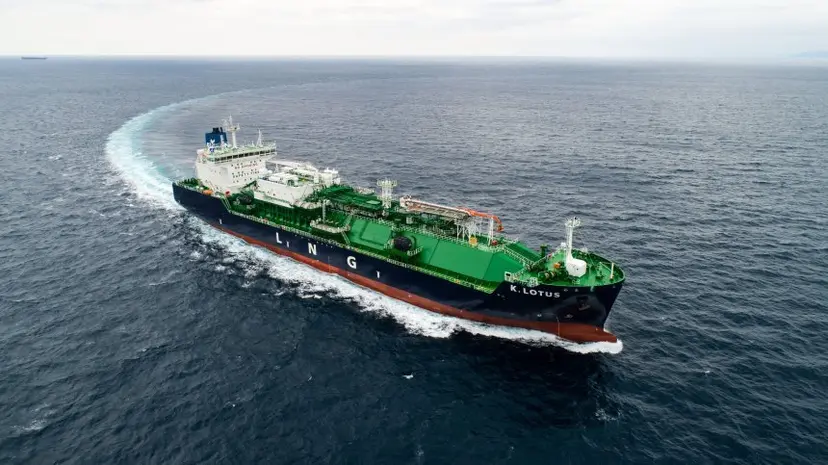
Coupled with the proliferation of LNG-powered vessels, the 'LNG bunkering' market, which supplies fuel to ships, is also showing continuous growth. According to related statistics, global LNG bunkering demand is expected to reach 16 million tons by 2030, and recently, a trend has been observed where the volume of LNG bunkering vessel orders in the market exceeds that of general LNG carriers.
Bunkering methods include Tank-to-Ship (TTS) using tanker trucks and Pipe-to-Ship (PTS) through land terminals, but there are limitations in capacity and location to meet the refueling needs of large merchant vessels. Consequently, the Ship-to-Ship (STS) method, where a dedicated bunkering vessel approaches the target ship to supply fuel, is establishing itself as an alternative.
The advantage of STS bunkering is its 'simultaneous operation' capability, which allows cargo loading and fuel supply to proceed at the same time. While a ship is docked at the pier unloading cargo, a bunkering vessel can moor on the opposite side to inject fuel, eliminating the need for separate docking time just for refueling. This shortens the port stay time for shipping companies and improves operational economics.
A shipbuilding industry insider stated, "As LNG bunkering vessels have been actively ordered recently, they are attracting attention as future revenue sources for small and medium-sized shipbuilders," adding, "Demand for LNG-related technology is increasing as many shipping companies demand ship designs that can reduce greenhouse gas emissions."