

[비즈한국] As labor and management at Samsung Electronics reached a dramatic agreement, the industry's attention has shifted to Samsung Biologics. Since staging its first strike in the company's 15-year history, the Samsung Biologics labor union has continued to be at odds with management while engaging in "work-to-rule" protests. With no signs of narrowing their differences over wage increase rates, improvements to the performance bonus (OPI) system, and personnel management principles, the situation shows signs of dragging on.
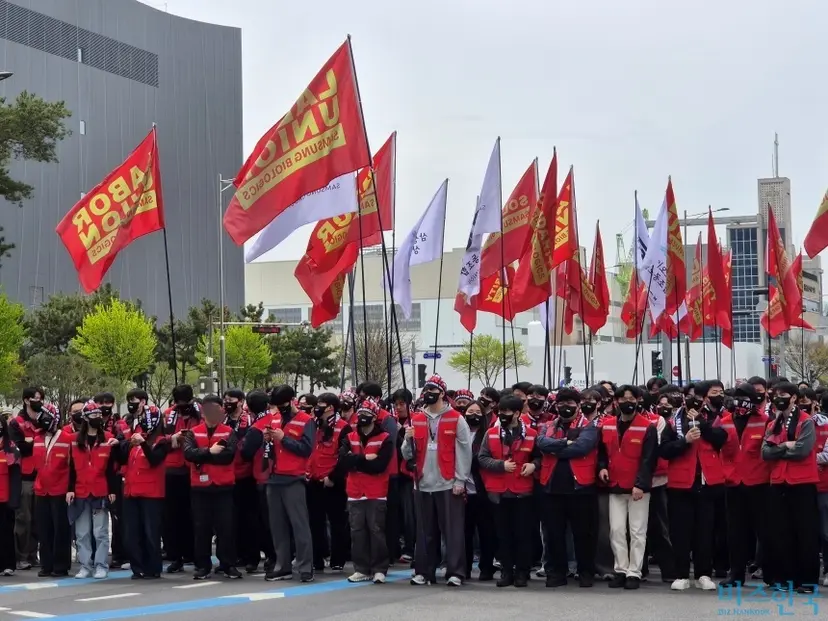
Park Jae-sung, chairman of the Samsung Biologics Sangsaeng Labor Union, stated in a written interview with our publication on the 21st, "There is currently no significant progress in labor-management negotiations," adding, "From our perspective, the company lacks a clear will to resolve the situation, so it appears the conflict will be prolonged." Chairman Park further added, "There are sharp disagreements between labor and management on all issues, including wages and welfare systems."
Following a full-scale general strike from the 1st to the 5th, the Samsung Biologics Sangsaeng Union is currently conducting a "work-to-rule" protest by strictly adhering to stipulated working hours and procedures. Although this is a lower-intensity form of protest compared to a general strike, industry experts believe the impact could be significant given the nature of biopharmaceutical production, which requires 24-hour continuous processes.
The core of the biopharmaceutical CDMO (Contract Development and Manufacturing Organization) business involves culturing and purifying living cells. If the timing of any process is missed or temporarily halted, all high-value antibodies and protein raw materials currently in culture must be discarded, leading to inevitable losses. In particular, there are concerns that if Samsung Biologics' long-emphasized external credibility regarding quality competitiveness, process stability, and on-time delivery is damaged, it could cause long-term harm to its competitiveness in winning future CDMO contracts, such as by leading global big pharma clients to leave.
Management recently warned of astronomical potential losses in the event of a strike through an injunction filed with the court to prohibit industrial action. The company argued that since there are about 100 batches being processed daily at the current plant, stopping even the minimum essential processes could result in losses exceeding 640 billion won.
Chairman Park acknowledged the impact that the work-to-rule protest is having on the site. He said, "The very fact that the work-to-rule protest is ongoing means the situation is not over," and added, "This is having a practical impact on the company's order and production schedules." However, he remained tight-lipped regarding the specific scale of the setbacks or risks.
The Samsung Biologics labor union is keeping silent about specific protest schedules, such as a potential second general strike. This is interpreted as a move mindful of legal battles with management. On the 23rd of last month, the Incheon District Court partially granted the company's injunction request, ruling that essential security tasks, such as "work to prevent the deterioration or spoilage of thawed cell lines," must not be interrupted even during a strike. Immediately following the court's decision, management filed an interlocutory appeal requesting that the remaining essential processes not covered by the injunction also be prohibited from being disrupted by the strike. Chairman Park took a cautious stance, stating, "As management is currently submitting media articles and other materials to the court as evidence for the injunction lawsuit, it is difficult to disclose detailed plans regarding a general strike."
When asked about the direction of future negotiations with the union, a Samsung Biologics representative replied, "We will continue to communicate with the union and the government to do our best to ensure the negotiations are completed."