

[비즈한국] With Uniqlo returning to the Myeong-dong commercial district after five years, interpretations that the aftermath of the 'No Japan' movement has effectively dissipated are gaining traction. Conversely, TOPTEN, which rose as an alternative by quickly filling the void left by Uniqlo during the boycott, is recently seeing its growth momentum slow. Industry experts analyze that as the 'domestic substitute' effect weakens, the inherent competitiveness of products, such as quality and design, is re-emerging as the key variable in the SPA market.
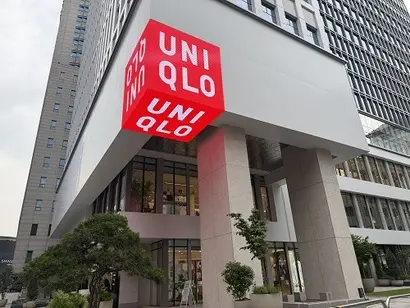
Uniqlo, Which Left Myeong-dong, Returns with its Largest Store in 5 Years
Uniqlo will open its Myeong-dong store at the Le Méridien Hotel in Myeong-dong on May 22. With a total area of 3,254.8㎡ (approx. 1,000 pyeong) across the ground floors 1 through 3, it is the largest Uniqlo store in South Korea. An official from FRL Korea, which operates Uniqlo in Korea, explained, "As the Myeong-dong commercial district is regaining its vibrancy, we opened the Myeong-dong store to expand customer touchpoints in a global commercial area."
This is Uniqlo's first opening of a large-scale store in Myeong-dong in about five years. Uniqlo operated the Myeong-dong Jungang store from 2011 until it closed in January 2021. The Myeong-dong Jungang store was highly symbolic, once considered the largest Uniqlo store in Asia. However, the operational burden increased significantly as foreign tourist traffic to Myeong-dong plummeted due to COVID-19, compounded by the backlash from the boycott of Japanese products.
Uniqlo is cited as a representative brand that was hit directly during the 2019 boycott of Japanese products. As it was discussed as a symbol of the anti-Japan movement among consumers, store visits and purchases dropped sharply, and the brand image suffered a major blow.
This atmosphere was reflected in performance. Before the boycott, FRL Korea boasted strong performance, recording its highest-ever revenue. Revenue for the 2019 fiscal year (September 2018–August 2019) reached 1.378 trillion won. However, the following year's revenue dropped by more than half to 629.8 billion won, and it recorded an operating loss of 88.4 billion won.
Regarding Uniqlo's return to Myeong-dong, industry insiders interpret this as a de facto reversal of the sentiment that had been suppressed since the boycott. The fact that it returned to Myeong-dong, which it left due to poor performance, with its largest store in Korea indicates confidence in brand recovery and offline expansion.
As of the 2025 fiscal year, Uniqlo's revenue was recorded at 1.3524 trillion won. This is a 27% increase from the 2024 fiscal year revenue of 1.0602 trillion won and approaches the performance of the 2019 fiscal year, when it recorded its highest revenue ever. Operating profit also increased by about 81% to 270 billion won compared to the previous fiscal year (148.9 billion won).
This year, the company is also accelerating store expansion and renewals. Including the opening of the Myeong-dong store, FRL Korea has opened or renewed a total of six stores in the first half of this year alone. It plans to open the Jeonju Songcheon store on May 29. An FRL Korea official said, "The performance trend remains stable in the first and second quarters of the 2026 fiscal year. Overall, it is maintaining a growth trend."
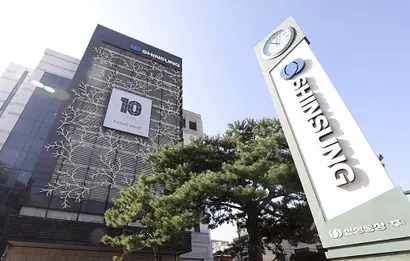
TOPTEN Fails to Transcend 'Uniqlo Alternative'... Focusing on Interior Management Amid Slowing Growth
As Uniqlo succeeds in a performance rebound, the industry is also turning its attention to TOPTEN's performance trajectory. TOPTEN is considered the brand that benefited the most during the period when the anti-Japan boycott was spreading due to the 'No Japan' movement. Its presence grew as a substitute for Uniqlo as its price range and product lines largely overlapped with those of Uniqlo, and its status as a domestic brand was highlighted.
Revenue for the fashion division of Shinsung Tongsang, which operates TOPTEN, grew rapidly after the boycott of Japanese products. Revenue for the fashion division, which was 546.6 billion won in the 2019 fiscal year (July 2018–June 2019), nearly doubled to 1.0114 trillion won in the 2022 fiscal year. The fashion division revenue includes major Shinsung Tongsang fashion brands such as TOPTEN, ZIOZIA, OLZEN, ANDZ, and EDITION.
However, growth slowed down afterward. In the 2023 fiscal year, revenue reached 1.157 trillion won, but it effectively stalled at 1.155 trillion won in the 2024 fiscal year, and decreased to 1.1248 trillion won in the 2025 fiscal year. A similar trend is continuing in recent performance. As of the cumulative 3rd quarter of the 2026 fiscal year, fashion division revenue was 775.7 billion won, down about 5.4% from 820.4 billion won in the same period last year.
A Shinsung Tongsang official explained, "We believe the overall industry was affected by the contraction in domestic consumption. TOPTEN has focused on managing inventory health and profitability. Gross profit margin has improved over the same period, which is a result of reflecting efforts in product management and cost efficiency."
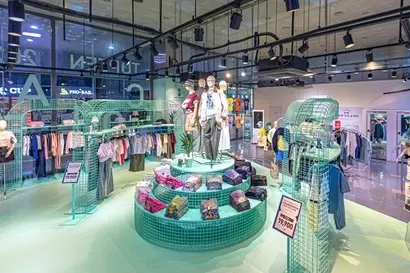
Industry observers comment that while TOPTEN grew rapidly by enjoying the windfall during the 'No Japan' phase, it showed limitations in converting the consumers who flocked to it into loyal customers. They analyze that while its symbolism as a domestic brand and reasonable price range acted as strengths during the boycott, the criteria for consumer choice shifted back to product competitiveness, such as quality and design, over time. Furthermore, with new value-for-money brands like Musinsa Standard growing in presence, it is interpreted that the windfall effect TOPTEN enjoyed has gradually weakened.
Seo Yong-gu, a professor of business administration at Sookmyung Women's University, said, "The South Korean domestic market has entered a saturation phase and seems to be moving toward a full-scale downsizing economy. The SPA market is also more likely to be reorganized around leading brands with competitiveness rather than expanding significantly."
TOPTEN's strategy is also shifting from exterior expansion to interior management. While it focused on rapid store expansion and revenue growth after the boycott, it is recently placing more weight on operational stability, such as inventory health, profitability, and cost efficiency. A Shinsung Tongsang official stated, "As TOPTEN has achieved rapid exterior growth over the past few years, it is currently focusing on laying a more stable foundation for mid- to long-term growth for the brand. This year, we are focusing on reordering our store portfolio by carefully reviewing the efficiency of each commercial district rather than expanding our scale."