

[비즈한국] The plastic resource circulation campaign 'Gap-geul-ji-u' has achieved a milestone of collecting 64 tons of plastic cumulatively. However, the in-store collection bins at E-mart139480, which serve as the primary offline touchpoint for consumer participation, appear to need improvements in location and guidance. While evidence of use was visible, a significant number of shoppers encountered on-site were unaware that such collection bins even existed.
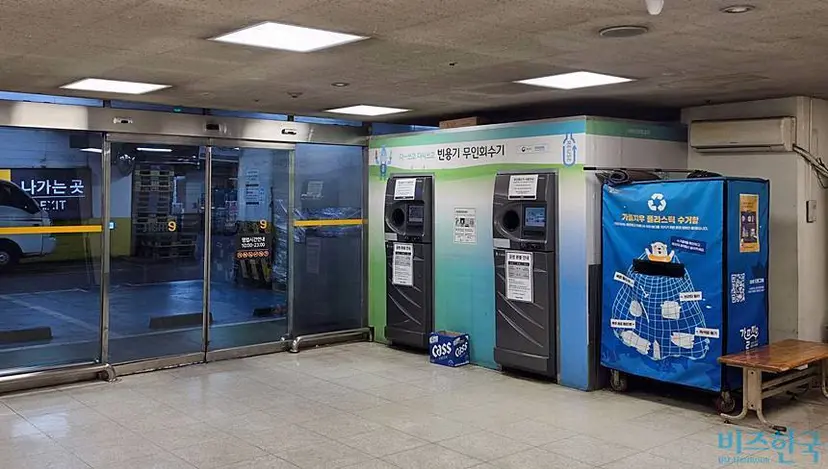
Gap-geul-ji-u is an abbreviation for 'Bring plastic, protect our ocean,' a resource circulation campaign launched in 2018 by E-mart, TerraCycle, and P&G Korea. It started by installing plastic collection bins at 30 E-mart stores in Seoul and has since expanded its participating organizations and scope of activities. As of April 2026, 19 companies including retailers, manufacturers, and public institutions are participating, engaging in coastal cleanup activities and marine environment protection education. Some of the collected plastic is recycled into items like children’s traffic safety reflectors, foldable shopping carts, and marine cleanup tongs for donation.
The management of the collection bins is shared between E-mart headquarters, individual stores, and partner companies. According to an E-mart representative, the Gap-geul-ji-u bins are overseen by the ESG Management Promotion Team at E-mart headquarters, while collection is handled by partner firm TerraCycle. Generally, collections occur one to four times a month, touring areas like the Seoul metropolitan area and Chungcheong province, with frequency adjusted based on the volume at each store. If a bin fills up unexpectedly, the store’s general affairs department handles the situation locally.
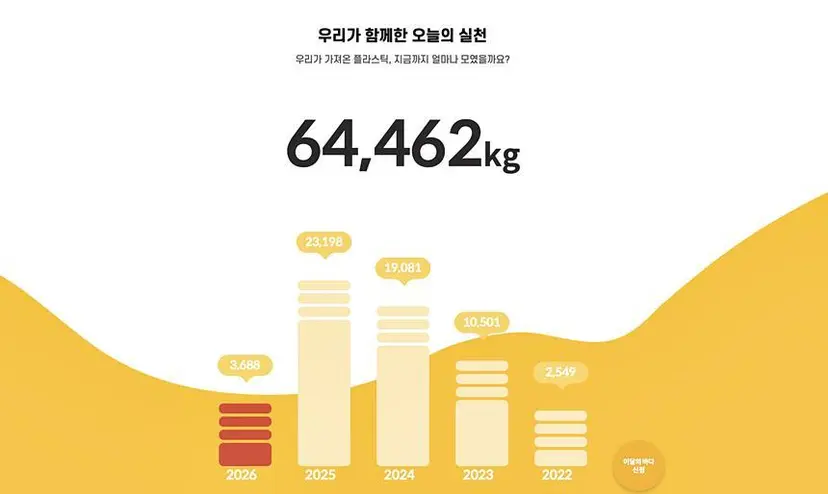
The collection results are significant. According to the official Gap-geul-ji-u website, the annual collection volume has steadily increased. It first surpassed 10 tons in 2023 with 10.5 tons, increasing to 19.1 tons in 2024, and 23.2 tons in 2025. The cumulative collection amount up to March 2026 is approximately 64 tons.
Most of the collection bins inspected by the reporter on-site were about half full of plastic. Collection company visit logs were also confirmed through store staff, indicating that the bins are indeed being used. The problem lies in the gap between collection performance and on-site awareness. Among the E-mart shoppers met during the report, few claimed to know about the Gap-geul-ji-u bins. Some customers even said they were "seeing it for the first time" after being shown a picture taken right next to a bin.
A shopper named A, met near the E-mart Eunpyeong branch, also said they were "seeing it for the first time" after being shown a photo of the bin. When asked if they intended to use it, A remarked, "I understand it's a good cause, but it doesn't seem easy to bring plastic waste along while coming to shop for groceries."
The low level of awareness can be attributed to the location of the bins within the stores and the methods of guidance. The placement varies by store. While some are placed near the entrance for easy access, others are tucked away in corners or in spots not easily visible to shoppers.
E-mart explained that its basic policy is to guide stores to install the bins near customer service centers or store entrances. However, they noted that if space is limited or if it is determined that store safety and traffic flow could be affected, the location may be changed at the discretion of store staff.
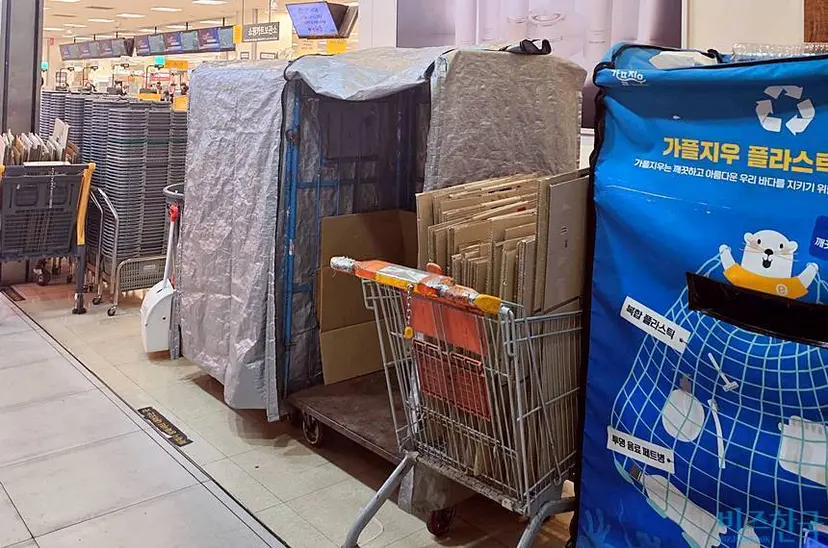
Signs or guides indicating the location of the bins were also rarely seen in stores. In some instances, store staff themselves were unaware of the location or even the existence of the bins, showing inconsistent operation across different locations.
Another point of concern is that the offline collection bins are concentrated in the Seoul metropolitan area. Currently, there are 84 stores with Gap-geul-ji-u bins, 71 of which are located in the metropolitan area. Non-metropolitan locations consist of only 13 stores, including 7 in South Chungcheong, 3 in North Chungcheong, 2 in Daejeon, and 1 in Sejong. Improvements in accessibility and guidance systems within stores seem necessary to encourage greater participation.
E-mart also recognizes increasing awareness and lowering participation barriers as key tasks. The company stated, "We will work to improve the current situation, such as by changing bin locations based on customer feedback at each store and enhancing visibility through renovations. We are reviewing various measures, including strengthening location guidance on the Gap-geul-ji-u website, and plan to secure data on offline participating customers by introducing QR codes and events to new bin designs around July."