

[비즈한국] Starbucks Korea's 'Tank Day' event, held on the anniversary of the May 18 Gwangju Democratization Movement, faced severe backlash. With the product name 'Tank' and the phrase 'thump on the desk' coinciding with the May 18 date, anger erupted among consumers regarding the company's historical awareness and internal inspection systems. Although Starbucks Korea apologized belatedly and canceled the promotion, the resentment has not easily subsided. Ultimately, with the dismissal of Starbucks Korea CEO Son Jung-hyun, the situation is escalating from a simple marketing mishap into a matter of organizational responsibility.
Industry experts view this controversy as a sign of structural fatigue at Starbucks Korea. Last year, Starbucks Korea held a total of 222 promotions, including card benefits, merchandise sales, and app events. Simply put, that is about one every two days. Last month alone, 16 events, including 'The Cho Day' and 'Lucky Starbucks Day,' were running simultaneously. Analysts suggest that as the system of constant promotions became solidified to boost revenue and visit frequency, the internal inspection process—which checks the social context of individual phrases and schedules—could not keep up with the pace.
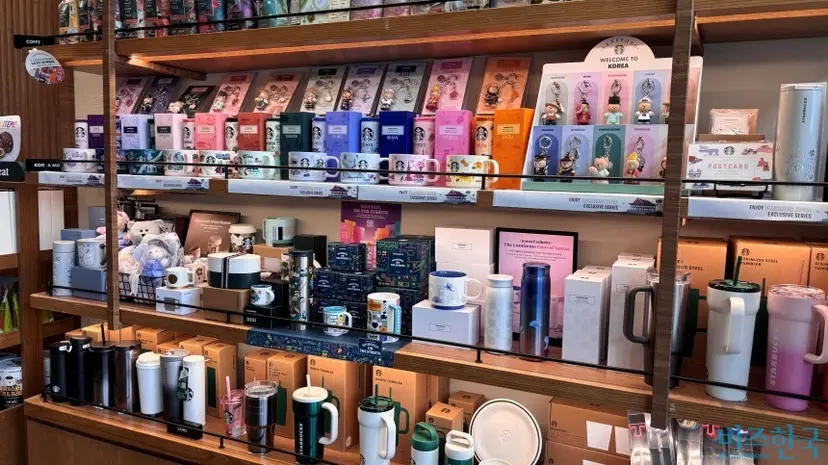
While there may have been no intent, the date and phrase are too strange to be a coincidence
According to Bizhankook's coverage, there is a sense of unfairness within Starbucks Korea regarding the controversy over the name 'Tank' itself. The explanation is that this name is not a term arbitrarily created by Starbucks Korea targeting domestic sentiments, but rather the original product name of a specific tumbler released by the U.S. headquarters. A significant portion of Starbucks Korea's merchandise includes products directly imported from the U.S. headquarters, not just items produced domestically. The internal stance is that this promotion, too, was simply aligned with the overseas product distribution schedule and was not planned to target any specific historical event.
A similar explanation is offered regarding the 'April 16 Mini Tank Day' controversy. It is argued that the regular arrival of goods and global promotion schedules simply overlapped by coincidence, and that the company did not intentionally use the social tragedy of the Sewol ferry disaster for marketing. A Starbucks Korea official explained, "The product name was set by the headquarters, and it was not an event planned by targeting specific dates in Korea," adding, "Unless it is a company-wide campaign or a major project, details such as specific phrases are not reported to the CEO one by one."
However, consumer reactions are different. Doubts continue to linger precisely because, in addition to the word 'tank,' the phrase 'thump on the desk' was added on the anniversary of the May 18 Democratization Movement. This is why the controversy has not subsided despite the company's explanation that the product name and schedule overlapped by accident.
Above all, there is no real explanation for the expression 'thump on the desk.' This phrase is what the police used during their cover-up announcement regarding the Park Jong-cheol torture-death case in 1987, and it is difficult to view it as a mere coincidence or wordplay. The expression "They thumped the desk, and he let out an 'ugh' and died" remains a phrase in South Korean society that symbolizes the false explanations of state violence and authoritarianism. The fact that such a phrase was used for a May 18 Gwangju Democratization Movement anniversary promotion is evidence that, regardless of intent, the company's internal historical sensitivity did not function properly.
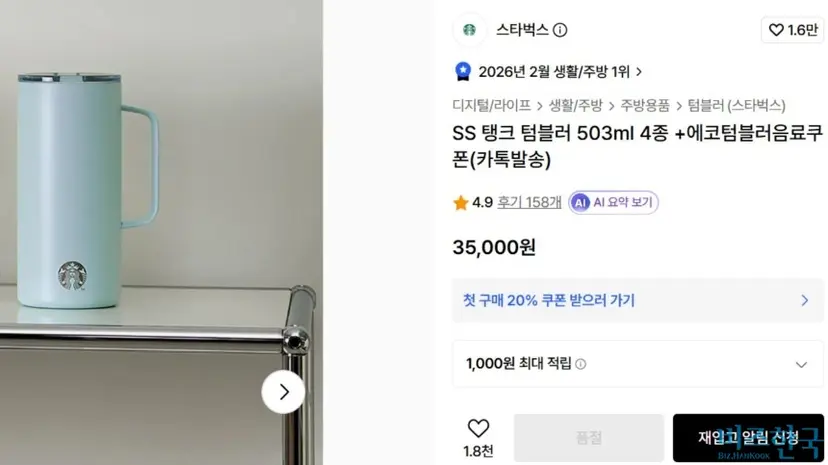
One event every two days, at a level too difficult for inspection to keep up
The root cause of this incident lies in Starbucks Korea's permanent promotion system. Starbucks is one of the companies with the strongest brand loyalty in the domestic coffee chain market. However, recent revenue relies more heavily on various promotional tools such as merchandise, app rewards, credit card partnerships, and seasonal events than on coffee itself. In fact, Starbucks Korea has frequently released merchandise like tumblers, mugs, diaries, and bags, and repeated events that induce consumption during specific periods.
Industry experts believe that while this operational method is effective in boosting revenue, app usage, and return visit rates, it inevitably increases the management burden. This is because as the number of events increases, the quality of individual events is bound to decline. Everything from event names, phrases, images, dates, partners, product names, global labeling, and domestic sentiment must be considered, but on the ground, speed and volume are easily prioritized. Especially in an organization like Starbucks Korea, where headquarter product names, domestic marketing copy, and external partnership promotions are complexly intertwined, accidents can happen if the inspection system is even slightly loose.
Negligent internal inspection systems have also come under fire. Industry insiders acknowledge that it is difficult for CEOs or executives to personally review every phrase. However, they point out that at least a minimal inspection system should have been in place to filter out sensitive dates and expressions. It is suggested that a separate verification system is needed for dates connected to the collective memory of South Korean society, such as May 18, April 16, Liberation Day, and the March 1st Movement. Expressions reminiscent of the military, violence, disasters, and torture should also have been reviewed more carefully than general events.
Starbucks Korea is known to use AI-based inspection tools in its phrase and schedule review process. However, industry insiders consider this system to be merely a supplementary tool. The reason is that while it can filter out typos or repetitive expressions, it is difficult for it to judge the social context that arises when specific dates and historical memories are combined. Most of all, internal sources say the relief that 'it must have been checked once' lowers the tension during the final review stage.
A source familiar with internal matters at Starbucks Korea said, "In the case of phrases like 'thump on the desk,' there is a possibility that they were dismissed as a form of fun or light expression rather than seriously considering the social impact," adding, "It seems there was complacency thinking, 'Surely this won't be a problem.'" They added, "The schedule and phrases should have been clearly filtered at the team leader or executive level, but the fact that the process did not work properly is the problem."
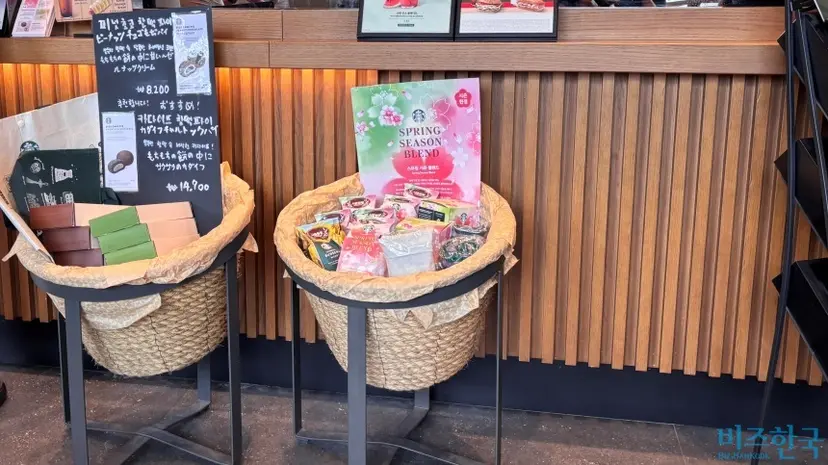
What consumers are truly taking issue with is not the 'Tank,' but the 'Owner'
The background to why this incident grew larger lies in the past actions of Shinsegae Group Chairman Chung Yong-jin. Chairman Chung previously caused controversy by repeatedly making 'anti-communist' remarks on social media. In 2021, he used the hashtag 'I hate the Communist Party,' and in 2022, he posted, "I will survive to the end. Anti-communism!!!" In 2023, he drew controversy again by sending a congratulatory video to 'Build Up Korea,' a conservative Protestant event.
As Chairman Chung Yong-jin's past remarks, the image of Shinsegae Group, and Starbucks Korea's poor inspection controversy were combined with the date of May 18 and the phrase 'thump on the desk,' consumer resentment grew. There is an atmosphere where consumers do not view this 'Tank Day' controversy as a simple one-off mistake. Although the company explained that it was not an intentional plan, the controversy has already expanded beyond individual events into an image problem for Shinsegae Group as a whole.
In the past, whenever major negative issues arose, Starbucks Korea handled crises by replacing CEOs and key executives. A prime example is the 'Summer Carry Bag hazardous substance detection incident.' At the time, the senior manager level person in charge of practical work was dismissed, and then-CEO Song David Ho-seop also stepped down early with more than two years left in his term. With the dismissal of CEO Son Jung-hyun this time, Starbucks Korea is repeating its 'CEO tragedy.'
A source familiar with Starbucks Korea previously said, "Rather than holding a large number of lower-level staff related to this event accountable, it is likely that team leaders or executives who neglected the inspection process, including the CEO, will be subject to heavy disciplinary action or demotion." However, it is unclear whether the problem will be solved by personnel reshuffling alone. The cause of this incident is difficult to explain by a single individual's mistake in phrasing. It is a complex combination of an excessive promotion structure, an organizational culture that failed to filter out sensitive dates and expressions, and owner risk.
Shinsegae Group Chairman Chung Yong-jin also issued a public apology on the 19th to handle the situation. Chairman Chung stated, "Yesterday, which was the 46th anniversary of the May 18 Democratization Movement, Starbucks Korea, a subsidiary of Shinsegae Group, carried out an inappropriate marketing campaign that should not have happened and cannot be tolerated," adding, "I apologize deeply on behalf of the group." He defined the matter as a "fault that cannot be excused, as it made light of the pain and sacrifice of all those who have dedicated themselves to the democracy of this country."
He also acknowledged the lack of historical awareness and sensitivity of the entire group, and promised to investigate the circumstances and approval procedures, re-examine the marketing content inspection process for all subsidiaries, reorganize review procedures, and provide history and ethics education for all employees. It appears that the Starbucks Korea 'Tank Day' controversy will eventually expand beyond the marketing mishap of an individual brand into a problem of re-examining the entire decision-making system and risk management standards of Shinsegae Group.