

[비즈한국] With only three days left until the threatened general strike by the Samsung Electronics005930 labor union, negotiations over the dispute regarding performance bonuses are ongoing through government mediation. However, the union maintains that if the post-mediation process by the National Labor Relations Commission (NLRC) resuming today fails, they will proceed with the general strike scheduled for the 21st.
The business world anticipates that this 'struggle' by the Samsung Electronics union will spread to other companies. Samsung Biologics207940, a subsidiary of Samsung Group, held a full-scale strike from the 1st to the 5th of this month and is continuing a 'compliance struggle' by refusing overtime and holiday work. Analysts suggest that unions led by the 30s and 40s age groups are pursuing a line of 'extreme pragmatism' unlike in the past, as seen with the HD Hyundai Heavy Industries329180 union, which has demanded a 30% distribution of this year's operating profit as performance incentives.
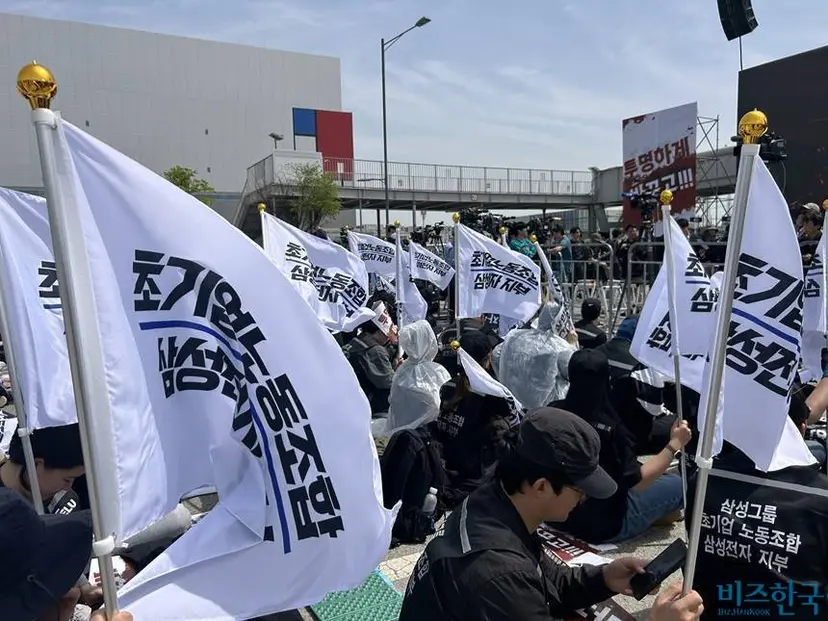
"We don't know how long the semiconductor boom will last"
It is said that among Samsung Electronics employees, there is a pervasive perception that they must secure 'profits from this boom' at any cost. Specifically, since there was significant anxiety about potentially being 'laid off' due to the semiconductor recession just 2-3 years ago, the prevailing sentiment is that they must properly claim their share of profits now that the semiconductor industry is booming.
An employee who has worked in the Samsung Electronics semiconductor division for over 10 years explained, "Just 2-3 years ago, the industry was so uncertain that we shared a sense of crisis that 'even Samsung Electronics could shut down its semiconductor business, and we might have to go open fried chicken shops.' Because we don't know how long this boom will last, the employees find it unacceptable when the company talks about performance bonuses only after achieving industry-leading results."
A notable aspect is that this trend is spreading beyond SK Hynix000660 and Samsung Electronics to employees of other large corporations. The Hyundai Motor union included a demand for a 'performance bonus payment of 30% of last year's net profit' in this year's wage and collective agreement proposals; based on last year's net profit, the total scale of the incentive would reach 3 trillion won.
Even last year, the Hyundai Motor union clashed with the company while demanding a 30% net profit bonus. After three partial strikes, they reached a final agreement for 'a 450% base salary plus 15.8 million won in incentives,' but this year they are demanding even more.
The shipbuilding industry, which has high performance expectations due to the super-cycle, is also seeing vocal demands from unions for profit sharing. The HD Hyundai Heavy Industries union included a 30% operating profit distribution plan in its collective bargaining proposal this year. There is also a projection that HD Hyundai Samho, which usually makes similar demands to the HD Hyundai Heavy Industries union, will ask for a performance bonus around the 30% mark of operating profit. The Hanwha Ocean042660 union is already locked in a tight power struggle with management, demanding both base salary increases and improvements to performance bonus payment criteria.
Evolving into 'Korean-style MZ unions'… Is an era of white-collar struggle opening?
The business world is focusing on this 'different method of struggle.' Samsung Electronics is a branch of the Samsung Group's Super-Corporate Labor Union and is not affiliated with the upper-level organizations like the Federation of Korean Trade Unions (FKTU) or the Korean Confederation of Trade Unions (KCTU). It is an organization designed to maximize the interests of its members rather than the solidarity of all workers.
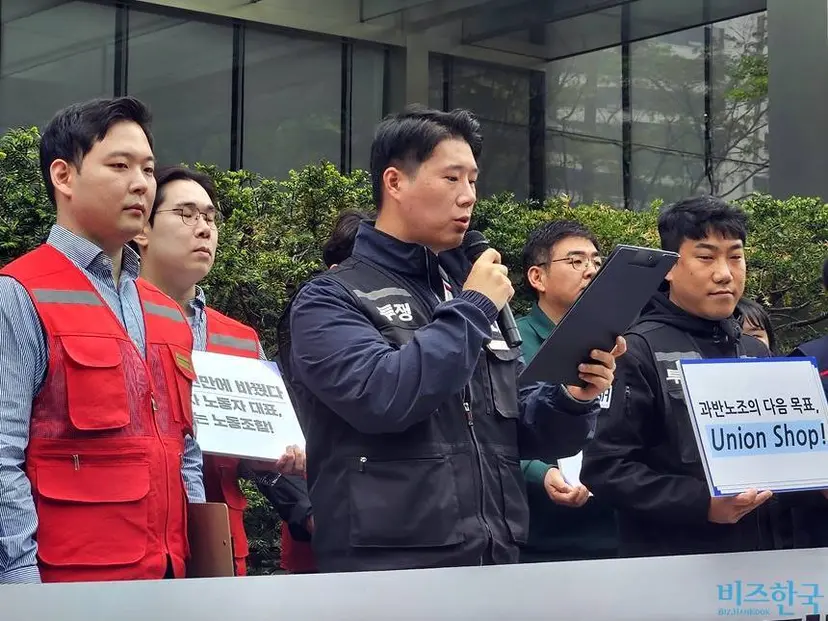
While typically considered to have weaker cohesion, the union expects up to 50,000 members to participate in this strike. This is a point where observers say it is evolving into a 'Korean-style MZ union' that unites solidly as the interest-seeking sentiment of the MZ generation meets the clear motivation of 'performance bonuses.'
The aforementioned Samsung Electronics employee hinted, "As the majority of colleagues share the atmosphere that we must definitely receive performance bonuses, people are asking each other if they are taking leave and if they would dare not participate. I cannot ignore the majority opinion of my colleagues. Since everyone thinks they could quit the company at any time when they reach 45 or 50, there is a desire to secure performance bonuses to sustain the future while the company's profits are guaranteed."
This is the background behind concerns in the business world that while past struggles were led by those in low-wage and poor working environments, a 'performance bonus war' centered on white-collar workers in large corporations demanding "fair distribution of what has been earned" is now becoming a reality.
A human resources executive at a major corporation expressed concern, "The results of the Samsung Electronics union's struggle inevitably serve as an incentive for other large corporate unions to ask, 'Shouldn't we also receive performance bonuses?' I think white-collar unions in large firms, which in the past had to endure simply because their 'salaries were high,' will become the main agents of strikes."
An employee who joined Samsung Electronics three years ago predicted, "There are not many colleagues who think they will stay at this company for more than 10 years. Many are thinking of going to graduate schools in the U.S. to raise their market value. Since everyone sees their current position as just a step in a 30-40 year career, they are more interested in their own assets and income than the future of the company. Because I see my friends at other major corporations having the same mindset, the 2030 generation will try to utilize the union as a window to raise 'income' and respond to unfair demands from management."