

[비즈한국] The global pharmaceutical and biotech industry is obsessed with the rosy future of cell therapies, which promise a cure with a single dose. However, the wall of commercialization—turning a profit in the market—is higher than the technical hurdles of receiving approval for a new drug. This is because it is difficult to escape the constraints of strict regulatory hurdles, the limitations of a narrow non-reimbursed market, and fragile supply chains for consumables. We take a sober look at the reality of commercialization facing the cell therapy industry.
Regulatory approval from the Ministry of Food and Drug Safety (MFDS) has long been considered the finish line for new drug development. However, in the nascent cell therapy market, an approval license is merely the beginning of the competitive race for commercialization. No matter how effective a drug is, if the price is too high and patients hesitate to take it, the market will turn its back.
Non-Reimbursed Cell Therapies Supplement Revenue Through ‘Off-Label’ Use
Immuncell-LC is the first domestic immune-oncology cell therapy to receive product approval from the MFDS in 2007. Although it is the top-selling domestic cell therapy with annual sales of 36.9 billion won last year, a closer look reveals it is trapped in a market dilemma.
Immuncell-LC is indicated as an adjuvant therapy to prevent recurrence in patients who have achieved tumor removal after hepatocellular carcinoma resection (surgery, radiofrequency ablation, or percutaneous ethanol injection). However, as it is a non-reimbursed medication not covered by national health insurance, the cost burden on patients is high. With each treatment costing 4 to 5 million won, patients must pay a total of 70 to 80 million won out-of-pocket to complete the full 16-dose standard treatment course.
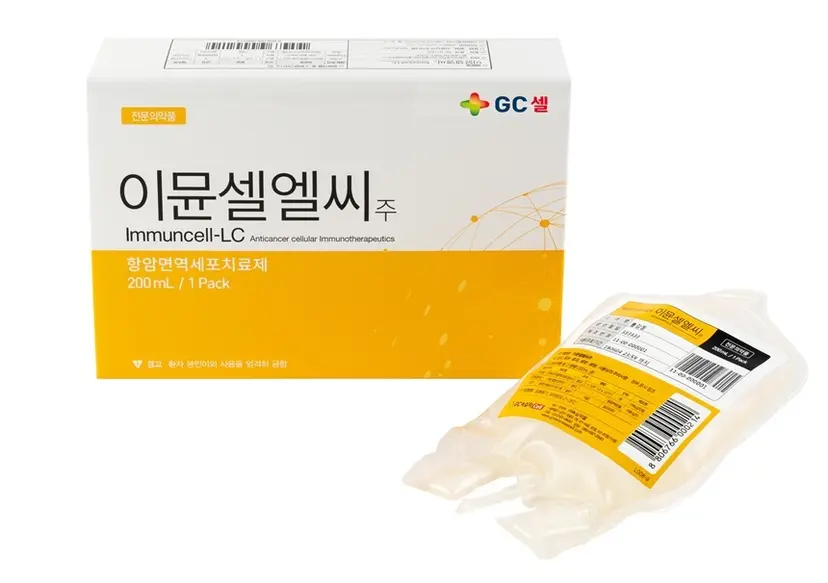
Furthermore, as the number of Hepatitis B carriers—the primary cause of domestic liver cancer—continues to decline due to vaccinations and improved hygiene, the core market for Immuncell-LC is shrinking. The reason it still records sales in the mid-30 billion won range is that it is also prescribed as "off-label" at the discretion of medical staff.
Off-label refers to the practice of prescribing a drug that has received MFDS approval for indications, dosages, or administration methods outside of its approved label, based on a physician’s discretion. Currently, Immuncell-LC is also used as an adjuvant therapy for post-surgical recurrence prevention in patients with other cancers, such as pancreatic cancer and brain tumors, in addition to liver cancer.
A GC Cell official explained, "Since it was approved as an adjuvant therapy to prevent recurrence after liver cancer surgery, the patient pool is small, and as a cell therapy, it is expensive. Additionally, while there used to be many cases of mothers passing the Hepatitis B virus to their infants, those cases have decreased, leading to a decline in the overall number of liver cancer patients."
This abnormal sales structure is not unique to Immuncell-LC. Many of the cell therapies successfully commercialized by domestic companies have failed to cross the threshold of health insurance coverage and remain non-reimbursed. Domestic cell therapies—including MediPost078160's knee osteoarthritis stem cell therapy 'Cartistem' (19.4 billion won in annual sales last year), BioSolution086820's 'Cartilife', Pharmicell005690's 'Hearticellgram-AMI', and Anturogen065660's 'Queencell'—are all situations where patients must bear 100% of the cost.
The Difficult ‘Reimbursement Gateway’ for the First Domestic CAR-T Therapy
Curocell's diffuse large B-cell lymphoma (DLBCL) treatment 'Anbal-cel' (trade name: Leemkato) received official product approval from the MFDS on the 29th of last month. It is the 'first domestic CAR-T' therapy to emerge in a situation that previously relied on ultra-high-priced imported drugs like Novartis' 'Kymriah', which costs over 360 million won per treatment.
Curocell has announced its goal to officially launch Leemkato in September through swift health insurance reimbursement. Lee Seung-won, Managing Director at Curocell, stated at a press conference held at the Four Seasons Hotel Seoul in Jung-gu, Seoul, on the 14th, "Leemkato was selected for the Ministry of Health and Welfare's pilot project for parallel approval-assessment-negotiation, making faster reimbursement listing possible compared to standard procedures. We are targeting reimbursement listing by September in the most optimal scenario."
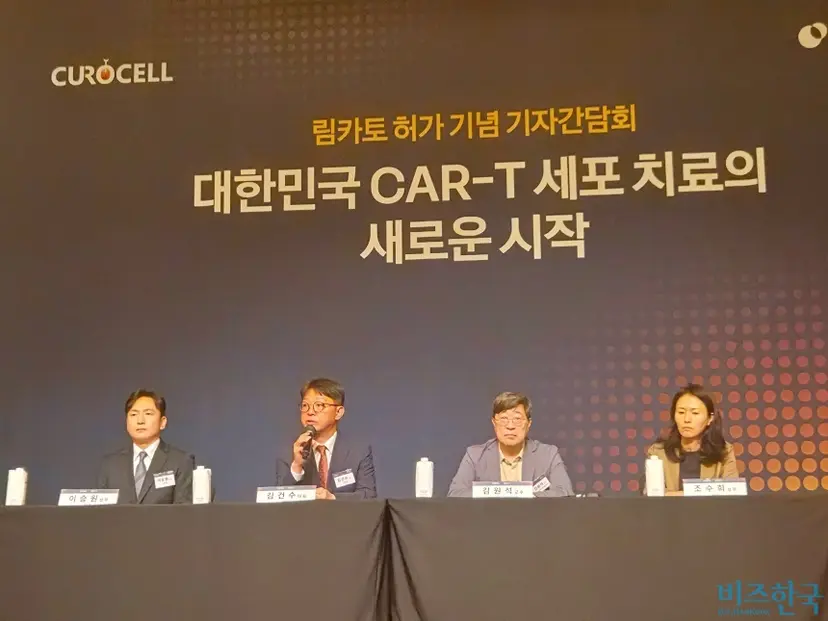
The 'parallel approval-assessment-negotiation' pilot project, for which Leemkato was selected as the second drug in December 2024, is designed to drastically shorten the market entry period for innovative new drugs by simultaneously conducting MFDS approval, Health Insurance Review and Assessment Service reimbursement assessment, and National Health Insurance Service drug price negotiations. However, the industry believes it will be a daunting task for Leemkato to be listed on the health insurance reimbursement list and launched by September, just five months after approval, as planned.
For 'Livmarli' (a treatment for pruritus in patients with Alagille syndrome), which was selected as the first pilot drug before Leemkato, it took about 1 year and 2 months from product approval (August 2024) to insurance reimbursement listing (October 1, 2025). 'Qarziba' (a treatment for neuroblastoma) took about 5.5 months, listed for insurance reimbursement on December 1 of the same year after being approved on June 19, 2024.
Even synthetic drugs and antibody drugs with relatively established evaluation criteria have engaged in fierce tug-of-war battles with the government. This is why experts point out that reimbursement assessment for advanced cell therapies, which cost hundreds of millions of won per dose and involve complex quality control standards based on patient-specific production, will inevitably be much more difficult.
A Curocell official expressed optimism, saying, "Being selected for the government's pilot project allows us to shorten the standard 330-day procedure to 150 days. As Leemkato has secured efficacy data showing a 53% reduction in mortality risk compared to existing treatments, our leverage in reimbursement negotiations will be high. We will increase the government's receptivity by suggesting a reasonable price compared to existing treatments, reducing the burden on the national health insurance fund while maximizing patient accessibility."
The final success or failure of the war for cell therapy commercialization is expected to be determined not just by 'how to make it', but by 'how to reach the patients'. As K-cell therapies look to move beyond the limitations of non-reimbursement and off-label prescriptions to leap forward as global blockbuster drugs (with annual sales of over $1 billion), it is time for flexible institutional support from the government.