

[비즈한국] In the last three years, one of the fields that has changed most rapidly in the startup ecosystem is defense. Just a few years ago, it was sensitive for European venture capital firms to speak openly about investing in defense startups. However, following the global rise of drones, battlefield AI, satellites, and cybersecurity, 'missile startups' have recently emerged as the new investment theme.
European startup media outlet Sifted reported that “missile-related startups have recently begun pitching to European VCs.” In particular, some startups are presenting concepts to create cheaper alternatives to the American long-range cruise missile, the Tomahawk. Jack Wang, a partner at the Berlin-based VC firm Project A, also mentioned that he has seen several startups looking to develop missiles in the last three months, stating, “People are taking things a step beyond drones.”
Behind this change lies a clear security vacuum. In May 2026, U.S. President Donald Trump announced the withdrawal of 5,000 U.S. troops stationed in Germany. This was interpreted as a measure to return the scale of U.S. troops in Europe—which had expanded following Russia's invasion of Ukraine—back to levels close to those before 2022. President Trump has long pressured NATO member nations, including Germany, to shoulder more of the financial burden for their own defense, and this move has heightened anxieties that European security can no longer be maintained stably, independent of American political decisions.
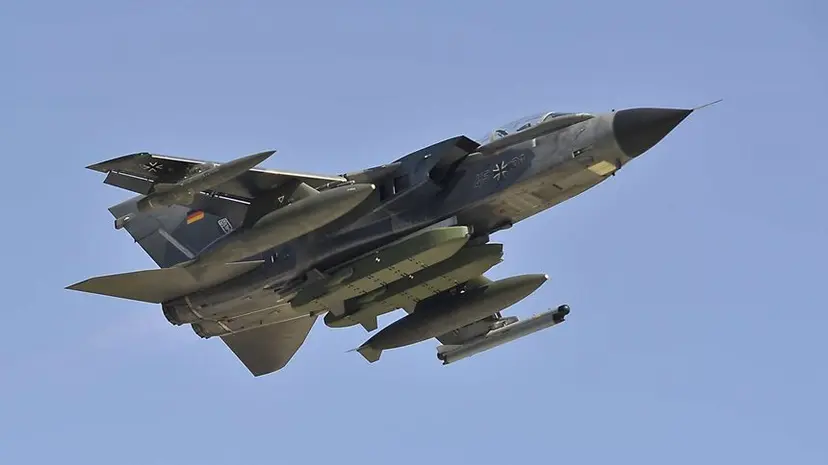
Amid this atmosphere, Europe has begun to ask the question again: “Will the U.S. always protect Europe?” In 2024, the U.S. and Germany announced that they would rotate long-range strike systems into Germany starting in 2026. The initial plan included the SM-6, Tomahawks, and hypersonic weapons currently under development. However, entering 2026, the uncertainty surrounding the sustainability of the long-range missile deployment plan increased along with the announcement of U.S. troop reductions. While the German Ministry of Defence stated that the plan was “not finally cancelled,” it is simultaneously pushing ahead with the purchase of U.S.-made Tomahawks and Typhon ground-based launchers. This shows that Europe has begun to conclude that waiting for U.S. deployment decisions is not enough.
From Europe's perspective, there is growing alarm that their security strategy itself could be shaken by shifts in U.S. political circumstances. The problem is that it is difficult for Europe to rely solely on U.S. weapons in the short term. Europe is already pushing for the European Long-Range Strike Approach (ELSA) to secure its own long-range strike capabilities. France, Germany, Italy, Poland, Sweden, and the UK have formalized their cooperation in developing long-range strike capabilities. This is expanding beyond mere weapon procurement into a matter of European defense sovereignty.
Missiles that are cheap and mass-producible
The core keywords for European missile startups are not high performance. More importantly, the key terms are 'low cost' and 'mass production.' The war in Ukraine has changed the cost structure of modern warfare. It has shown that using much more expensive interceptors to stop cheap drones is not sustainable. Therefore, rather than making expensive weapons more sophisticated, European startups are proposing systems that perform well enough and can be produced quickly in large quantities.
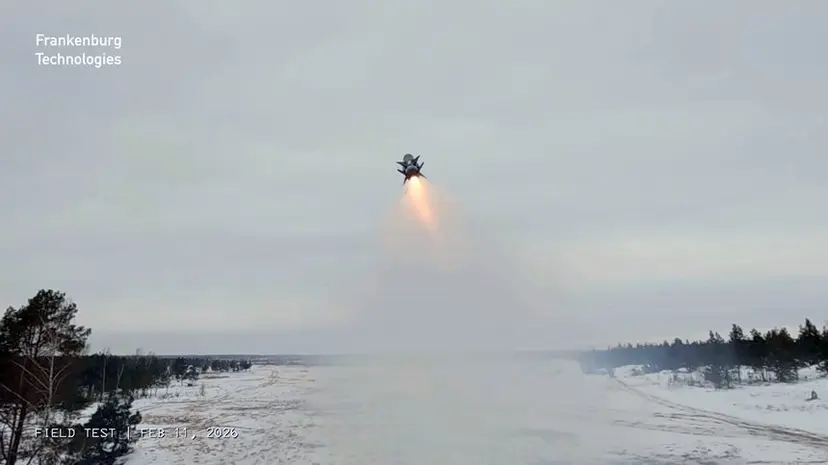
A prime example is the Estonian defense startup Frankenburg Technologies. Founded in 2024, this anti-drone and missile defense startup explains that it is developing affordable and mass-producible missile defense systems. In February 2026, it secured a Series A investment of 30 million euros (approximately 51 billion KRW). According to Reuters, Frankenburg is cooperating with the Polish state-owned defense company PGZ to build production facilities for anti-drone missiles, aiming to produce up to 10,000 MARK I missiles annually.
Another case is the UK/Germany-based hypersonic defense startup Hypersonica. With the goal of creating Europe's first independent hypersonic strike capability, the company secured 23.3 million euros (approximately 39.6 billion KRW) in Series A funding in February 2026. Participants in the investment included German VC Project A, the German government's innovation agency SPRIND, and U.S. VC General Catalyst.
Destinus, a Swiss-French defense and hypersonic aerospace startup, illustrates the marriage between traditional defense giants and startups. In April 2026, Germany's leading defense firm Rheinmetall and Destinus agreed to form a joint venture called 'Rheinmetall Destinus Strike Systems.' This venture aims to manufacture and sell cruise missiles and ballistic rocket artillery systems, with a structure of 51% ownership for Rheinmetall and 49% for Destinus.
Are missile startups viable?
Missiles have traditionally been the domain of large defense firms. Companies like Europe’s leading missile manufacturer MBDA, Germany’s defense giant Rheinmetall, France’s defense and electronics firm Thales, and the French-European aerospace joint venture ArianeGroup have dominated the market based on state procurement and long-term R&D.
In fact, France's Thales and ArianeGroup announced the successful first test flight of the French long-range rocket launcher FLP-t 150 in May 2026. This is interpreted as part of the flow toward securing long-range strike capabilities within Europe.
Nevertheless, the reason startups are emerging is because of the speed of the battlefield. Existing defense procurement is slow, requirements by country are complex, and production capacity is limited. Conversely, the war in Ukraine demonstrated how important software updates, low-cost hardware, and rapid shifts in production are on the actual battlefield.
The British newspaper The Guardian analyzed that Europe is rushing to produce low-cost, high-tech weapons and that a style of war centered on drones and expendable equipment is creating opportunities for defense startups.
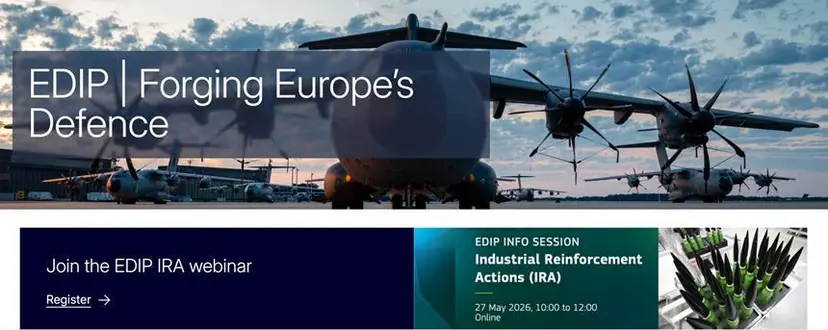
The investment environment is also changing rapidly. According to Sifted, European defense startups raised 2.3 billion euros (approximately 3.91 trillion KRW) in 2025, more than double the previous year. The European Union (EU) has also adopted a 1.5 billion euro (approximately 2.55 trillion KRW) work program for the European Defence Industry Programme (EDIP) for 2026–2027 to support the strengthening of defense production capacity and technological capabilities.
In particular, recent European defense VCs are showing interest in long-range strike systems rather than simple drones. This is linked to the critical awareness that Europe must secure independent deterrence, not just defense.
However, whether missile startups are truly suitable for venture investment is a separate issue. Missiles are subject to much stricter regulations, export controls, certifications, and government procurement reliance than drones. Most customers are states, sales cycles are long, and political approval and military verification are required before operational deployment.
Even so, the reason VCs are interested is the urgency of the market. Europe is facing three pressures simultaneously: the Russian threat, uncertainty in U.S. security guarantees, and a shortage of defense production capacity. In this situation, 'weapon systems that are cheaper, faster, and can be made within Europe' are valued not just as products, but as strategic assets.
The investment in missile startups is gaining traction because defense budgets of European governments are structurally increasing, there is clear demand for long-range strikes and anti-drone defense, and existing prime defense firms are finding it difficult to cover all demand, increasing the likelihood of cooperation with or acquisition of startups. The outlook is that even if the start is small, opportunities like collaboration and M&A with existing defense firms will create new flows in the market.
The European defense boom is not someone else's story
From South Korea's perspective, this trend is not someone else's story. South Korea already has a strong industrial base in missiles, air defense, electronic warfare, drones, military communications, satellites, and AI-based surveillance and reconnaissance. However, in the European market, local partnerships, joint development, responding to NATO standards, and export control management are more important than simple finished-product exports.
The rise of European defense startups creates two opportunities for Korean firms. One is cooperation in technology and components with European startups. Areas such as propulsion, sensors, navigation, materials, batteries, communication modules, and manufacturing automation are difficult for startups to solve alone. The other is participating in production and joint procurement projects within Europe. The EDIP, ELSA, and various defense procurement programs are highly likely to attract more private technology firms in the future.
However, this field is different from typical startup expansion overseas. More important than technical prowess is trust, regulatory compliance, and an understanding of security alliance structures. Korean companies attempting to enter the European defense market should first present not the message that “we have good technology,” but rather “what gap in the European security ecosystem can we fill, with which partners, and within what regulatory framework?”
The European startup ecosystem no longer turns a blind eye to war. The language of investment, which was once centered on climate tech, fintech, and SaaS, is expanding to include terms like defense, resilience, and technological sovereignty. Among these, missile startups are the most controversial, but they are simultaneously the field that most clearly shows the reality of Europe.
If drones changed the cost structure of modern warfare, missile startups are attempting to change the industrial structure of European security. The changes happening in Europe now are not merely a competition for new weapon development. They are an industrial experiment surrounding whether Europe can reduce its dependence on the U.S. and produce its own deterrence. And now, startups have begun to stand at the forefront of that experiment.
The author, Lee Eun-seo, majored in law in South Korea and studied theater in Berlin. Based in Berlin, a city of arts and a European startup hub, she leads '123 Factory,' which connects the startup ecosystems of South Korea and Germany while growing alongside the city.