

[비즈한국] With the Samsung Electronics005930 union's general strike only five days away, intense tension is hanging over the entire industrial sector. Attention is focused on whether Samsung Electronics Chairman Lee Jae-yong's decision to cut short his overseas business trip and return home to send a message of restraint and harmony to the union could serve as a dramatic breakthrough to end the brinkmanship.
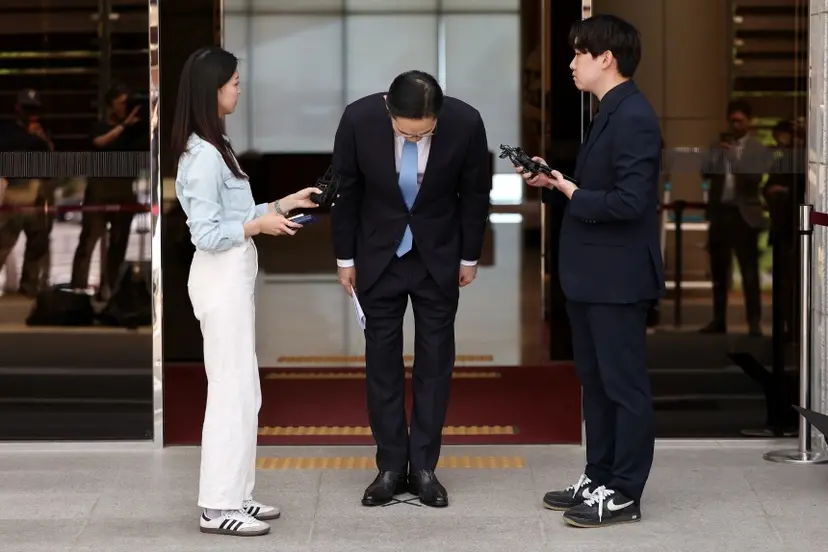
Upon arriving through the Seoul Gimpo Business Aviation Center (SGBAC) in Gangseo-gu on the 16th, Chairman Lee appealed, "To the union members and the Samsung family, we are one body and one family. Now is the time to wisely pool our strength and move in one direction." He added, "I will take on the harsh winds and storms and blame myself for everything, so let us do our best to take pride in being Samsung employees once again."
He continued by bowing his head, saying, "I sincerely apologize to customers around the world for causing anxiety and concern due to internal company issues, and I apologize to our fellow citizens who always support, love, and provide constructive criticism to Samsung."
Despite Chairman Lee's surprise apology and appeal for harmony, there is a prevailing view that if labor-management negotiations fail, the government will likely step in with mandatory intervention. With Minister of Trade, Industry and Energy Kim Jung-gwan already hinting at the possibility of exercising the emergency adjustment power via a personal Facebook post on the 14th, tension between the business and labor sectors has reached its peak.
At the time, Minister Kim wrote, "The semiconductor industry is almost the only core strategic asset for our country, and it is a winner-takes-all industry that must compete based on the speed and scale of investment. In a situation where rival countries are expanding their presence based on strong government support and bold investments, a strike could cause irreparable economic damage, so I believe emergency adjustment is inevitable as the Minister of Industry if a strike occurs."
The reason the government is applying such intense pressure is that if the strike is actually carried out, the estimated damage to the national economy is astronomical. Currently, the Samsung Electronics union is demanding the formalization of performance bonuses at 15% of operating profit and the abolition of the bonus cap, while the company is expressing reluctance, citing issues such as breach of trust, leading to a tight tug-of-war.
The semiconductor industry is a facility-based industry where a 24-hour continuous process is essential. If the line stops even once, all wafers currently in process must be discarded. Massive amounts of time and money are required just to restart the line and restore the original yield afterward. The union has also warned that if a strike proceeds, daily losses could reach an average of 1 trillion won, with potential total losses of up to 30 trillion won. Some in academia and industry even forecast that considering the chain effects on partner companies, the direct and indirect damages could reach up to 100 trillion won.
Furthermore, there are concerns that global clients might refuse to accept products manufactured during the strike period due to uncertainties in quality and potential delivery delays resulting from the use of replacement personnel. It is pointed out that if the strike becomes a reality, it could lead to long-term customer attrition, such as shifting volume to other global foundry firms to find alternatives.
In the history of South Korean labor, the emergency adjustment power has been invoked only four times: the Korea Shipbuilding Corporation strike in August 1969, the Hyundai Motor strike in July 1993, the Asiana Airlines pilots' strike in August 2005, and the Korean Air pilots' strike in December 2005. All were used due to concerns over prolonged strikes in national export logistics or core key industries. Notably, during the 2005 Korean Air pilots' strike, it was invoked just four days after the start of the strike due to fears of a massive logistics crisis, marking the fastest mandatory intervention in history.
While the labor law academic community generally maintains that mandatory intervention, which limits the constitutionally guaranteed right to strike, should be approached with caution, there is an atmosphere of acknowledging the inevitability of government intervention to prevent the economic catastrophe that a semiconductor shutdown could bring.
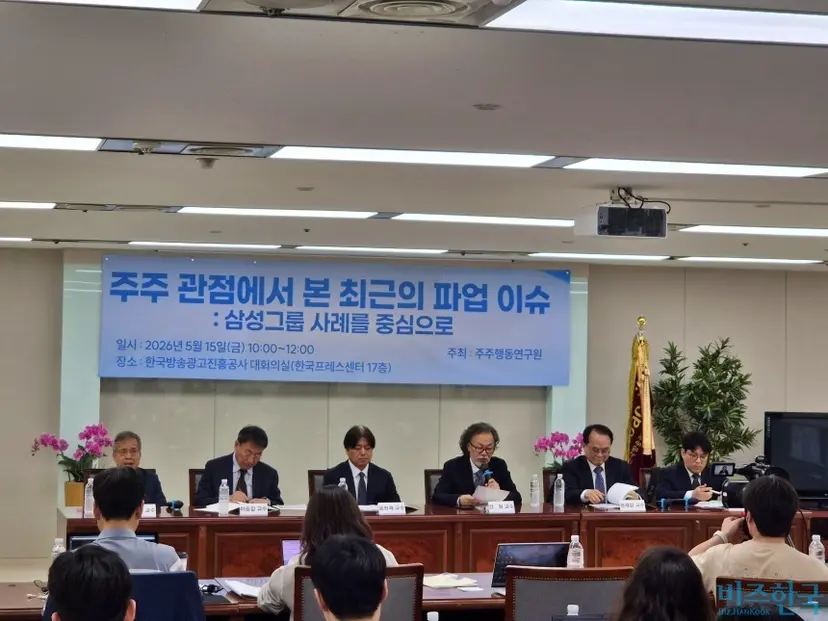
Lee Seung-gil, President of the Korea ILO Association (former professor at Ajou University Law School) and a leading expert on labor law in Korea, attended the seminar hosted by the Shareholder Action Research Institute at the Press Center in Jung-gu, Seoul, on the 15th, titled 'Recent Strike Issues from a Shareholder Perspective: Focusing on the Samsung Group Case.' He explained, "Emergency adjustment is a system that acts as a last resort for the state to intervene to minimize damage from strikes to the national economy or daily life. If the Minister of Employment and Labor announces it after meeting the requirements for invocation, industrial action must stop immediately, and the strike cannot be resumed until 30 days have passed."
He also analyzed the strategic meaning behind Minister Kim's social media remarks. Lee diagnosed, "The government leaking the possibility of emergency adjustment can be interpreted as a sophisticated signal intended to pressure labor and management to reach an agreement just before the strike, while simultaneously providing the union with a justification to back down, all in hopes of resolving the situation smoothly without needing to invoke the emergency power."
Meanwhile, labor and management are scheduled to resume negotiations at the National Labor Relations Commission on the 18th. It is reported that Park Soo-geun, Chairman of the National Labor Relations Commission, will personally attend the mediation.