

[비즈한국] "If anything remains that I can call my own, I ask that it be returned to activities that manifest a clear and fragrant society. And do not prolong my life by relying on machines."
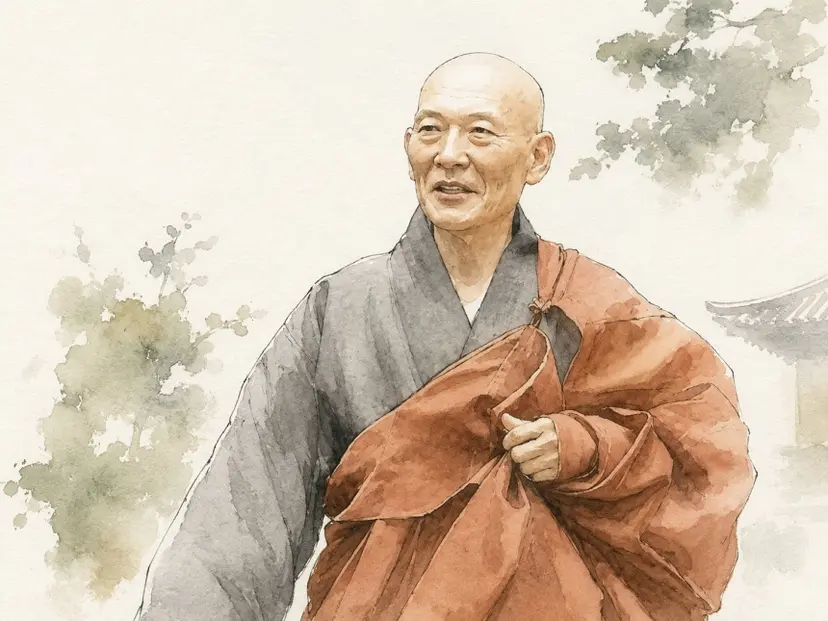
In 2010, the final teachings left by Venerable Beopjeong posed a weighty question to our society about a 'dignified death.' As his end approached, rather than clinging to life with the aid of modern medicine such as ventilators or blood transfusions, the monk chose to return to his mountain temple in accordance with the natural order. This was a complete act of self-determination based on his own beliefs and conscience.
Sixteen years later, in May 2026, the Republic of Korea has established an institutional framework called the Act on Decisions on Life-Sustaining Treatment, yet the natural passing demonstrated by Venerable Beopjeong remains difficult to achieve.
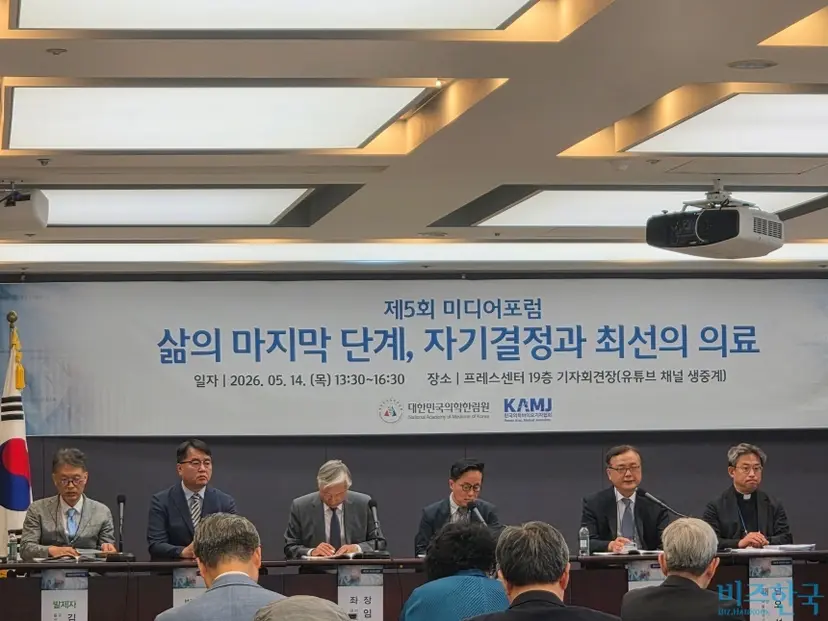
On the 14th, at the 5th Media Forum held at the Korea Press Center in Jung-gu, Seoul, co-hosted by the Korean Academy of Medical Sciences and the Korea Medical and Bio Journalists Association, a discussion took place to bridge the gap between law, reality, and ethics under the theme of 'The Final Stage of Life: Self-Determination and Optimal Medical Care.'
Kim Dae-gyun, head of the Regional Hospice Center at Incheon St. Mary's Hospital, pointed out that the legal uncertainty felt by medical staff is the biggest barrier blocking patients' self-determination. This is because defensive medicine is rampant, with doctors recommending transfer to the emergency room out of fear of legal liability, even when a patient nearing the end of life clearly expresses a desire to 'die at home.'
Director Kim noted, "Unless clinical judgments and shared decision-making processes based on good faith are protected to a certain level by law, doctors have no choice but to choose the safe, albeit incorrect, path of expanding life-sustaining treatment."
Representing the religious community, Father Oh Seok-jun, Secretary-General of the Life Committee of the Archdiocese of Seoul, examined this issue through the Catholic principle of 'medical proportionality.' In Catholicism, medical proportionality refers to pursuing medical actions that are helpful to the patient and free of excessive burdens or side effects in the treatment of terminally ill patients.
Father Oh emphasized, "Life-prolonging technology is not always a moral good for the patient," adding, "We must be wary of persistent treatments that artificially prolong a painful end-of-life process." Aligning with the life independent of machines that Venerable Beopjeong rejected, Father Oh suggested that it is necessary to objectively identify the effectiveness of treatments based on medical data and move toward palliative care instead of meaningless medical intervention.
The panelists agreed on the limitations of the current Act on Decisions on Life-Sustaining Treatment, urging the need to legally protect the good-faith clinical judgments of medical staff and to re-examine the distinction between terminal and end-of-life stages, which is a prerequisite for carrying out the suspension of life-sustaining treatment.
Kwon Bok-kyu, a professor of medical education at Ewha Womans University School of Medicine, argued, "The current law too strictly distinguishes between terminal and end-of-life stages, undermining the autonomy of doctors. Rather than the law dictating everything, it should transition to a flexible system that indemnifies and guarantees the ethical decisions of medical institutions."
According to the Act on Hospice and Palliative Care and Decisions on Life-Sustaining Treatment for Patients in the End-of-Life Process, life-sustaining treatment refers to medical procedures—such as cardiopulmonary resuscitation, hemodialysis, administration of anticancer drugs, the use of ventilators, and other procedures prescribed by Presidential Decree—that only prolong the period of the end-of-life process without therapeutic effect.
The suspension of life-sustaining treatment is only applicable to patients in the end-of-life process who have no possibility of recovery, show no improvement despite treatment, and are in a state where death is imminent due to rapidly worsening symptoms. For patients who have written an Advance Directive for Life-Sustaining Treatment, such life-sustaining treatments can be withheld or withdrawn.
On the other hand, terminally ill patients, while similar to end-of-life patients in that they are facing death, are not eligible for the suspension of life-sustaining treatment. A terminally ill patient is defined as one who has no possibility of fundamental recovery despite active treatment and is expected to die within a few months, as diagnosed by the attending physician and one specialist in the field. In practice, the use of ventilators is mandatory even for terminally ill patients. If a doctor stops such treatment and a problem arises for the patient, it can lead to legal disputes over liability; therefore, under the current Act on Decisions on Life-Sustaining Treatment, the self-determination right of terminally ill patients is strictly limited until they officially enter the end-of-life stage.
The forum also saw many voices pointing out blind spots, such as the difficulty of even meeting the requirements for an Advance Directive for those without family, amidst the reality of rapidly increasing single-person households and family fragmentation. Consequently, suggestions were made to promptly introduce a medical proxy system—like those in the U.S. or U.K.—that allows patients to designate a trusted person to be granted legal authority, thereby guaranteeing the right to self-determination in the true sense.
"Death, the very last stage of life, is a socially and institutionally significant event. If the focus has been on 'living' until now, there is a growing voice that we must now establish a system related to death." It is time for our society to reflect on these closing remarks by Kim Jang-han, a professor of Humanities and Social Medicine at Ulsan University College of Medicine.