

[비즈한국] The field of engineering design has broken away from the traditional workflows maintained for decades and has reorganized into an AI-centered, intelligent ecosystem. If Computer-Aided Design (CAD) in the past was merely a tool for creating digital blueprints, the modern engineering environment has entered the era of 'cognitive engineering,' where systems understand design intent and autonomously propose optimal solutions within physical constraints.
Currently, engineering AI is divided into 'Generative Design' and 'Generative AI' based on interaction and automation. Generative design contributes to the lightweight manufacturing industry by providing answers to the question, "What is the most efficient shape within the load-bearing and material constraints the part must withstand?" On the other hand, Generative AI reduces repetitive tasks for designers by generating models via natural language commands or by identifying and proposing optimal standards from past design data.
The impact of AI on engineering design is most starkly visible in industrial sectors that require massive capital investment and high precision. The shipbuilding and plant industries are prime examples.
In the shipbuilding industry, particularly in ship engineering, the introduction of AI tools is changing workflows. General-purpose generative AI like ChatGPT or Gemini is now used for complex engineering calculations and problem-solving. When a designer hits a wall, instead of asking a colleague, they now consult generative AI. A worker in the shipbuilding industry, 'A', said, "In the past, when designing complex piping for ships, we had to manually input numbers and environmental conditions into Excel to calculate pipe sizes. Now, AI immediately presents the optimal value for specific conditions, so the engineer only needs to verify it, which has significantly reduced the time taken."
Automation for initial ship design drafts is also on the verge of being introduced. Ships require new designs for every project due to differing structures and equipment. In the past, it took about a week just to find past data, but now, by querying AI connected to an internal database, necessary ship specifications can be retrieved in a day or two. Beyond this, shipbuilding companies are recently developing AI that can draft initial design blueprints. 'A' noted, "The most time-consuming stage in the design process is creating the first draft on a blank canvas. If AI can generate the initial draft, the time taken will be drastically reduced."
In the plant industry, where numerous elements like piping, electricity, and instrumentation must be combined, the adoption of AI is a major topic. Hyundai Engineering is actively researching and developing AI-based design automation technology, spearheaded by its Smart Technology Center and Engineering Center.
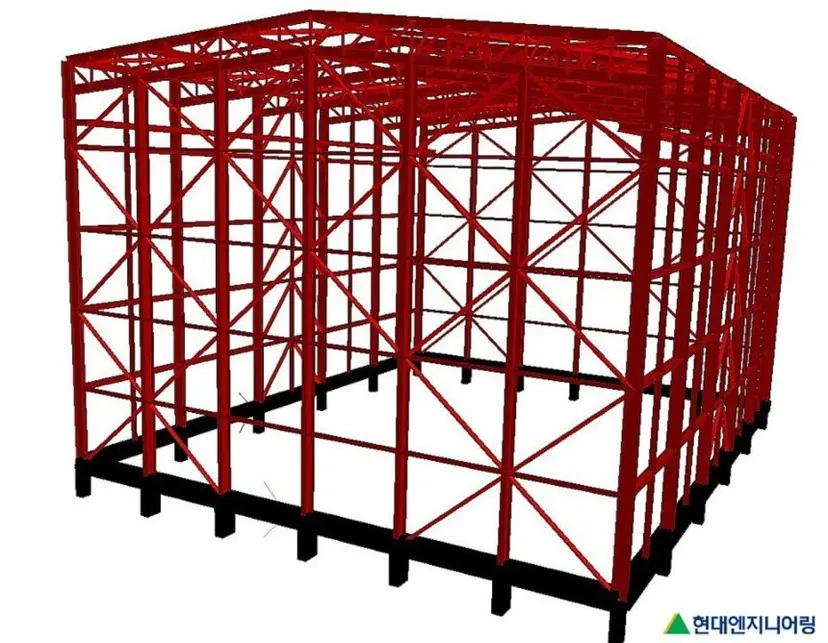
The 'AI-based Plant Steel Structure Automated Design System,' developed domestically and patented, has shortened structural design time from the usual 3-4 days to less than 10 minutes. By predicting the optimal shape of structures, it minimizes construction volume and reduces design costs by approximately 20%, leading to its widespread use in bidding and actual project execution.
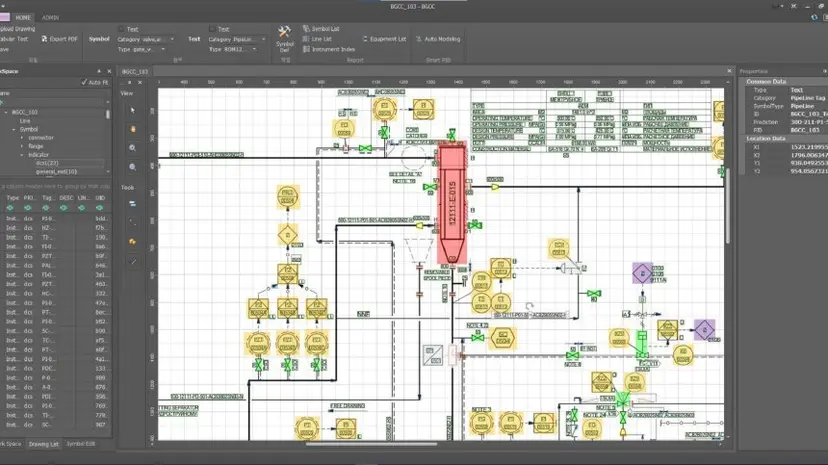
Furthermore, the 'Piping & Instrumentation Diagram (P&ID) Automated Recognition System,' which incorporates deep learning and computer vision technology, has transformed the manual method of drawing analysis. It automatically recognizes P&ID, which are key process diagrams, and automatically generates outputs such as piping/instrumentation lists and CAD drawings. This system extracts information with over 95% accuracy in just 1-2 minutes per drawing.
Efforts are also being focused on advancing generative AI. In 2024, at the 'AI Ready' conference, the company unveiled its self-developed plant-specialized Large Language Model (LLM). Trained on 16.5 billion tokens of plant construction corpora and internal professional data, this model is being used to develop the 'ChatFiles' service, which searches, summarizes, and translates internal technical documents through a Q&A format, as well as services that compare, analyze, and review Invitation to Bid (ITB) items based on past cases, legal clauses, and standard contract conditions (FIDIC).
While the adoption of engineering AI will lead to a dramatic increase in productivity, field engineers are facing challenges such as unprecedented changes in the work environment and employment instability. This is because companies might use AI to drastically reduce work hours and seize this as an opportunity to cut labor costs.
A worker in the automotive industry, 'B', said, "Engineering design is a field where AI has arrived faster in reality than physical AIs like Atlas. In a situation where AI presents six drafts in 30 minutes for a task that would take a team a month, there is no reason for a company to maintain its previous headcount."