

[비즈한국] Nowadays, there isn't a person who claims to have a 'cultural life' who doesn't visit exhibitions. While it’s been the same every year, this year in particular, there’s no shortage of exhibitions being touted as 'must-sees.' Among them, the one that has received the most spectacular spotlight this spring is undoubtedly 'Damien Hirst: Nothing Is True But Everything Is Possible.' Held at the National Museum of Modern and Contemporary Art, Seoul, this exhibition has garnered immense interest as the first large-scale solo exhibition in Asia to survey the overall artistic world of Damien Hirst, and it is currently thriving amidst intense attention and various controversies. It is truly fitting for an artist whose very name is a brand in itself.
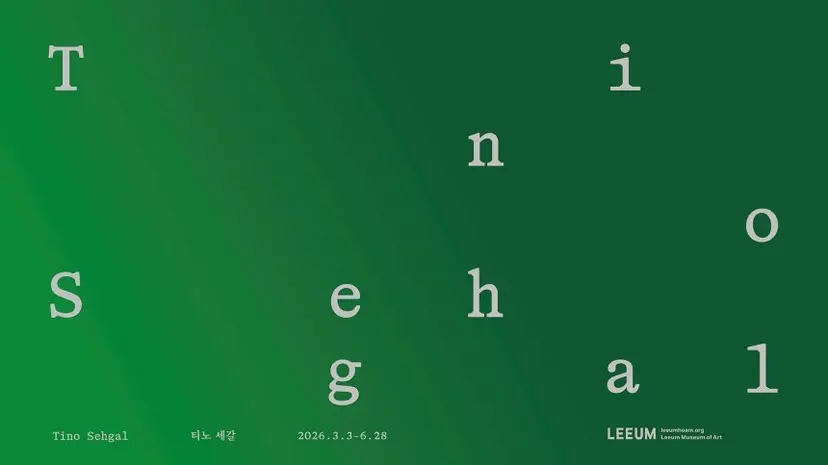
Unlike the boisterous Damien Hirst exhibition, which feels like a band frontman, there is another exhibition—popular like a quiet but steadily consistent band member—that is receiving subtle yet ongoing attention. That is 'Tino Sehgal,' held at Leeum Museum of Art. As the first solo exhibition in Korea by Tino Sehgal, a contemporary artist who leaves no physical records, the exhibition follows the artist's philosophy of providing no catalogs, labels, wall texts, or promotional photos and videos. Thus, the audience's memory becomes the only means for the work's permanence. Photography by visitors is also restricted, placing it in stark contrast to the Damien Hirst exhibition, which is overflowing with Instagram-certified shots. On a day at the border of spring and summer, I visited these two exhibitions, both rumored to be 'hip' but offering polar opposite vibes. Both exhibitions run until June 28.
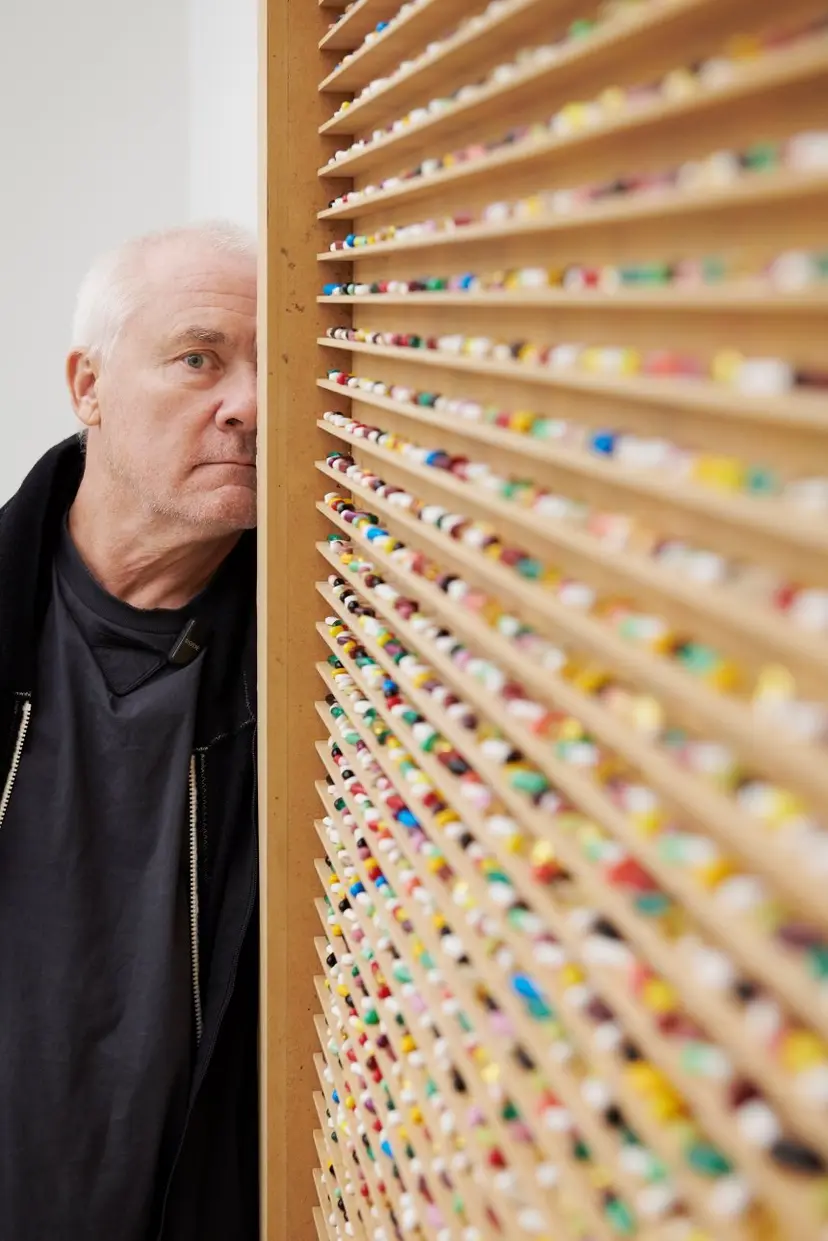
Damien Hirst: Nothing Is True But Everything Is Possible
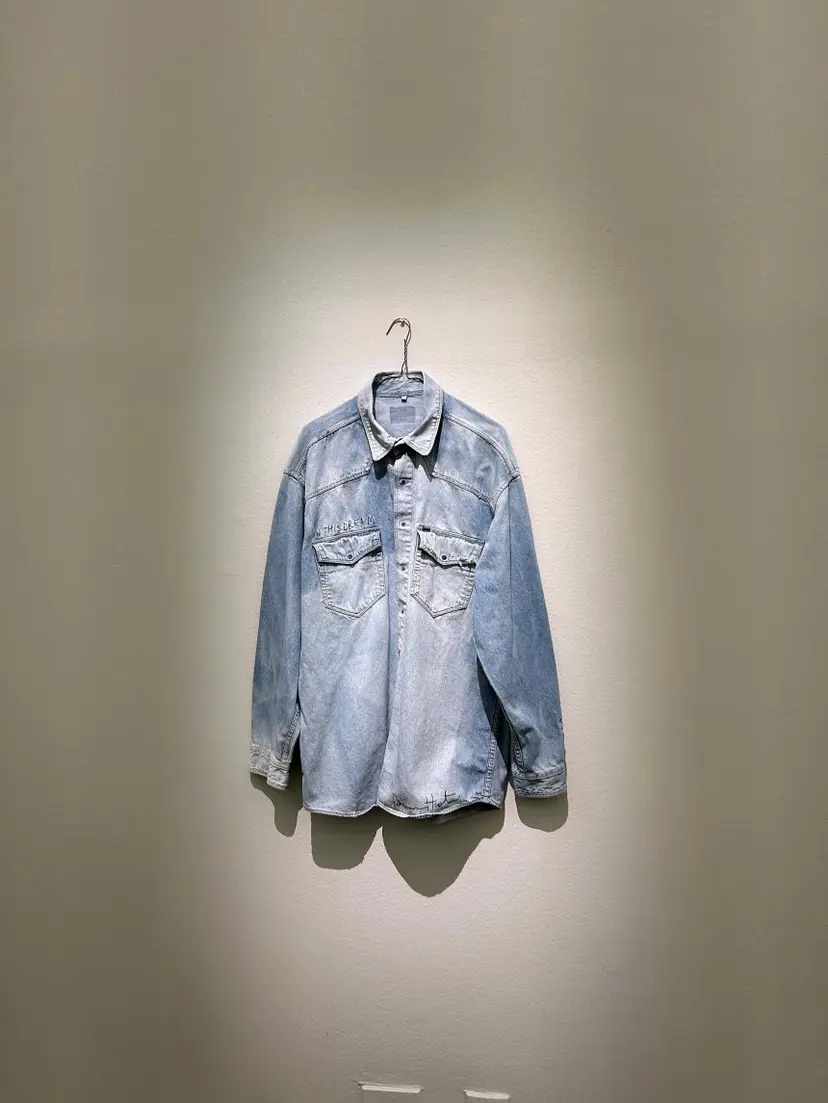
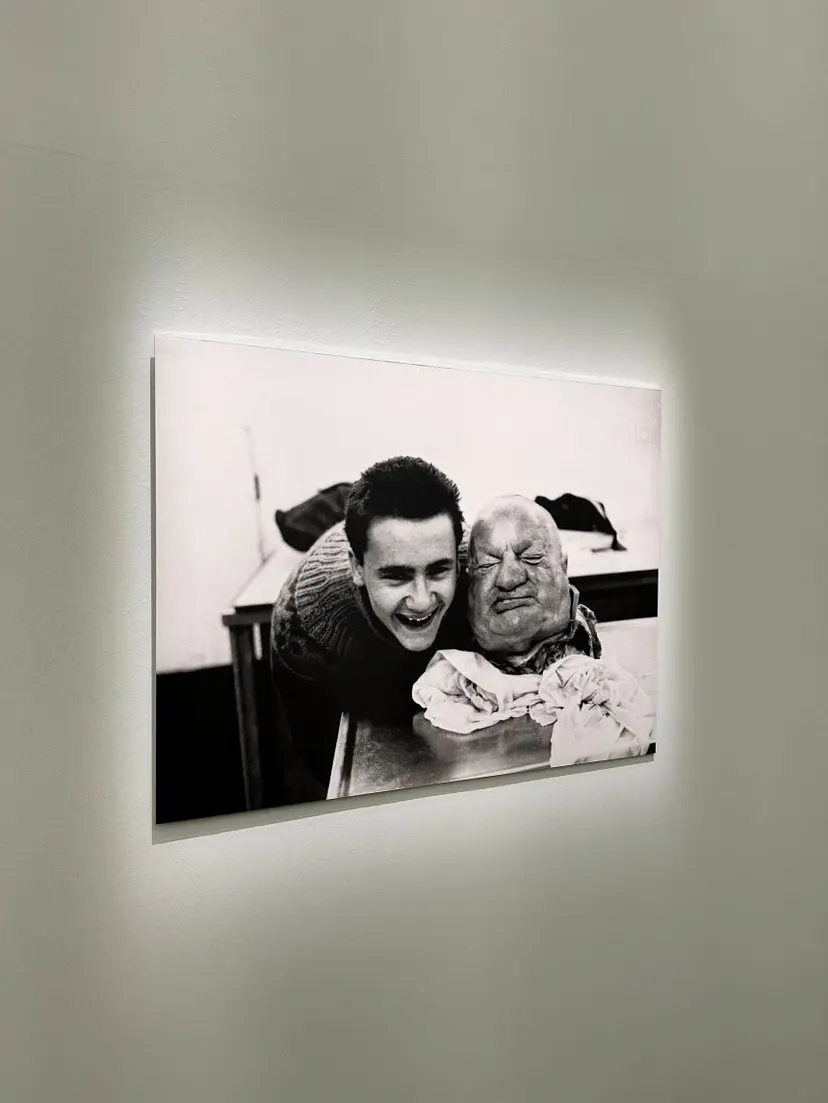
“I can’t even understand the very first piece.” I clearly heard someone muttering beside me while looking at Hirst’s 'Self-Portrait' (1987). 'Self-Portrait' is a denim shirt on a hanger displayed on a wall. There’s no need to be discouraged from the start thinking, 'Contemporary art is hard again.' Once you hear the explanation that it is a rearrangement of the artist's name 'Damien Hirst' into 'Denim Shirt,' you immediately go, "Aha." If you look closely, you can see the phrase 'IN THIS DREAM' embroidered on the pocket. Moving to the side, there is the photograph 'With Dead Head' (1991), taken when he was a teenager, where he is grinning brightly next to a corpse's head in a morgue. The description notes, 'He stood calmly on the outside, but was actually terrified,' yet in these early works, one can read and infer much about the wit, aspirations, and desires of the young Hirst.
There is great pleasure in watching the witty ideas and appropriate titles of Damien Hirst's works. First, look at the work as a whole, examine the details thoroughly, think, and then read the title. You find yourself ruminating on the artist's ideas and intentions embedded in works like 'The Vulnerability of Love' (2000), which features a beach ball suspended in the air by wind with knives densely arranged underneath, or 'The Acquired Inability to Escape (Inverted)' (2008), where a long table and chair are placed inside a cramped structure, with cigarettes and ashtrays on top.
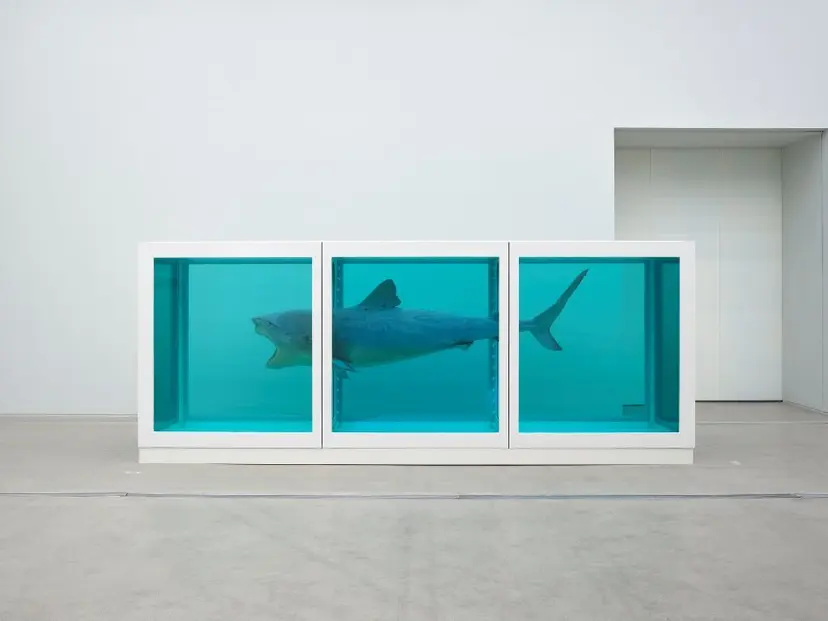
Of course, the works that draw the most attention are undoubtedly the shark—that is, 'The Physical Impossibility of Death in the Mind of Someone Living' (1991)—'A Thousand Years' (1990), which consists of a dead cow's head, fly larvae, and an insectocutor, and the diamond-encrusted skull, 'For the Love of God' (2007). These are Hirst’s representative works that focus on the complex human emotions and desires regarding life and death; the giant shark in a glass tank filled with formaldehyde, in particular, is one of the most iconic images of 20th-century art.
Watching Hirst’s exhibition can sometimes evoke discomfort. A normal human being might feel nauseated seeing a severed cow head with visible bloodstains and swarms of flies circling it. Of course, while watching 'A Thousand Years,' I saw a young person say, "Ah, now I want to eat beef head soup"—perhaps out of bravado or twisted spite—so individual reactions may vary wildly. In any case, it is clear that we live in an era where even death has become a commodity, and within that era, this exhibition keeps posing questions, leaving room for audiences to think in a continuous loop. Even if it remains as a question like, "Is this really art?", it is certainly a time that awakens a sluggish brain.
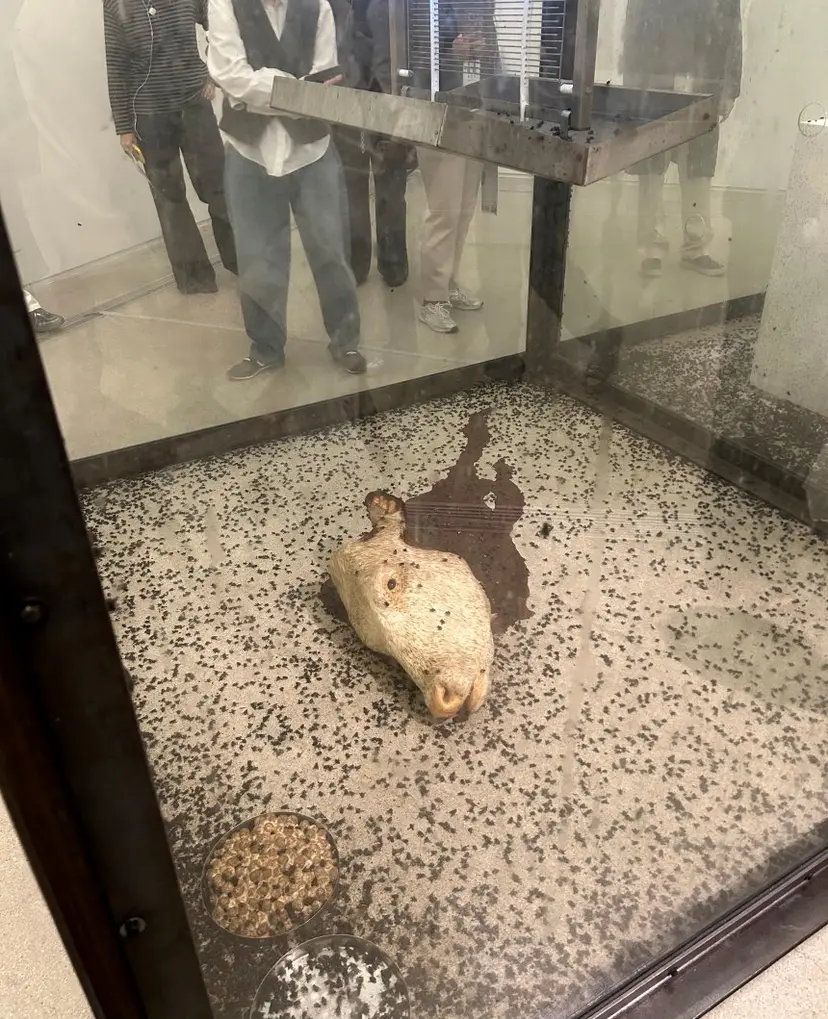
Looking back, this exhibition has never been quiet since the news of its opening. From enthusiastic cheers to questions about whether it is too late timing-wise, cynical gazes on the classic yet worn-out theme of life and death, and condemnation and protests from animal rights groups regarding the artist’s method of using animal carcasses and living beings in his work—the list goes on. Regardless, the exhibition is thriving. There is growing interest in whether it will surpass last year’s record-breaking Ron Mueck solo exhibition, which attracted 530,000 visitors. Tickets are 8,000 won, and admission is free for those aged 24 and under, university students, and seniors aged 65 and over. Both on-site purchases and advance reservations are available, but as there are often long waits, advance booking is highly recommended. The same goes for recommending weekday visits over weekends.
As you well know, Damien Hirst’s works cost hundreds of billions of won. Unless you are a billionaire, owning his work in this lifetime is a pipe dream. If the museum souvenirs aren't enough, check out the limited edition planning exhibition of Damien Hirst at the original art poster shop, 'Kuna Jangrong.' It is an opportunity to contemplate his philosophy and questions in your own space through posters containing Hirst’s major motifs like sharks, butterflies, and pills, with up to 15% off until May 25.
If you saw the exhibition but still hold a critical view of Damien Hirst, there is a Damien Hirst condemnation performance scheduled for May 16 at 11 a.m. in front of the main gate of the National Museum of Modern and Contemporary Art, Seoul. It is an offline action planned by a group that contemplates the animals killed by Damien Hirst, and it aims to raise questions about the use and killing of animals justified under the name of art, as the title 'There Is No Art Compatible with Massacre' suggests. A 'silent march' slowly circling the museum and open-floor speeches are planned.
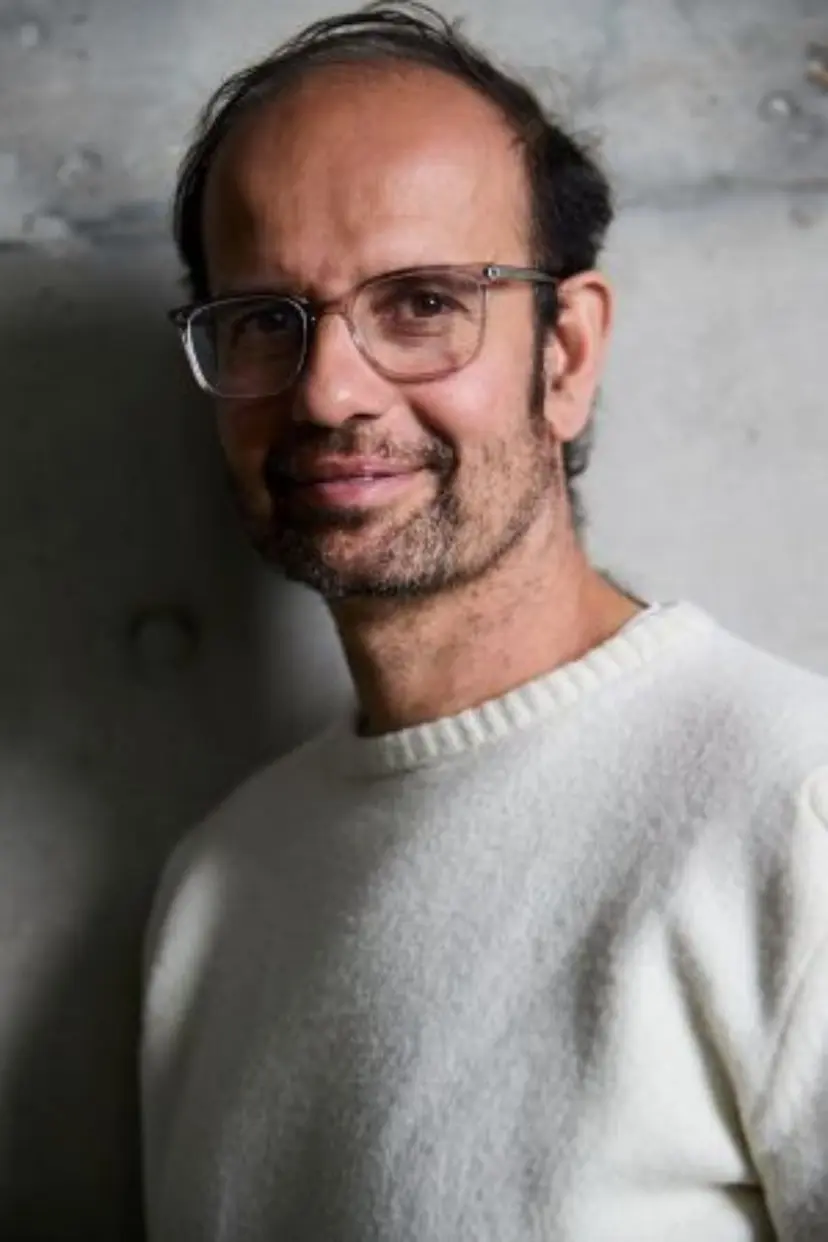
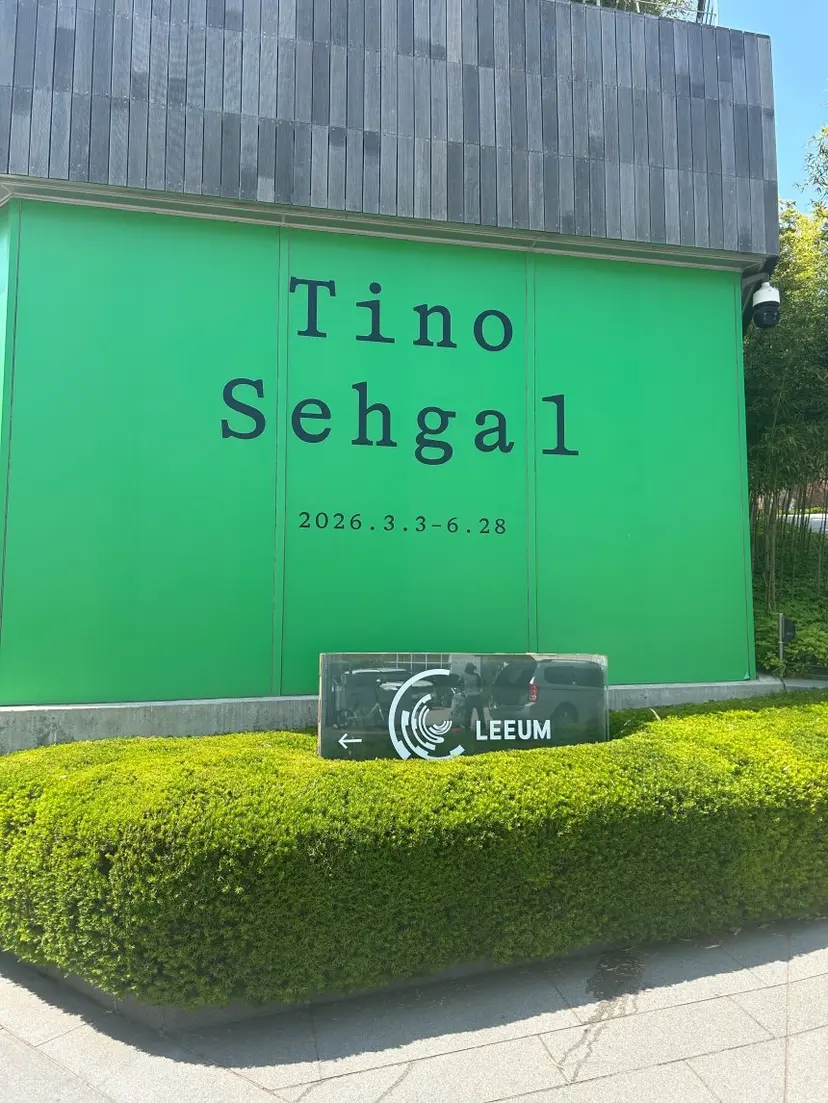
Tino Sehgal
Tino Sehgal’s exhibition, which begins with a unique background in economics and dance, has absolutely no promotional photos or videos, and visitor photography is also restricted, so even on social media, you only see text reviews alongside views of the Leeum Museum of Art. I believe the phrase 'An exhibition that torments introverts' was effective in making it widely talked about without even a single common 인증샷 (proof shot). It was the curiosity of 'how bad could it be' that made this introvert head to Leeum as well.
Tino Sehgal challenges traditional artistic creation methods that center on material production and the consumption of natural resources. He calls his works, which are composed of human bodies, language, and social interaction, 'Constructed Situations.' This exhibition consists of eight 'Constructed Situations' realized by 'Interpreters,' a method that induces direct encounters and participation from the audience. If you’re wondering what that means, seeing is believing—I simply recommend you visit.
You can encounter works from the museum entrance. Those who suddenly jump towards you as if dancing while you are trying to enter, exclaiming "Oh~ This is so contemporary," are the 'Interpreters,' and this constructed situation is one of the eight works. To be precise, the work includes how the audience reacts to this. The works also appear suddenly in the lobby, which is greeted by large typography that reads, 'This is so contemporary' (Wait, the original text says 'Near, and far, and someday at the same distance'). Since you never know when or where a work will appear, or who is the work and who is the visitor, the audience experiences a light, unprecedented tension while exploring the exhibition.
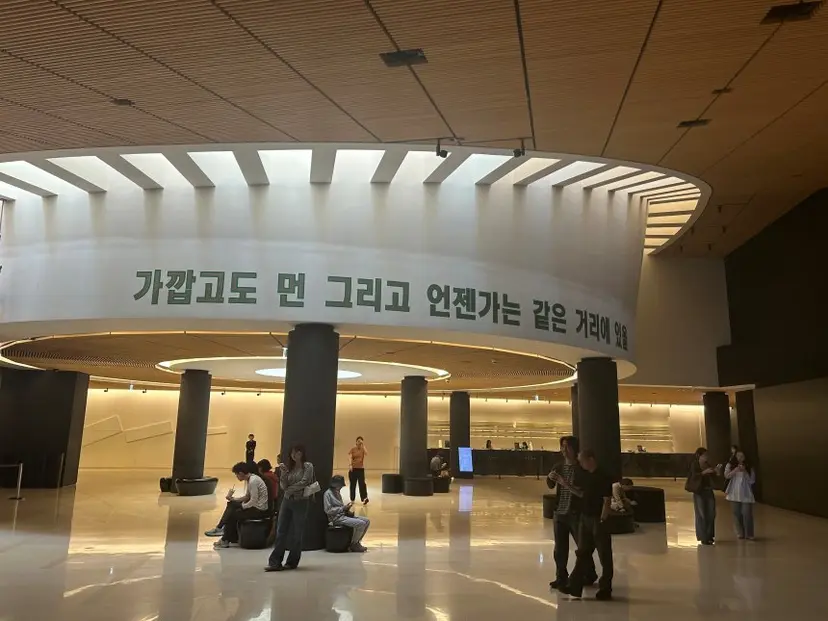
In this way, the Tino Sehgal exhibition is conducted simultaneously not only in the exhibition space M2 but also from the museum entrance to the lobby and garden. It is characterized by forming new relationships by harmonizing the architectural space of the Leeum Museum of Art with works from the museum's collection personally selected by the artist. A representative example is Sehgal’s signature work 'Kiss' (2002), presented in a space filled with Auguste Rodin’s various sculptures; it maximizes the contrast created by the vitality of human existence as a real man and woman kiss and embrace amidst the classical bronze statues. Of course, there is also the fun of stealing glances at the expressions of the visitors watching it. From expressions that clearly show the question, 'Is this really art?' in a different sense from Hirst’s, to expressions that actively engage and enjoy the work in response to the interpreters, all of this blends together to complete a new experience.
Among the eight constructed situations, the three works held in the central hall—'This Entry,' 'This Variation,' and 'This You Me'—are held for six weeks each in sequence, with 'This Variation' currently being held until May 17. Tickets are 16,000 won, with admission at 8,000 won for teenagers, young adults, university students, and seniors aged 65 and over.
![[Have You Been There?] The Place of BTS and the '21st Century Grand Princess', Awon Gotaek in Wanju](https://s.bizhankook.com/attachments_thumb/2026/05/98545_thumb.webp)
![[Have You Been There?] Damien Hirst and Tino Sehgal Exhibitions: 'Whether You're Uncomfortable or Not'](https://s.bizhankook.com/attachments_thumb/2026/05/98633_thumb.webp)
![[Have You Been There?] "Until the Joy of Living Becomes Your Taste…" The Edit 10th Anniversary Pop-up Store](https://s.bizhankook.com/attachments/2026/07/12b52a23bfaf_49adb774.jpg)
![[Have You Been There?] Let Your Fandom Delight Your Ears at 'Audeum'](https://s.bizhankook.com/attachments/2026/07/0213677cba05_3085135b.jpg)
![[Have You Been There?] Joyful Laughter Amidst a Dry Reality! 'Fernando Botero: The Aesthetics of Form'](https://s.bizhankook.com/attachments/2026/07/2cf805024d8b_a292260c.jpg)
![[Have you been there?] Go to 'Muju', a place even Park Bo-gum has fallen in love with, right now.](https://s.bizhankook.com/attachments_thumb/2026/06/106475_thumb_243baea0.webp)