

[비즈한국] We are launching Season 12 of the 'Korea Art Promotion Project,' a program designed to cultivate the fertile soil of Korean art. This project has now been recognized as a meaningful event by the art community for discovering and fostering artists, and it has gained a reputation among artists as a project they want to participate in. The basic keyword that the 'Korea Art Promotion Project' has pursued from the beginning is 'the acceptance of diverse currents in Korean art and the search for developmental changes.' As a result of these principles, it is evaluated as having established a perspective for viewing contemporary Korean art.
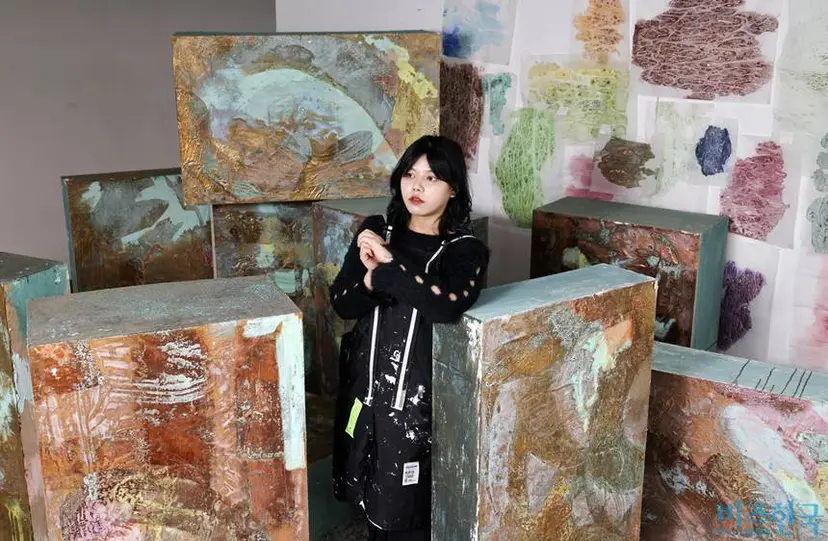
Perceiving time is relative because every person experiences it differently. Thus, even within the same timeframe, the speed of people's emotions varies, and the breadth of their judgment is wide. While the speed of emotions or the breadth of judgment may differ, the physical properties of time remain unchanged: the direction of progress from past to present to future. How has art expressed this nature of time?
There are not as many works dealing with time as one might think. In Western art, time appears in the form of a person. Although personified time began appearing in paintings during the Middle Ages, it was not until around the 17th century that it emerged in a convincing form.
It is the image of a hunched old man holding a scythe and an hourglass. Why did it appear in this form? People attribute this to the influence of Greek and Roman mythology, which deified time, and ancient Chinese culture, which expressed gods of longevity through the image of immortals.
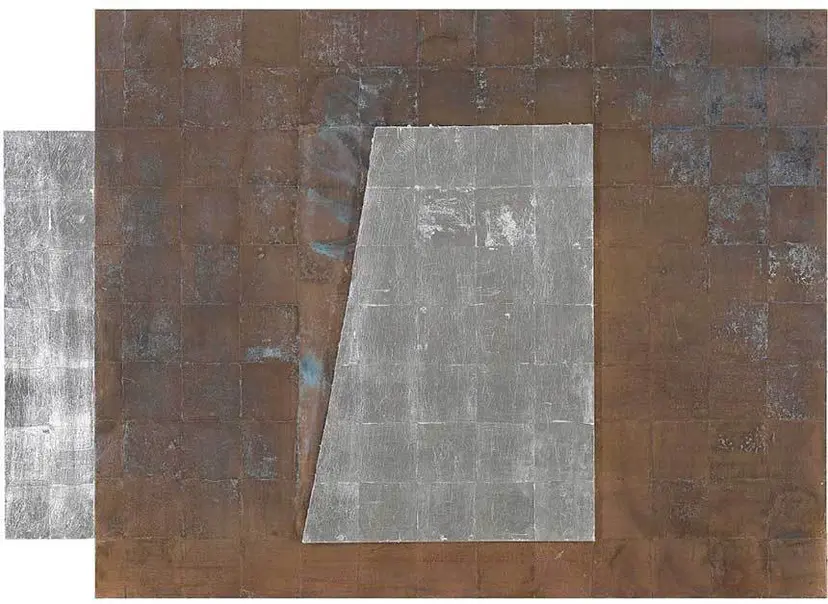
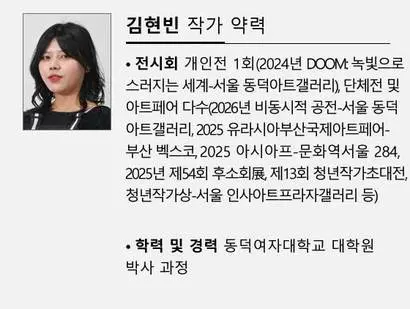
The artist who expressed time convincingly was the British painter William Dyce (1806-1864). Active during a time when realism and impressionism were sweeping Europe, he belonged to the 'Pre-Raphaelite Brotherhood,' a Victorian-era painting style in Britain.
The work left by Dyce, titled 'Pegwell Bay: A Recollection of October 5th, 1858,' is a landscape painting featuring a beach and cliffs, and is a masterpiece that captures three properties of time. The first is the time when the artist created the work. This is 'realistic time' occupied by humans. It is expressed through the concrete setting of the landscape—the cliffs and beach at twilight—and the figures of the artist and his family within it.
The second time is 'astronomical time.' Donati's Comet, which appears in the sky, represents the cosmic time of October 5, 1858, as used in the title. According to records, a comet named Donati passed by Pegwell Bay, where the artist lived at the time.
The third is 'geological time.' The cliffs, rendered clearly thanks to the twilight sky, show the age of the Earth. The layered strata have accumulated at least 250 million years of time. Geological time is solidified like the strata of a cliff. It is a feeling very different from the time felt while listening to the ticking of a clock.
Dyce captured the thrill of a brief moment where the vastness and strangeness of astronomical and geological time meet the familiarity of human time in a lyrical landscape.
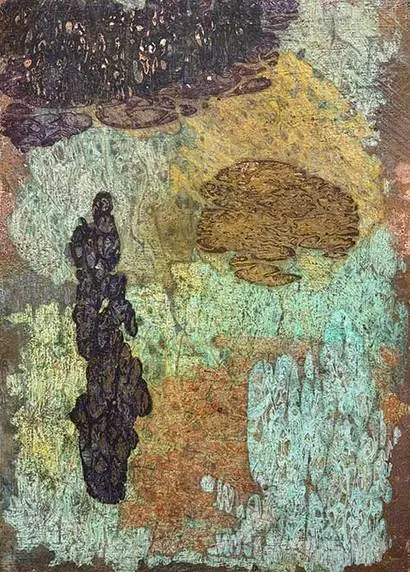
Kim Hyun-bin's work, which captures the traces of time through abstraction, is also unfamiliar but meaningful painting. He expresses the time of the 21st-century young generation in Korea, who live in the same era and space, in his own way. Within it, conflicts between people, the flow of emotions, and rational judgments are intertwined into abstract forms.
The artist says, "Because everyone's time is different and the ways of consuming emotions are vastly different, I had no choice but to capture the physical properties of time through abstraction." To achieve this, he says he used accidental effects by mixing various paints and materials.
It is a compelling painting that reflects the artist's belief that the traces of time are abstraction.
![[Korean Art Support Project Season 12] Kwon Ji-hyun - The Message in Wildflowers](https://s.bizhankook.com/attachments_thumb/2026/05/98175_thumb.webp)
![[Korea Art Promotion Project Season 12] Seo Je-ah - Growing Pains Expressed Through Leather Art](https://s.bizhankook.com/attachments_thumb/2026/05/98480_thumb.webp)
![[Korea Art Promotion Project Season 12] Kim Hyun-bin: Capturing the Traces of Time in Abstraction](https://s.bizhankook.com/attachments_thumb/2026/05/98642_thumb.webp)
![[Korea Art Promotion Project Season 12] Joo Kyung-sook - Lines Containing the Energy of Life](https://s.bizhankook.com/attachments_thumb/2026/06/106488_thumb_74bfae90.webp)
![[Korean Art Support Project Season 12] Kim Kyung-won - Original Paintings Created Through Optical Illusions](https://s.bizhankook.com/attachments/2026/07/4942ec34bbf7_bd974ed4.jpg)
![[Korea Art Promotion Project Season 12] Claire Kim - Cartoon-like Paintings](https://s.bizhankook.com/attachments/2026/07/79ed5c5967a3_47729c25.jpg)