

[비즈한국] Jo Shin-hong (43), CEO of Purun Partners Asset Management and the largest shareholder of Purun Savings Bank007330, is expanding his influence within the group by purchasing additional shares of the bank. As the Purun Group strengthens its owner-family-centered governance structure following its inclusion into the Sajo Group, attention is focused on the status of the affiliates where CEO Jo holds stakes. While the financial affiliates have shown growth centered on asset management and venture capital, it has been found that some firms in the golf and leisure sectors are suffering from capital impairment.
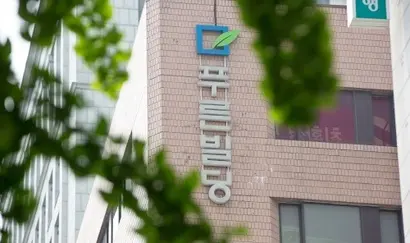
On April 22, the board of directors of Bookook Feed002710 announced that it would sell its entire stake in Purun Savings Bank (1,088,048 shares) to CEO Jo Shin-hong of Purun Partners Asset Management. The transaction is scheduled between May 20 and June 18, with shares being disposed of through off-hours block trading at 10,650 KRW per share. The purpose of the disposal was stated as securing liquidity and improving the financial structure. Bookook Feed is a Sajo Group affiliate in which Purun Savings Bank and Purun F&D each hold 10.0% and 13.2% stakes, respectively.
As Purun Savings Bank is the core affiliate, CEO Jo Shin-hong's influence within the Purun Group is expected to increase following this share transaction. CEO Jo is currently the largest shareholder of Purun Savings Bank. His existing 17.2% stake will increase to 24.4% once he acquires the 7.21% stake from Bookook Feed.
The Purun Group is controlled by the owner family, including Chairwoman Koo Hye-won (67) and her three children: CEO Jo Shin-hong, Purun F&D Director Jo Grace (40, Korean name Eun-jin), and Purun Trading CEO Jo Eun-hye (38). When the Fair Trade Commission designated the Sajo Group as a large business conglomerate in 2025, Purun Group affiliates, which are related to the Sajo Group owner family, were also incorporated into the Sajo Group. This is because the late Jo Jin-kyu, former chairman of the Purun Group and husband of Chairwoman Koo, was the younger brother of Sajo Group Chairman Jo Jin-woo (77).
In addition to Purun Savings Bank, financial affiliates within the group include Purun Partners Asset Management and Purun Investment. Non-financial affiliates include livestock company Purun F&D, real estate firm Purun Trading, golf apparel company Purple Blood, golf studio firm The Plaza (TPZ), golf range operator Siren, and pet cafe Slow Forest. Purun Group recently established Purun Rental & Partners for business purposes such as machinery and electronic appliance leasing, though the shareholding ratio was not disclosed (Related article: [Exclusive] Purun Group establishes rental subsidiary... Chairwoman Koo Hye-won personally oversees new business).
As the Purun Group strengthens CEO Jo Shin-hong's control, attention is drawn to the performance of the affiliates in which he holds stakes. CEO Jo is the largest shareholder of the group's financial and leisure affiliates. In the case of Purun F&D and Purun Trading, the stakes held by Director Jo Eun-jin and CEO Jo Eun-hye are higher, or the three siblings hold equal portions.
Purun Partners Asset Management (86.8% stake), led by CEO Jo, posted strong results in 2025 with an operating revenue of 3.9 billion KRW and a net profit of 2.1 billion KRW. Its wholly-owned subsidiary, Purun Investment, is also performing well, recording an operating revenue of 6 billion KRW and a net profit of 2.7 billion KRW in 2025, representing increases of 50% and 80% respectively compared to the previous year.

Conversely, affiliates in the golf and leisure sector are posting losses. The Plaza (TPZ Studio), the pillar of the golf business, is a company that operates premium indoor golf ranges and lesson studios, with TPZ On and TPZ Range as its subsidiaries. Major shareholders of The Plaza are CEO Jo Shin-hong (24.5%) and Purun Trading (19.9%).
At the end of 2024, The Plaza generated 4.9 billion KRW in revenue but recorded a net loss of 700 million KRW. During the same period, TPZ Range posted 300 million KRW in revenue with a 200 million KRW net loss, and TPZ On also recorded a loss with 800 million KRW in revenue and a 10 million KRW net loss. In particular, TPZ Range and TPZ On are currently in a state of capital impairment.
There are also companies whose business activities are difficult to verify. Launched in 2021, Purple Blood is a premium golf apparel brand, with CEO Jo Shin-hong holding a 75.4% stake. However, the brand's website is currently inaccessible, and there have been no posts on social media since late 2023. New products cannot be found on major domestic e-commerce sites like Musinsa, SSG.com, or Lotte On. Purple Blood's 2024 revenue was a mere 44 million KRW, most of which was generated through transactions with The Plaza. The net loss for the year was 97 million KRW.
The situation for Siren, a golf range operator established in August 2020, is similar. As of the end of 2024, Siren recorded 325 million KRW in revenue but a net loss of 7.7 billion KRW. In the case of Siren, CEO Jo Shin-hong holds a 25.9% stake, while Director Jo Eun-jin and CEO Jo Eun-hye each hold 23.1%.
As improving the fundamentals of the non-financial sector has become a task, attention is focused on whether they will move to prune non-core businesses in the future. An industry official noted, "Since the profit structure is centered around financial firms and the scale of the leisure sector is small, meaning it has little impact on overall performance, a business reorganization does not seem urgent."