

[비즈한국] The post-mediation process by the National Labor Relations Commission (NLRC), the final official arbitration procedure for the labor-management dispute at Samsung Electronics005930, finally collapsed early on the 13th. The negotiations continued for about 17 hours from the morning of the 12th past midnight, but they failed to bridge the fundamental divide between labor and management over the "institutionalization" of the performance-based bonus calculation method. The union evaluated the NLRC's mediation proposal as "actually a step backward from what we had demanded."
With the general strike scheduled for the 21st, there are now only 9 days left. As labor-management relations head toward a total collision, the largest general strike since the company's founding, which raises concerns of tens of trillions of won in damages, is now within sight.
Collapse after 17 hours of negotiations… Disagreement even over the 'mediation proposal'
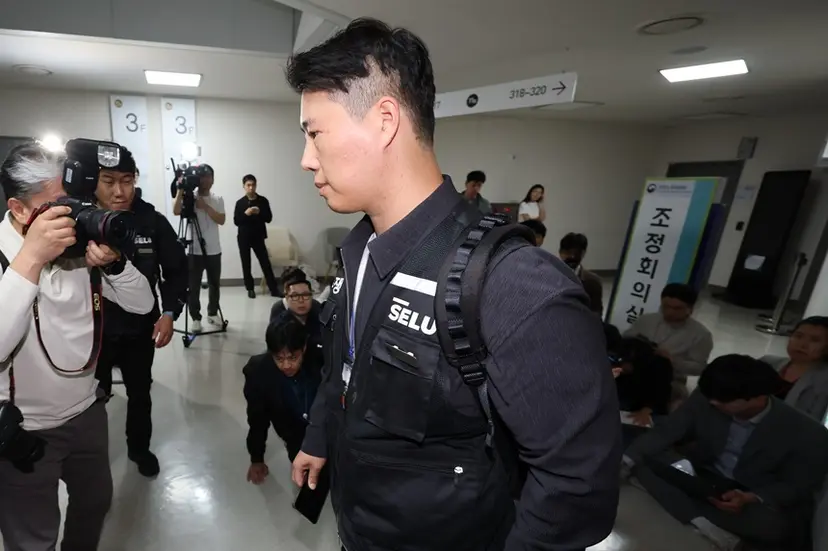
The agreement between Samsung Electronics' labor and management has ultimately failed. Choi Seung-ho, chairman of the Samsung Electronics chapter of the Samsung Group Mega-Union, stated immediately after the second post-mediation meeting held at the NLRC in the Government Complex Sejong early on the 13th that "the post-mediation has finally collapsed" and that "the mediation proposal we received after waiting for over 12 hours was actually a step backward (from the union's demands)." The negotiations lasted about 17 hours from 10 a.m. the previous day until 2:53 a.m., but no common ground could be found regarding the restructuring of the performance bonus system. Consequently, both sides return empty-handed from the three-day government-mediated procedure that began on the 11th.
The core issue was "whether to structure the performance bonus system." The union insisted that a fixed percentage of operating profit should be secured as the source for performance bonuses and that the abolition of the OPI (Overall Performance Incentive) cap (50% of annual salary) must be codified in the collective agreement. On the other hand, the management countered with the logic that institutionalizing a fixed ratio is an excessive management burden due to the volatility inherent in the semiconductor industry.
Post-mediation is the final arbitration procedure that resumes after an initial mediation fails, provided both sides agree; if a mediation proposal is reached, it has the same effect as a collective agreement. Samsung Electronics' labor and management also failed to reach an agreement in the previous mediation in February and March, receiving a decision to suspend mediation.
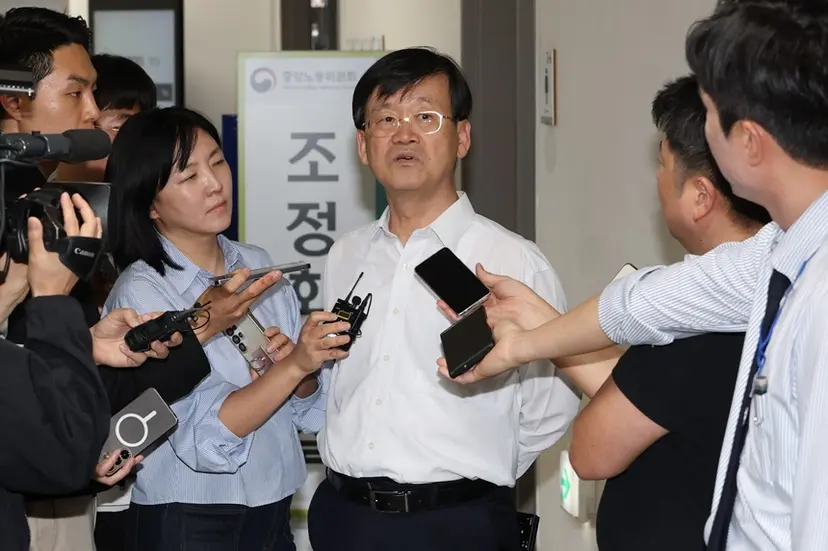
According to the union, the NLRC proposed: maintaining the existing EVA (Economic Value Added)-based OPI system; maintaining the 50% annual salary cap; establishing a new special management performance bonus limited to the DS (Semiconductor) division (based on 12% of operating profit); and paying it only if domestic No. 1 in revenue and operating profit is achieved in 2026. The Device Experience (DX) division, including smartphones, is excluded. Chairman Choi pointed out, "They only proposed a special performance bonus limited to 2026 for the DS division and did not even institutionalize it," adding that "the expansion of the stock compensation system was not included either."
Chairman Choi stated, "Our core demands, such as the abolition of the performance bonus cap and its institutionalization, were not reflected," adding that "the proposal is actually at a level that has regressed compared to our existing demands." He particularly strongly objected to the conditional payment structure of "achieving domestic No. 1," calling it "a way of leaving performance to external factors." Chairman Choi had previously told reporters at 6:20 p.m. the previous day, "We requested the NLRC to provide a mediation proposal and waited for about 3 hours. We informed them that if there were no results within 2 hours, we would consider it a collapse and conclude it here."
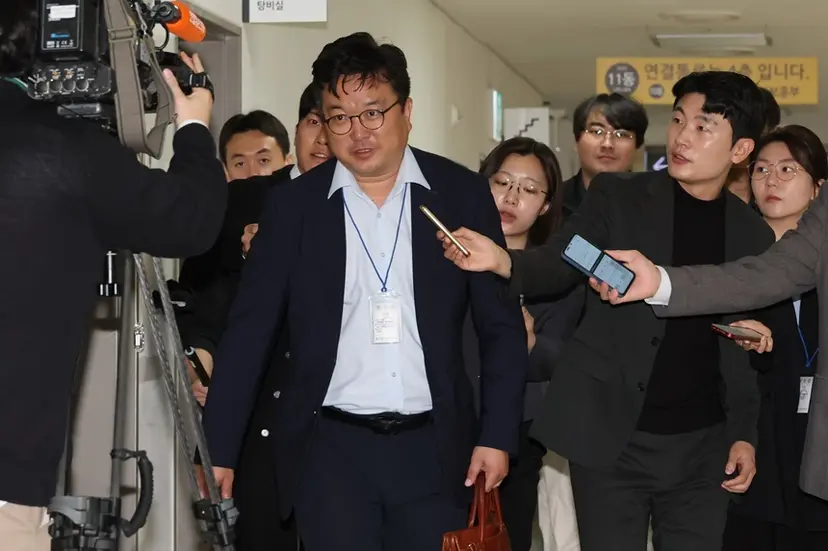
On the other hand, the NLRC and the management have opposing positions regarding whether a "mediation proposal" was even presented. After the meeting, both the NLRC and the management drew a line, stating that no official mediation proposal had been presented. The NLRC announced in a statement, "There was a large gap between the two sides' claims, and the labor union requested to stop the post-mediation, so we decided to end this post-mediation without presenting a proposal." Kim Hyung-ro, Vice President of Samsung Electronics and a management representative, also said, "The company did not officially present a mediation proposal."
Expanded compensation and permanent institutionalization… A gap that could not be bridged
Labor and management have shown a difference in stance regarding "expanded compensation" and "structural institutionalization." The management proposed a special compensation method that could respond flexibly depending on market conditions, but the union viewed this as a one-time measure and rejected it. Instead, it maintained the position that a stable compensation system should be established by fixing a certain percentage of operating profit.
According to the union, the NLRC's mediation proposal suggested a special performance bonus of 12% of operating profit to bridge the gap between the two sides, but the union judged that it could not accept it because its application scope and conditions were limited, and it omitted the core demands: institutionalizing the abolition of the cap, expanding stock compensation, and company-wide application.
The union plans to go on a general strike for 18 days starting from the 21st as planned. The number of participants is expected to be up to 30,000 to 40,000. This is a significantly expanded scale compared to the strike in 2024. However, the Donghaeng Union, the 3rd union that had formed a joint negotiation group, left first, and the National Samsung Electronics Union also showed disagreement over the scope of post-mediation, making the unity of union members and the actual strike participation rate the key factors that will determine the influence of the future strike.
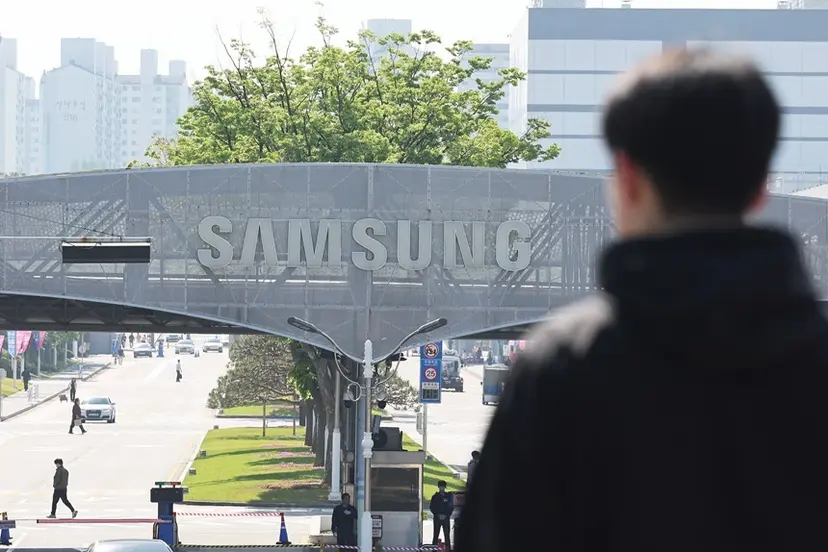
The economic repercussions are expected to be substantial. Global investment bank JPMorgan has suggested a possibility of up to 43 trillion won in losses if production disruptions and cost increases are reflected, and the industry is also mentioning damages of over 30 trillion won. Analysts say that since this is a strike occurring at the peak of the semiconductor supercycle, the impact could be even greater when considering the loss of opportunity costs.
Major global clients are reportedly expressing concerns about supply stability and are monitoring the situation. The possibility that the repercussions will spread throughout the entire ecosystem, which consists of over 1,000 primary suppliers and hundreds of secondary and tertiary suppliers, cannot be ruled out.
As government mediation has effectively been neutralized, attention is also turning to the possibility of additional intervention. Some have even mentioned the possibility of the government invoking the right to emergency adjustment, but the government seems to be leaning toward re-operating existing arbitration procedures, such as additional post-mediation, while observing the progress of labor-management negotiations rather than forced intervention.
The right to emergency adjustment is a system that prohibits industrial action for a certain period if it has a serious impact on the national economy; if invoked, the strike is suspended for 30 days. However, the view is that the possibility of actual invocation is limited due to the damage to the principle of labor-management autonomy and political burden. The NLRC stated, "We supported the negotiations by suggesting various alternatives based on the claims of both labor and management, but the gap between the two sides was large," adding, "We will continue to monitor how the labor-management negotiations proceed and judge whether post-mediation is possible again at a necessary and appropriate time."
On this day, a hearing on the injunction to prohibit illegal industrial actions, which Samsung Electronics filed last month against the Samsung Electronics chapter of the Mega-Union and the National Samsung Electronics Union, will be held at the Suwon District Court. Chairman Choi said, "Because what the company filed is an injunction against illegal industrial action, lawful industrial action is possible." He also left open the possibility of further dialogue, saying, "If the management brings a forward-looking proposal, we are willing to listen."