

[비즈한국] Where is European startup investment heading right now? A list that reveals this trend was released last week.
TechCrunch, a leading tech media outlet representing Silicon Valley startups, introduced 21 European startups to watch on the 2nd. The selection method was simple: they received two recommendations each from major European venture capital (VC) firms—one from the VC's own portfolio and one they unfortunately missed out on. They added a few more selected by their own reporters to this list.
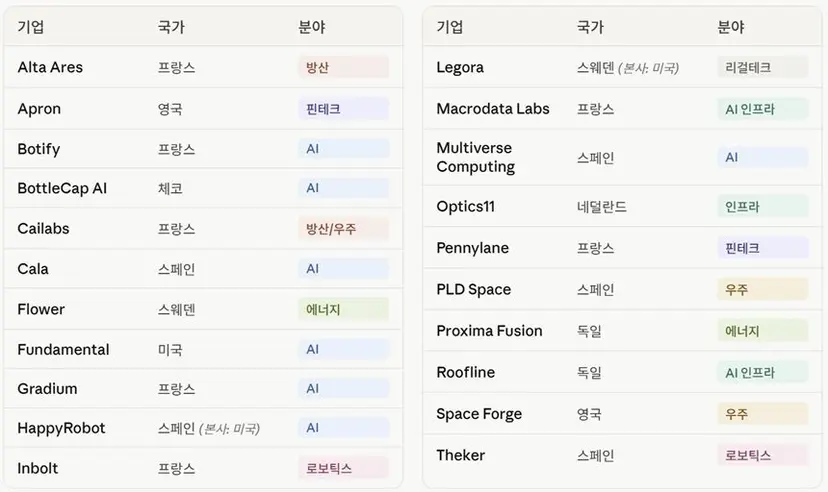
The article title is intriguing: 'Beyond Lovable and Mistral.'
Lovable is a Swedish startup that hit $100 million (approx. 145 billion KRW) in annual recurring revenue (ARR) with its AI coding tools, while Mistral is a French AI company often referred to as Europe's OpenAI. Startups that have already reached unicorn status, such as defense firm Helsing, were excluded from the list. The list released this time is the answer to the question: "Beyond these well-known names, which are the next European startups to watch?"
The startups on the list were broadly categorized into three groups.
Defense Tech: From Taboo to Essential Portfolio
First, there are two startups in the defense sector, a field already covered several times in the 'European Startup Review'.
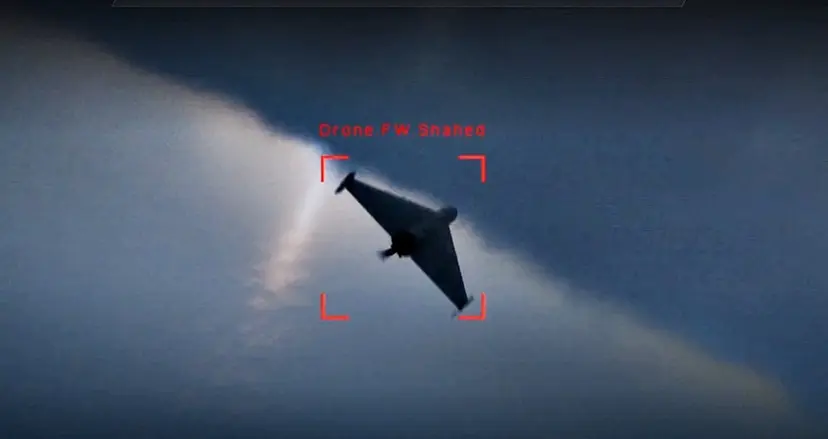
Alta Ares is a French startup that builds an AI-based anti-drone interception system. They are developing interceptors that detect and neutralize drone threats, with the key advantage being that they can be operated at a much lower cost than existing air defense systems.
Cailabs applies technology that transmits data using light (lasers) to aerospace and defense. With the surging demand for laser-based satellite communications, their goal is to build a high-speed data transmission infrastructure between satellites and the ground by constructing 50 optical ground stations.
Just 3-4 years ago, major European VCs refused to invest in defense startups. Reasons included ESG standards and ethical investment principles stating, "We do not invest in killer robots." However, since the Russia-Ukraine war, European countries have drastically increased their defense spending, and VCs are now actively filling their portfolios with defense startups like Helsing, Stark Defence, and Quantum Systems.
AI Infrastructure: Models Above Models
About half of the 21 startups listed are AI startups. However, most do not build their own models from scratch. Since developing AI models requires astronomical resources, it is virtually impossible for a startup to compete head-on with U.S. Big Tech firms like OpenAI, Google, and Meta, or Chinese companies. Instead, European AI startups are carving out niches. They make existing models cheaper, faster, and safer to use.
Czech startup BottleCap AI uses a strategy of streamlining existing open-source models and building apps on top of them. Their flagship service is the AI news app 'Pulse'. The team is attracting VC attention because one of the co-founders has the experience of selling a gaming company to Meta.
Spain's Multiverse Computing compresses open-source models like OpenAI, DeepSeek, and Mistral to allow companies to run them on their own hardware at a low cost. Their strategy targets companies that want to use large models but are concerned about cloud costs and data security. Their cumulative investment has reached $250 million (approx. 360 billion KRW).
Fundamental, one of the hottest startups recently, was also included. It was a corporate big data analysis AI startup with little public information available, but it became a unicorn overnight by raising $255 million (approx. 370 billion KRW) in its Series A, reaching a valuation of $1.4 billion (approx. 2 trillion KRW). It appears to have been classified as a European startup because it was founded by researchers from Google DeepMind based in London, even though it is a Silicon Valley startup.

Botify is an AI search optimization platform, also known as GEO (Generative Engine Optimization). For the past 20 years, the core of digital marketing was SEO (Search Engine Optimization)—a technique to make your website appear at the top when searching for specific keywords on Google. GEO is the next version, a technology to ensure your brand is included in AI-generated answers. As people begin searching for information via AI instead of Google, companies are shifting their marketing budgets to respond to AI search. Founded as an SEO company in 2012, Botify saw this change early and pivoted to GEO. Their clients include Macy’s, the largest department store chain in the U.S., and The New York Times.
Hard Tech & Space: Europe's True Strength
This is the most "European" area on the list.
Europe is stronger in hardware than software. It has engineering infrastructure accumulated over decades, such as Germany's precision machinery, France's aerospace industry, and Northern Europe's clean energy technology. Deep-tech startups emerging from this foundation are difficult for U.S. startups to replicate easily.
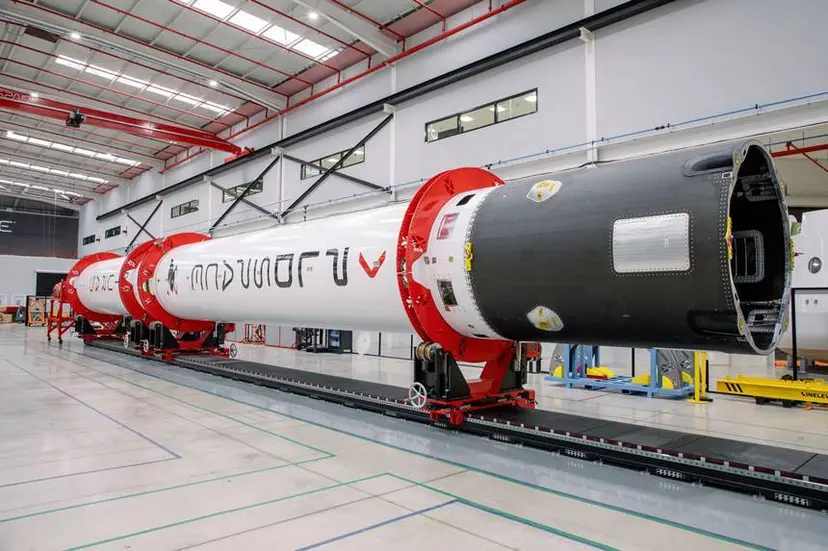
PLD Space is Spain's first private rocket company. In 2023, they achieved the first fully private rocket launch in Europe and are currently developing the reusable launch vehicle 'Miura 5', capable of placing small satellites into low Earth orbit. Last March, they raised $209 million (approx. 300 billion KRW) in a Series C round led by Mitsubishi Electric, bringing their cumulative investment to over $350 million (approx. 500 billion KRW). Mitsubishi Electric acting as the lead investor is seen as a strategic bet by Japan, which lacks its own launch vehicle technology. With the sense of crisis spreading across Europe and Asia after Trump’s re-election that "we must not depend on SpaceX for launches," PLD’s strategic value has risen even higher.
Space Forge is a British startup that manufactures semiconductor materials directly in space. They utilize the microgravity and vacuum environment of Earth's orbit to create high-purity semiconductor substrates that are difficult to make on the ground. Recently, they verified their core technology by successfully generating plasma in low Earth orbit. The idea of making key materials for chip manufacturing in space is revolutionary, but it aligns precisely with the geopolitical demand to diversify semiconductor supply chains currently concentrated in specific regions.
Theker is a Spanish robotics startup strategically invested in by Inditex, the parent company of Zara. Their goal is to provide robots as a service (RaaS) for various industrial sites, including logistics, food and beverage, and waste management. It is interesting that Inditex structured this as a direct bet on a startup for its own internal logistics automation.
Proxima Fusion is a nuclear fusion startup based in Munich, Germany. As the first commercial spin-off from the Max Planck Institute for Plasma Physics (IPP), they are pushing to build the world's first commercial nuclear fusion power plant on a retired nuclear power plant site, in partnership with the Bavarian state government, Germany's largest energy company RWE, and IPP. RWE, which transitioned from coal and nuclear power to renewable energy, is pouring decades of experience in power plant construction and operation into this project. The total project budget is approximately 2 billion euros (approx. 3.42 trillion KRW).
Hard tech is slower and more expensive than software. However, once it takes hold, it is difficult to replicate. The current reality facing Europe—such as defense self-reliance and semiconductor supply chain diversification—provides the best market environment ever for hard-tech startups.
Author Lee Jung-woo has been a journalist for 17 years, covering various fields including major industries like automobiles, secondary batteries, and heavy industry, as well as national defense, diplomacy, environment, education, and health and welfare. He has reported on site about industrial structural changes centered on mobility, energy transition, and sustainability. He currently resides in Berlin, Germany, and works as a partner at the startup accelerator '123 Factory'.