

[비즈한국] In the past, horror movies were synonymous with "cooling off" specials. The term "nablyang" is a combination of "nab" (to let in) and "ryang" (coolness). It literally means "to invite coolness." During the hot summer months, horror movies or special dramas were aired as a way to beat the heat, as the momentary shivers induced by such content provided a temporary sense of relief from the high temperatures.
However, as air conditioning became ubiquitous, the cooling utility of horror movies declined. Entering the 90s, the expansion of multiplex theaters and the growth of the Korean film industry led summer theaters to be dominated by large-scale blockbusters. As action and entertainment films took center stage, horror movies were pushed aside and were no longer a preferred genre for audiences. They were eventually relegated from the peak summer season to the off-season of autumn, and even from there, they shifted to spring releases.
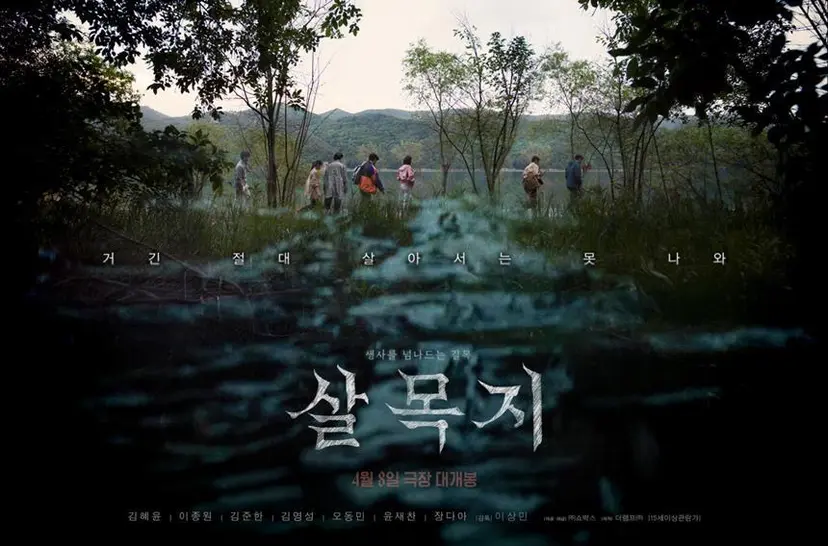
The horror movie 'Salmokji,' released this spring, has gained significant attention. 'Salmokji' was provided and distributed by the same company as the movie 'Wang-sa-nam.' Perhaps that is why their promotional marketing methods were similar. One such method involves encouraging movie viewership through audience participation.
The movie 'Wang-sa-nam' began to motivate viewers after news spread on social media that malicious comments were being posted on the website of Gwangneung, the royal tomb of King Sejo, and that Cheongryeongpo, the place of King Danjong's exile, was crowded with visitors. Curiosity about what the movie was actually about led people to take action. Similarly, news spread via social media that many vehicles were visiting the actual Salmokji reservoir in Yesan-gun, Chungcheongnam-do, in the middle of the night, which again made headlines in the media and piqued public curiosity.
A similar marketing strategy proved effective in 2024 when director Jang Jae-hyun's occult thriller 'Exhuma' (Pamyo) drew 11.88 million viewers. By creating a buzz that "something ominous is coming" and leaving people unable to resist the curiosity of what it was, they ensured that those with high curiosity had no choice but to head to theaters quickly before the details were revealed on IPTV or OTT platforms.
However, at least 'Exhuma' did not use an actual real-world location name. In contrast, 'Salmokji' used the exact name of a reservoir in Gwangsi-myeon, Yesan. While the production team stated that the Hanja characters are different and that it was based on reports of horror experiences at that reservoir, those are merely personal anecdotes. Furthermore, using different Hanja characters is a known marketing tactic.
Director Na Hong-jin's film 'The Wailing' (Gokseong) caused controversy because its name was identical to Gokseong County in South Jeolla Province. The production team claimed the Hanja characters were different, but those who did not realize it was a marketing strategy were too naive. 'The Wailing,' which drew over 6.5 million viewers, was brought up alongside Gokseong, Jeonnam, whenever horror movie box office success was discussed. Naturally, this time as well, 'The Wailing' was mentioned again alongside 'Salmokji.'

The neighborhood where the actual reservoir serving as the backdrop for 'Salmokji' is located is a legitimate place of livelihood and residence for its inhabitants. Because of the movie, however, residents had to endure noise and shouting late at night. The reservoir became polluted with trash and cooking remains left by visitors. The actual Salmokji is a public asset where fishing, as well as camping and overnight stays, are prohibited. Violators are subject to legal penalties, but such realities were ignored in the film.
Above all, it is undesirable for a region to be branded as a place of horror due to a movie. It does not help the local economy either. How long must we tolerate outsiders visiting only to extract motifs from their strange sense of fear and then throwing "horror parties"? Since local residents are a minority, their protests have little influence. Just as Westerners in the era of colonial imperialism viewed the Third World as a space of horror haunted by monsters or strange creatures, K-content still portrays regions from that same perspective.
The break-even point for the movie 'Salmokji' was 800,000 viewers, but it drew over 2.6 million. It made more than triple the profit at the expense of a local area. Now is the time to be satisfied and move on. The movie 'Wang-sa-nam' demonstrated a model of coexistence with the region. Horror films should also consider this. It is regrettable that the tradition of older Korean horror films, which often had a positive thematic consciousness of realizing social justice by resolving the grudges of the socially marginalized, has been broken.
The author, Kim Heon-sik, has been walking and navigating the forest of popular culture phenomena since his 20s, driven by the hope that there is a way to make the world a better place through culture. He continues on the same path in the 21st century, where artificial intelligence and quantum computers are at play, with the same belief.