

[비즈한국] Two months have passed since the government legalized pet entry into restaurants. With the number of pet-friendly establishments on the rise, the government views the policy as having successfully taken root. However, the experience of pet owners tells a different story. Critics point out that an increase in 'pet-friendly' signs is a separate issue from having more spaces where pets are genuinely welcomed.

1,870 'Pet-Friendly' Locations Nationwide... What's the Reality?
Following the enforcement of the revised Enforcement Rule of the Food Sanitation Act on March 1st, pets were legally allowed to enter restaurants. Previously, animal entry into food service establishments was restricted due to concerns over food contamination and infection, but the revised rule now allows general restaurants, cafes, and bakeries to accept pet-accompanied customers, provided they meet specific hygiene and safety standards.
Confusion in the field was high during the early stages of implementation. Restaurant owners complained that the facility standards and compliance requirements were overly burdensome. They were required to check every pet's vaccination status, install fences to block access to kitchens, store dedicated utensils and cleaning supplies separately, and provide designated pet waste bins.
As the controversy grew, the Ministry of Food and Drug Safety (MFDS) partially relaxed its guidelines on March 19th. The revised guidelines eased table spacing requirements for pets held by owners or kept in carriers, and allowed vaccination status to be verified via QR codes in addition to traditional certificates and records. Since then, complaints from the field have subsided somewhat. An MFDS official stated, "There were many related complaints in the early stages, but after we announced improvement measures, the number of complaints dropped significantly. We believe the policy is settling in to some extent."
The number of pet-friendly establishments registered with local governments is also growing rapidly. According to the Ministry of Food and Drug Safety’s 'Food Safety Korea,' there were 1,870 pet-friendly establishments as of May 6th. Compared to the roughly 280 locations immediately after the regulation change, this represents a six-fold increase in just over two months.
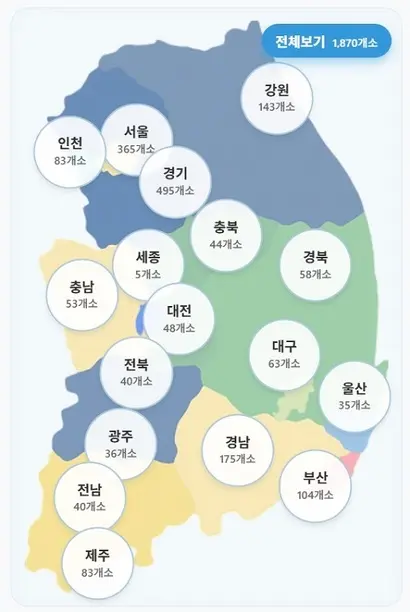
However, the changes felt by pet owners differ from the statistics. While the number of pet-friendly places has grown, they say it is still difficult to find spaces where they feel their pets are truly welcome. Many pet owners point out that quite a few businesses merely display 'pet-friendly' signs to attract new customers or for marketing purposes.
A resident surnamed A said, "Some places claim to be pet-friendly but post notices saying 'No entry if your pet barks even once.' It’s hard to visit these places with peace of mind. They say there are more pet-friendly restaurants and cafes, but I don't feel it. If anything, it's a shame that places I used to visit with my dog have turned into 'no-pet zones'."
In fact, since the policy went into effect, some businesses that had previously welcomed pets have either closed or converted into 'no-pet zones' due to the burden of stricter standards and operations. Cafe B in Hwaseong, Gyeonggi-do, which was known as a pet-friendly cafe, suspended operations starting in March. A cafe official said, "We considered reorganizing the shop to meet the new regulations, but we have many concerns. Considering the process of checking every vaccination record and potential friction with customers, running the shop doesn't feel easy, so we haven't decided whether to resume operations."
"Check for Negligence": Owners Burdened Ahead of July Crackdown
The pet-friendly dining policy was also a hot topic during the first meeting of the Pet Policy Committee held on March 30th. Specifically, the requirement for businesses to verify vaccination status was controversial. Veterinarian Seol Chae-hyun, who attended the meeting, criticized it, saying, "Requiring individual verification of vaccination records upon entry to a restaurant is an unrealistic regulation that doesn't exist anywhere else in the world, especially since the incidence of zoonotic diseases like rabies is extremely rare."
The MFDS maintains that the verification process remains necessary. An MFDS official stated, "When the policy was being revised, we held meetings with the veterinary community and consumer groups, and the need for vaccination verification was noted. The purpose is that in a shared space, a minimum verification process based on trust is necessary considering the possibility of various diseases. We are continuing to discuss with the Prime Minister's Office to review potential improvements."
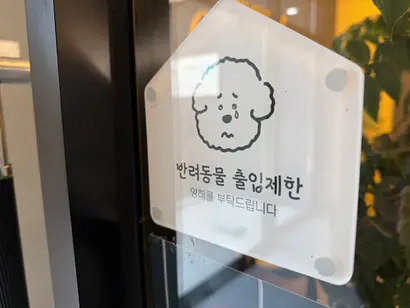
If a pet-friendly restaurant violates hygiene and safety standards, such as failing to check vaccinations, it can face up to 20 days of business suspension. The MFDS suspended crackdowns until July to allow for early adjustment, but once the grace period ends, it could lead to actual administrative penalties.
Owners' concerns align with this point. They fear that once enforcement begins, minor operational lapses could lead to complaints or reports. In fact, posts are circulating online urging people to verify whether a business was negligent in its management in the event of an accident or dispute at a pet-friendly location. Suggestions include gathering photos or recordings of whether entry signs were posted, whether vaccination checks were performed, and whether staff controlled the scene. This is because such evidence could be used to claim that a business failed to meet standards. For owners, the act of accepting pets in itself feels like an invitation to complaints and administrative risk.
Conversely, the MFDS believes that operating within the institutional framework can actually serve as a protective measure for owners. An MFDS official said, "Owners might worry about getting involved in accidents within their premises, but if they follow the guidelines, they can be free from liability debates. Some owners see operating within the legal boundaries as a way to reduce their liability."
They added, "We are currently focusing on providing guidance and on-site consulting. Once the grace period ends, if complaints are filed, we plan to conduct on-site inspections to determine whether to impose penalties, or conduct special inspections if necessary."